
Free Counting On Worksheets for Word: 10 Printables to 20, 100 and 1,000
Preview every worksheet, choose colour or black and white and your paper size, then download your counting on worksheets in one small ZIP file.
Made by a teacherA4 and US Letter10 worksheetsFree










Can’t find the template you need? Request a template and I’ll make it in Word, free.
Get new free printables first: follow Word Made Easy on Pinterest
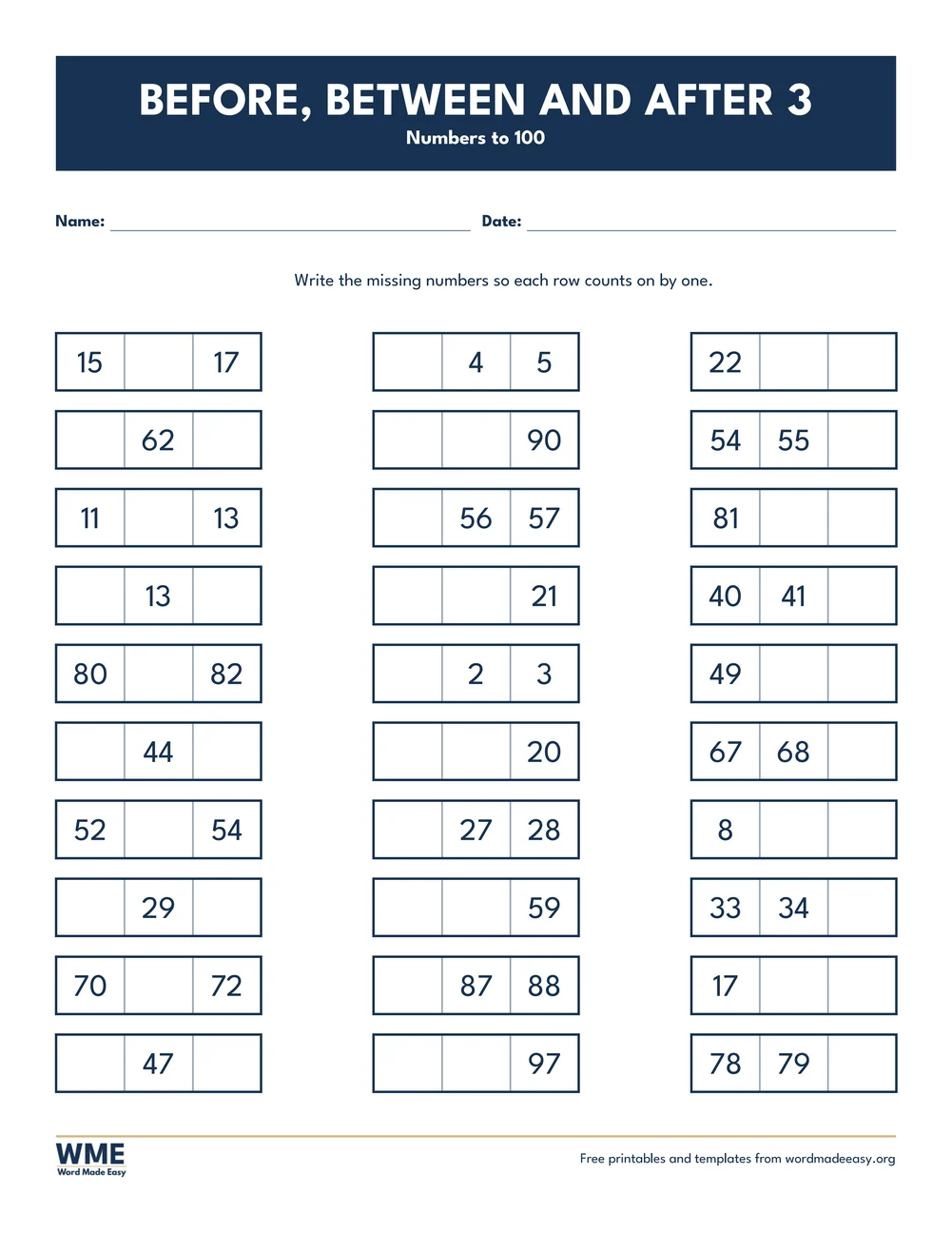
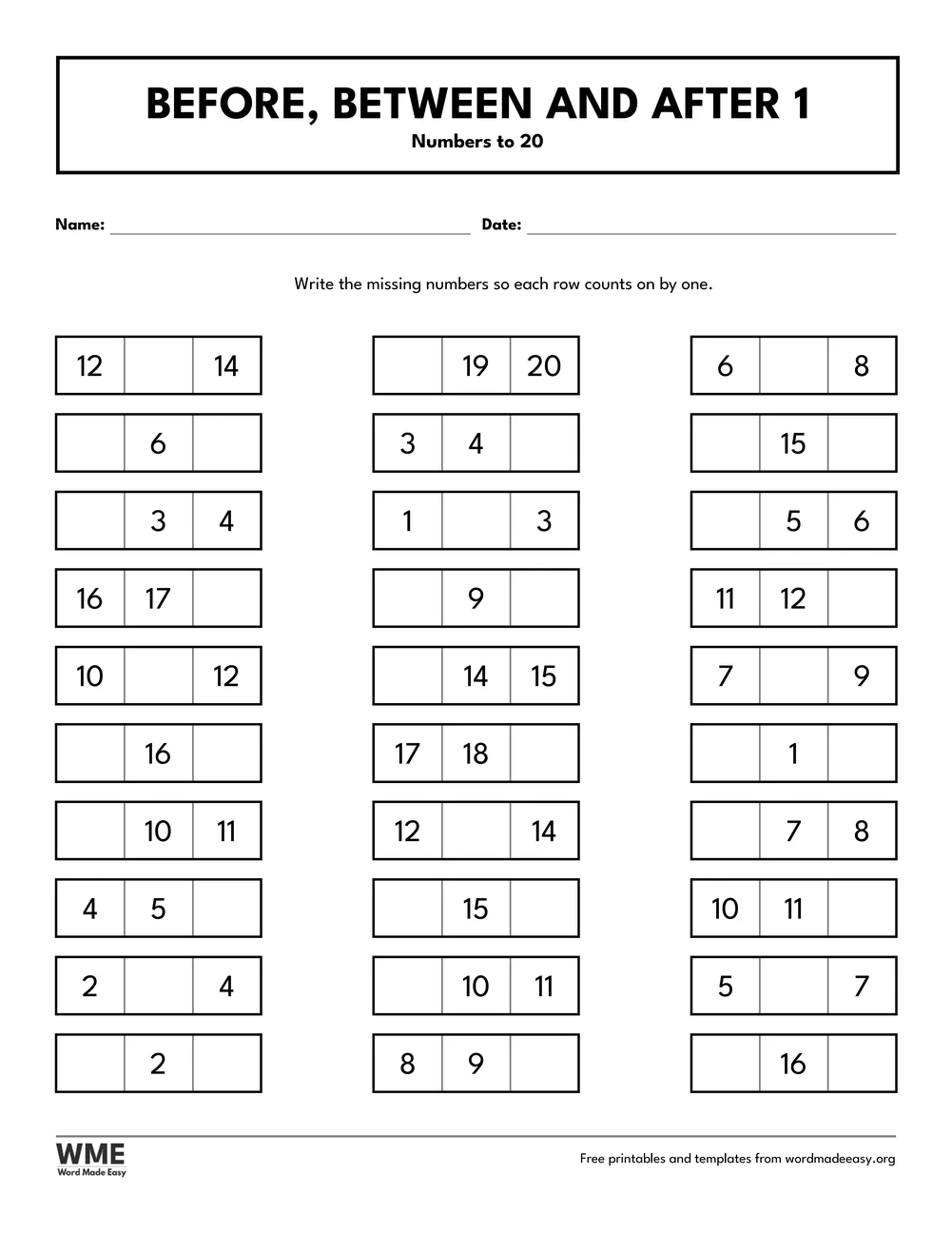
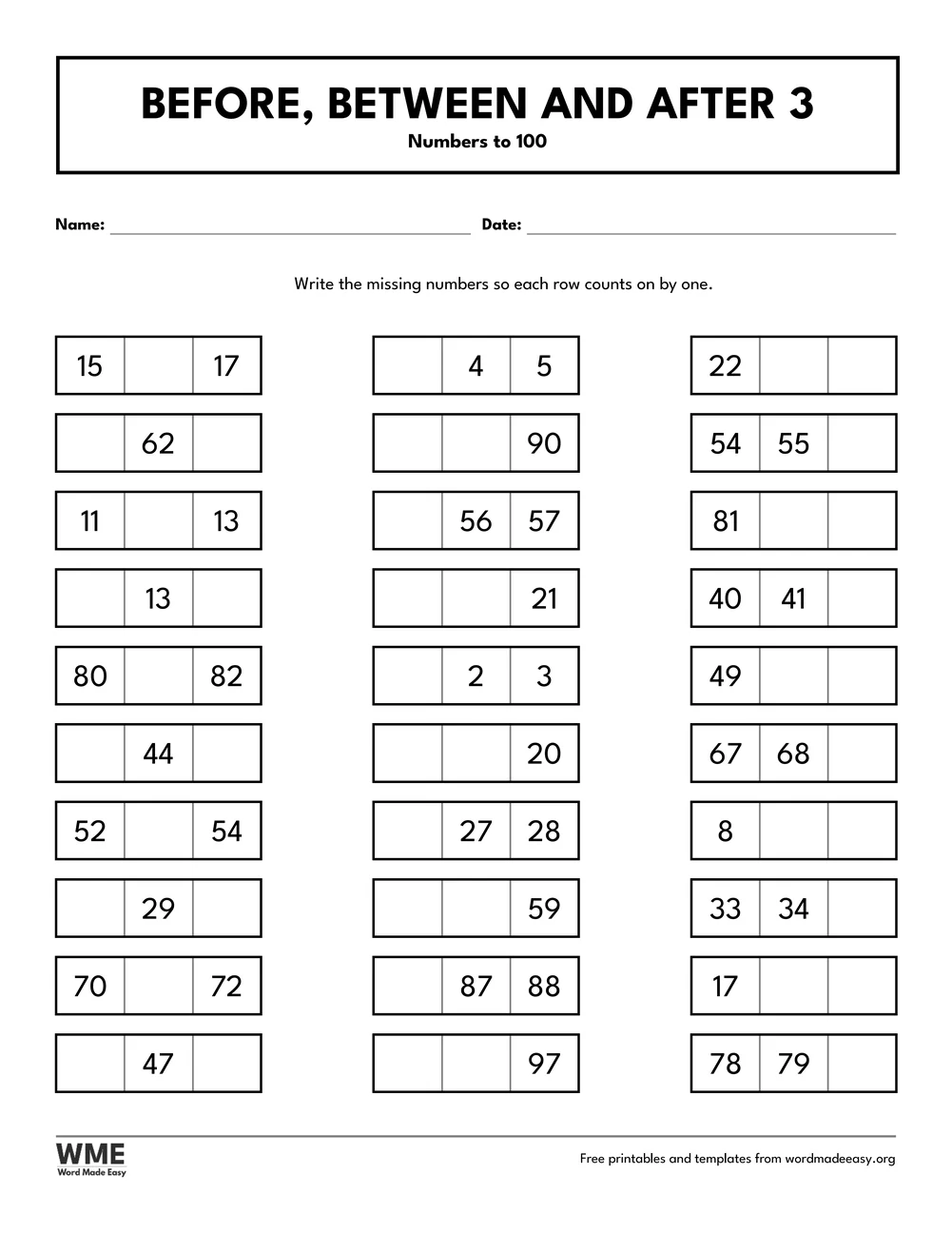
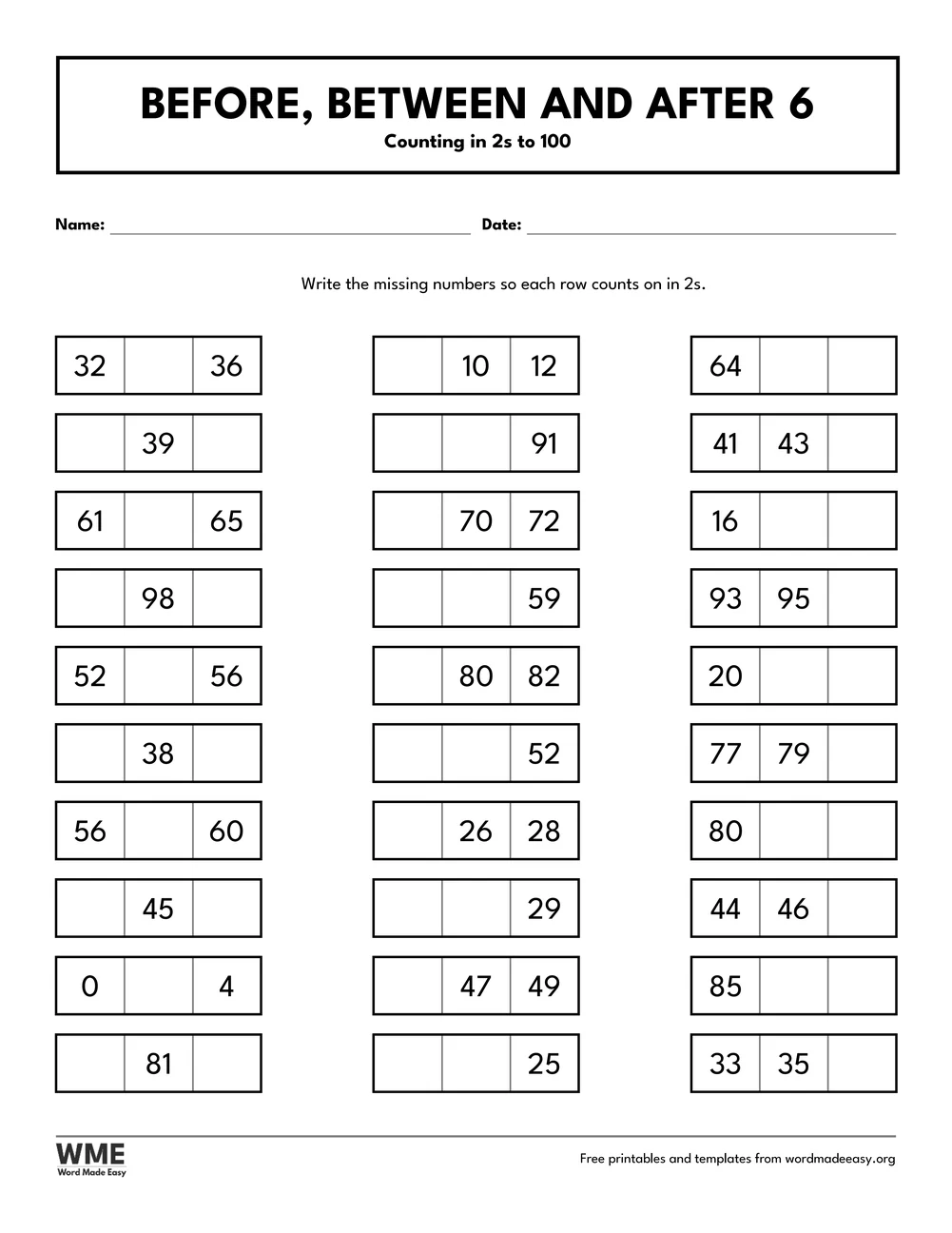
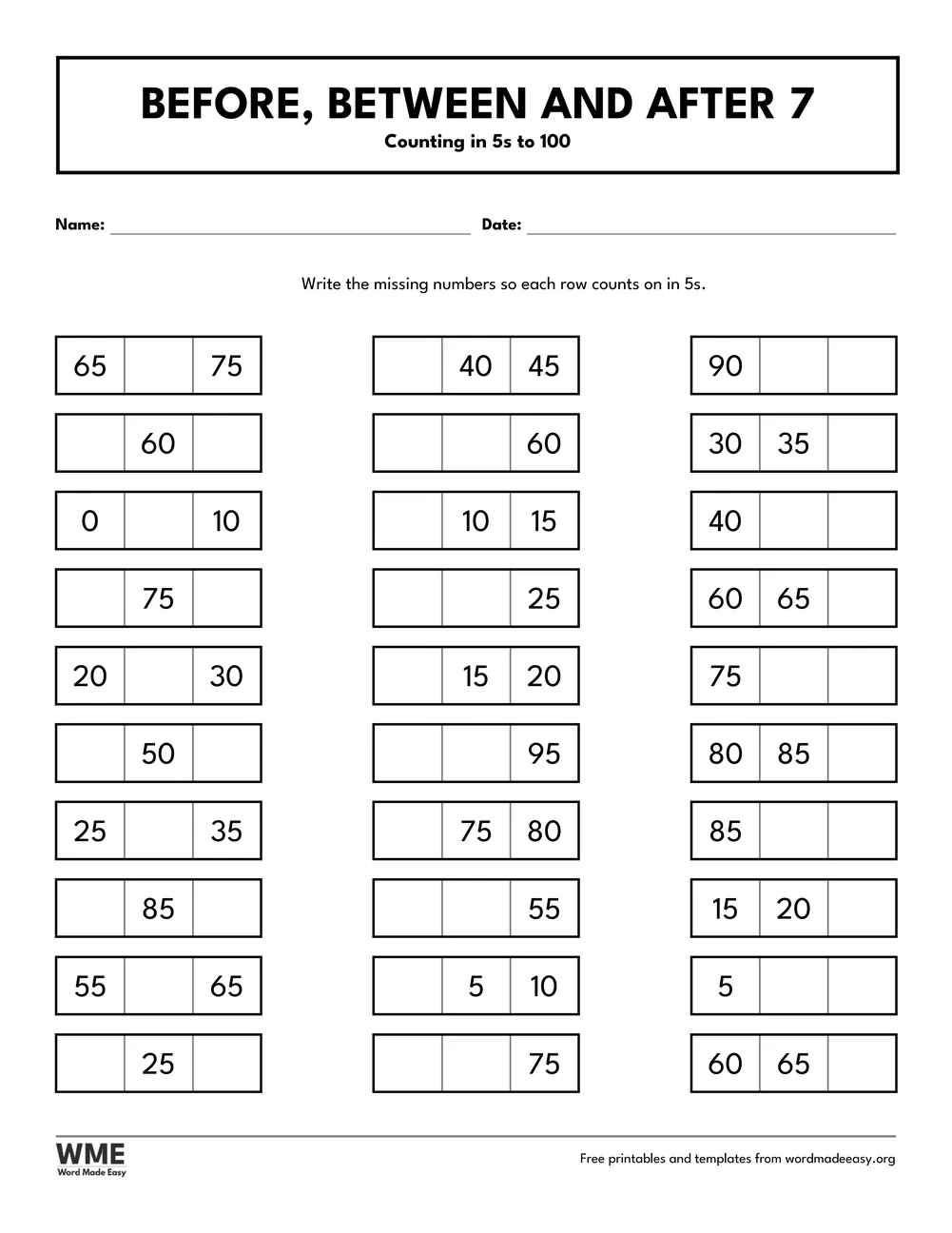
These free counting on worksheets are built from rows of three boxes. Each row is a tiny number sequence with a gap at the start, in the middle or at the end, and children write the missing number so the row counts on. Ten sheets take them from numbers to 20 up to 1,000, with rows that count in 2s, 5s and 10s, and every sheet has an answer page, on US Letter and A4, in colour and in black and white.
In this guide, you’ll see how the ten sheets build on each other, which one fits your class, and how to turn a finished sheet into a quick counting check.
What’s in the Counting On Worksheets
| Worksheet | What is on it |
|---|---|
| Before, Between and After 1 | Missing numbers to 20, with answers |
| Before, Between and After 2 | Missing numbers to 50, with answers |
| Before, Between and After 3 | Missing numbers to 100, with answers |
| Before, Between and After 4 | More missing numbers to 100, with answers |
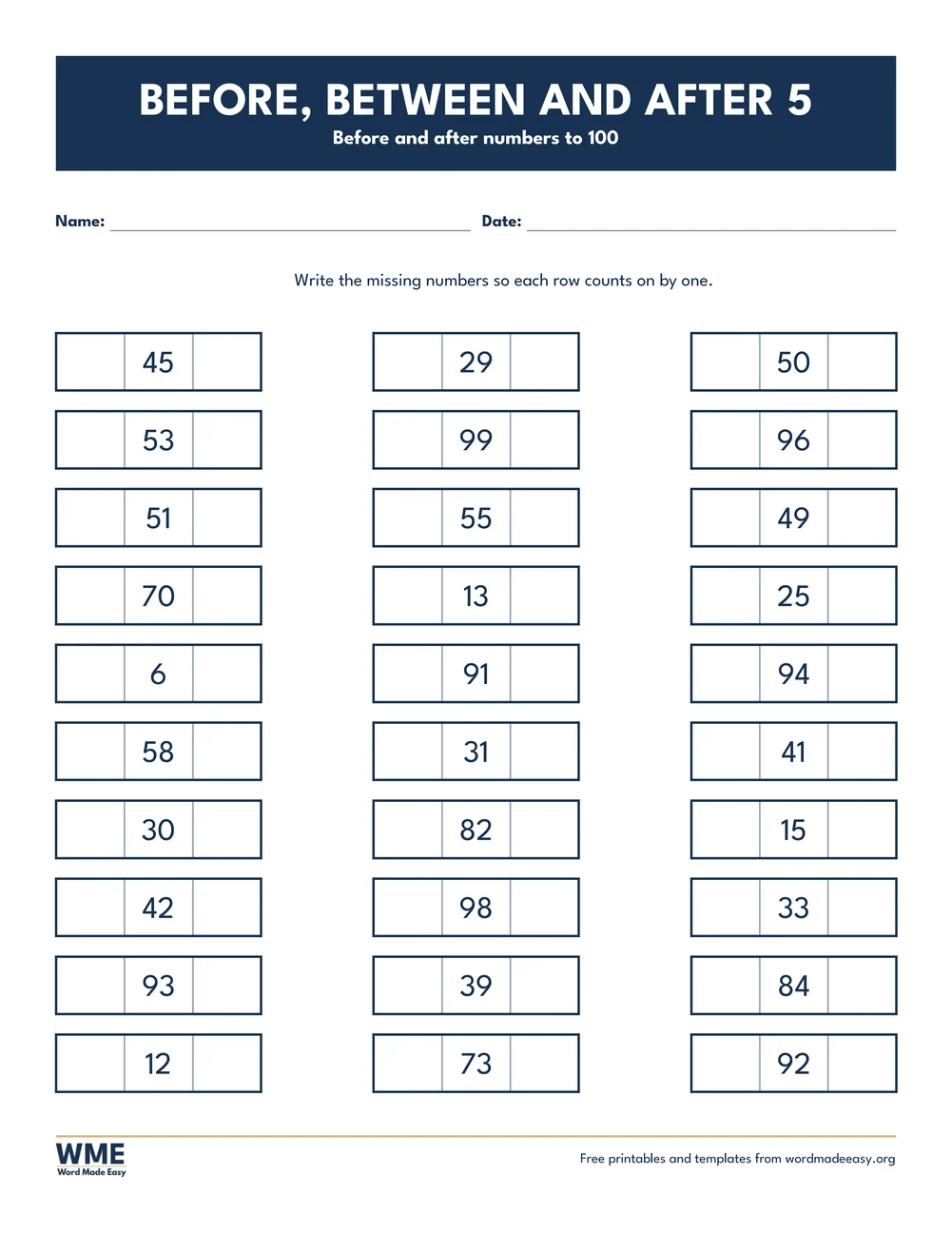
| Before, Between and After 5 | The number before and after, to 100, with answers |
| Before, Between and After 6 | Counting in 2s to 100, with answers |
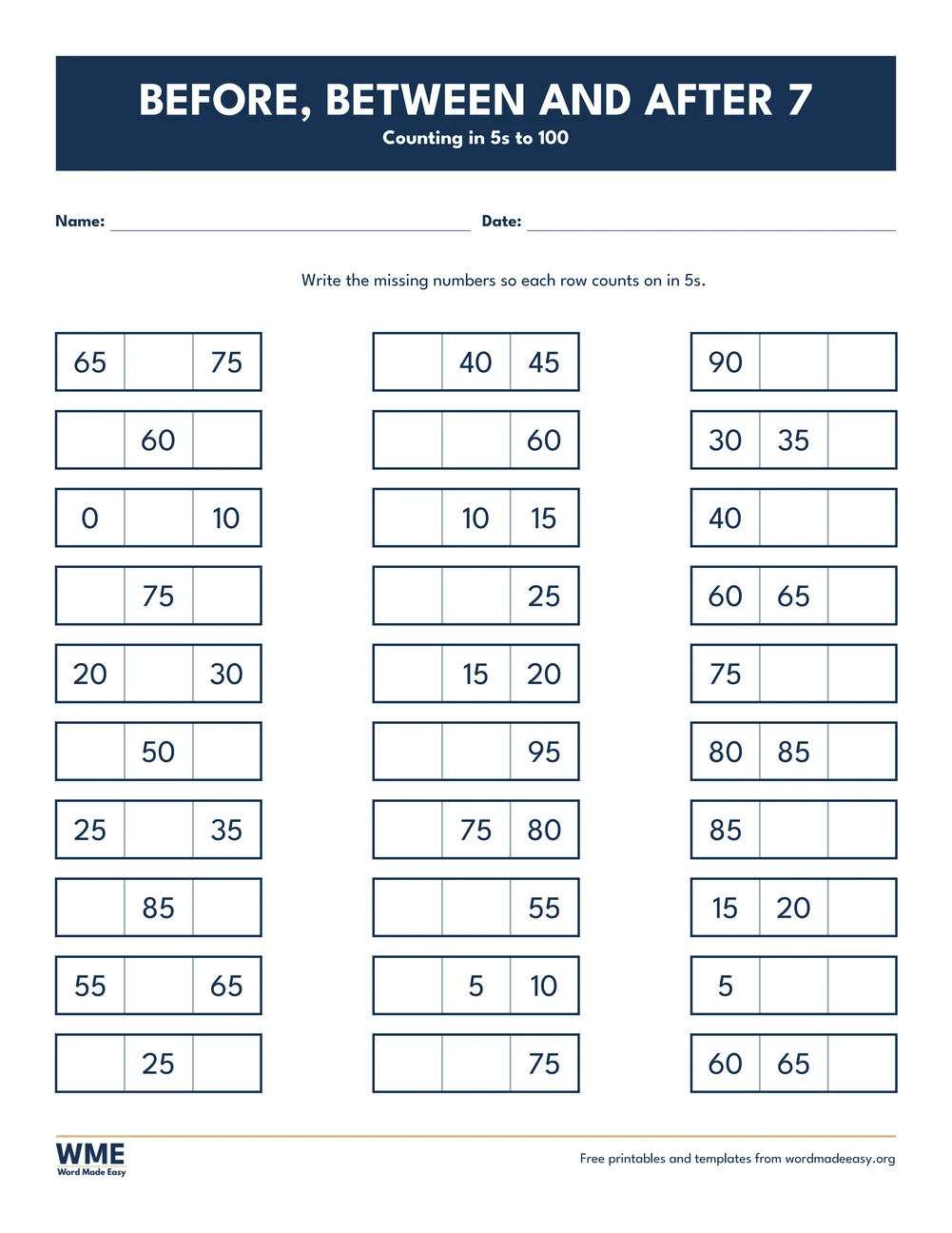
| Before, Between and After 7 | Counting in 5s to 100, with answers |
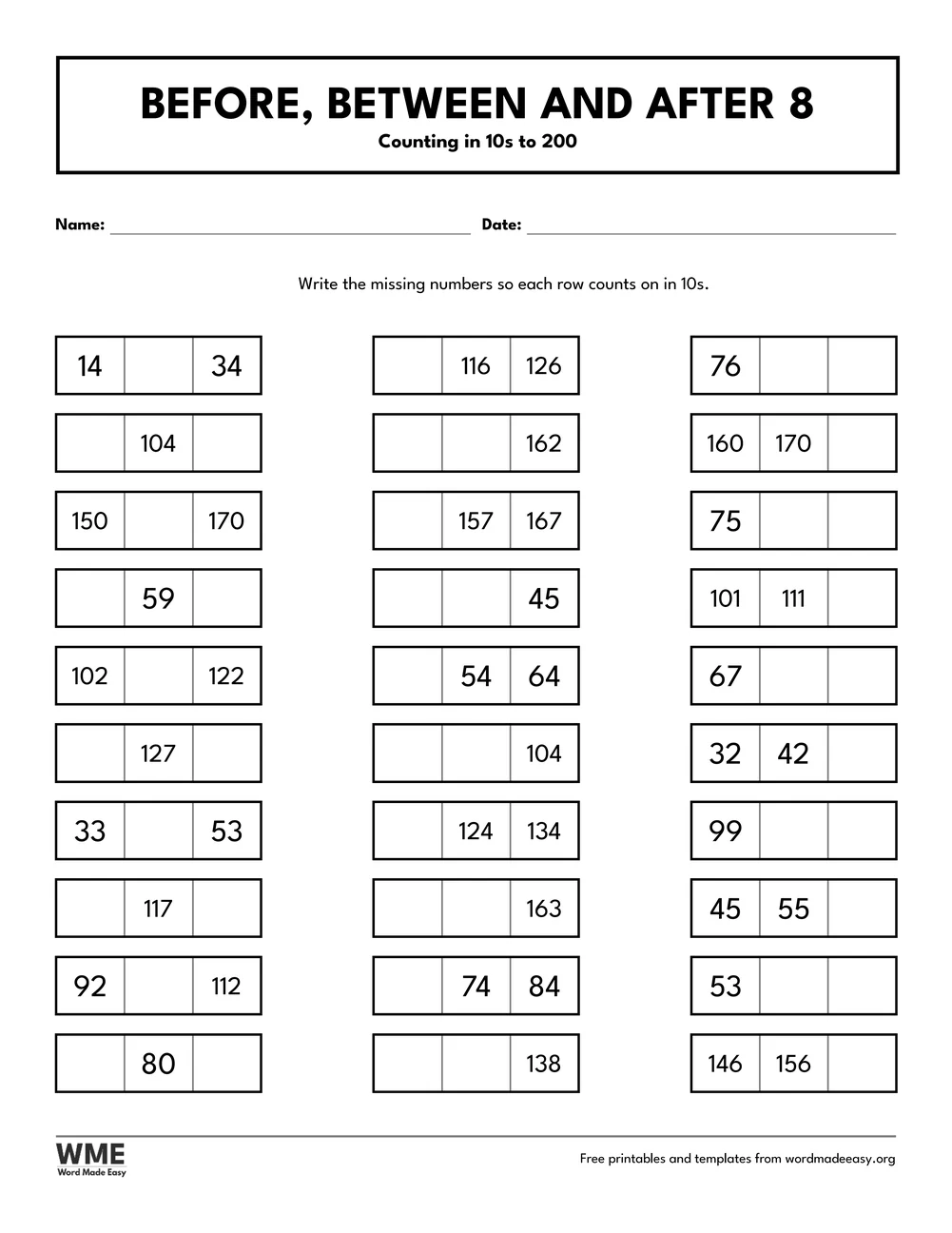
| Before, Between and After 8 | Counting in 10s to 200, with answers |
| Before, Between and After 9 | Missing numbers to 1,000, with answers |
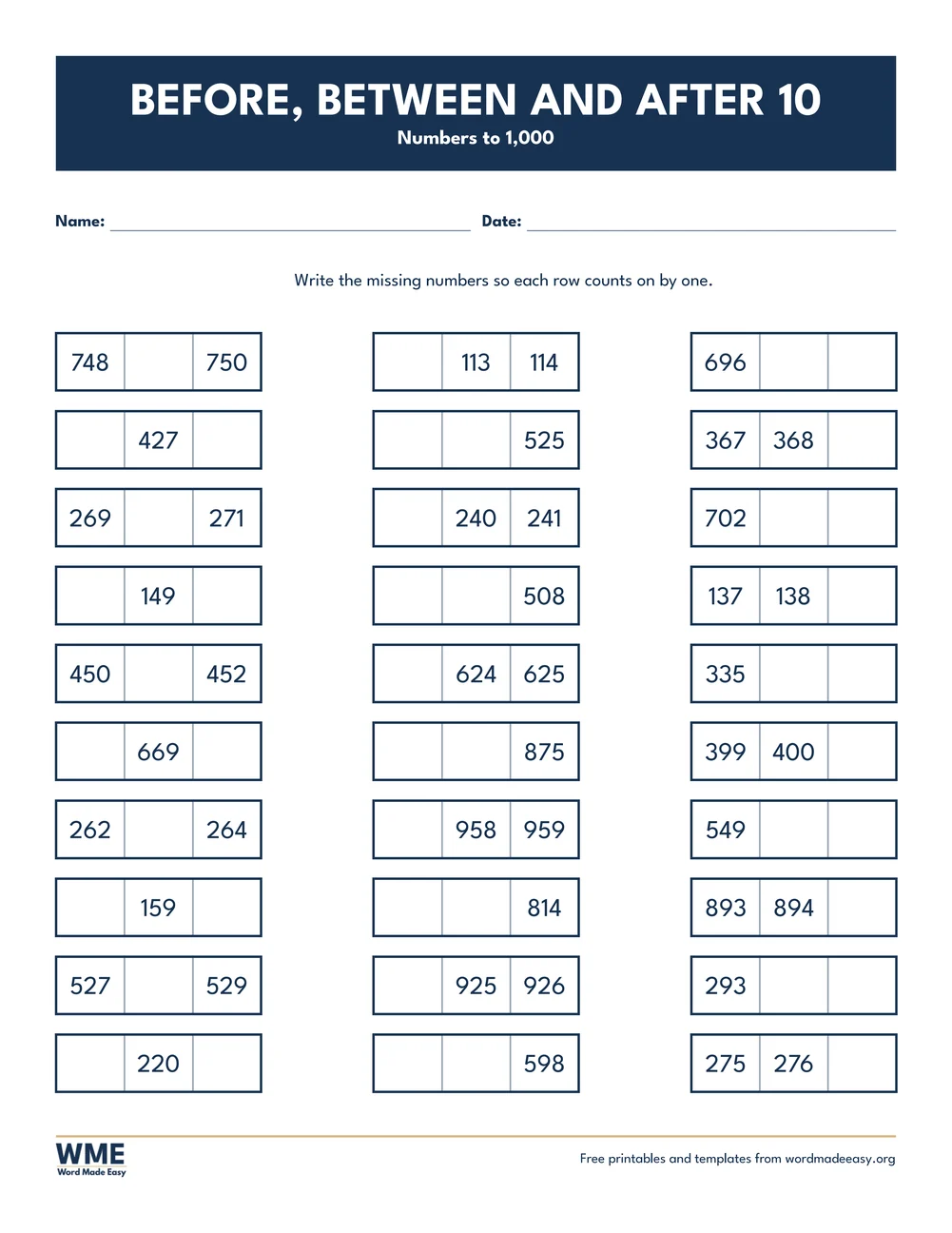
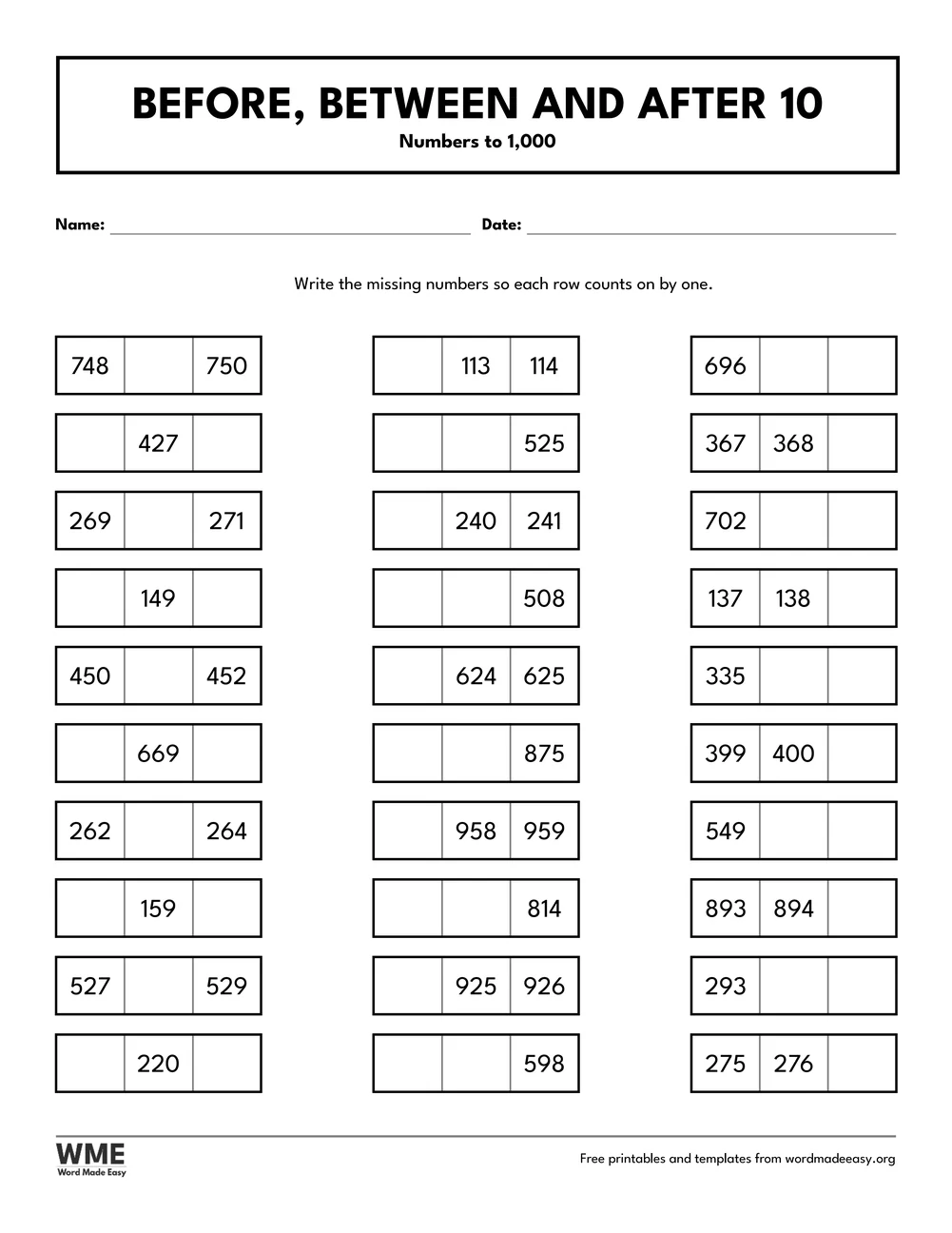
| Before, Between and After 10 | More missing numbers to 1,000, with answers |
👉 Thirty rows per sheet, three boxes per row. The given numbers are typed into Word table cells, so you can change any row in seconds; page 2 shows every row finished in red.
What Are Counting On Worksheets?
Counting on means starting from any number and saying the numbers that follow, without going back to 1. It is the step between rote counting and adding: a child who can count on from 47 can work out 47 + 3 in their head. Counting on worksheets practise it on paper. Here every row shows three numbers in order with one or two left blank, so children have to think about what comes just before, what sits between two numbers and what comes next. Later sheets change the step to 2, 5 or 10, so the same rows become number order practice for counting in groups.
Which Counting On Worksheet Should You Choose?
- Sheet 1 (numbers to 20): the gentlest start, for children who are just counting past ten.
- Sheets 2 to 4 (to 50 and to 100): bigger numbers, crossing tens such as 39, 40, 41.
- Sheet 5: only the number before and the number after, to 100, with the middle given.
- Sheets 6, 7 and 8: count on in 2s, in 5s and in 10s (the 10s sheet runs to 200).
- Sheets 9 and 10 (to 1,000): three-digit sequences that cross hundreds, such as 399, 400, 401.
- Children who want a longer run of numbers can count along the 100 chart, and the abacus worksheets show the same numbers as beads in tens and ones.
How to Use the Counting On Worksheets
- Pick a starting sheet in the preview, download your paper size and print just the first page of each file.
- Read the first row aloud together: “12, something, 14”. Ask what number lives in the gap.
- Children work along each column of rows, saying the three numbers quietly before they write.
- On the 2s, 5s and 10s sheets, ask them to find the step first by comparing the two numbers they can see.
- Mark with the answer page, then give the next sheet up to anyone who got every row right.
Rows that cross a ten or a hundred (29, 30, 31 or 199, 200, 201) are where mistakes happen, so circle those on the answer page and practise them out loud. For a whole column of numbers in one step, the skip counting worksheets follow on well, and the before and after numbers worksheets suit younger children.
Black and White Versions
All ten counting on worksheets also come in black and white: the same rows of boxes with black outlines and no coloured title bar, so they photocopy cleanly for a whole class. Pick Black and white under the colour choice, or All to get both styles in one ZIP.
How to Print the Counting On Worksheets
Print at 100% (Actual size) on the paper the file was made for, US Letter or A4. Page 1 is the worksheet and page 2 the answers: print page 1 for the class and keep page 2 for marking.
FAQs
Are these counting on worksheets free?
Yes. All ten counting on worksheets are free: choose US Letter or A4, colour or black and white, and download them in one ZIP file.
Do they come with answers?
Yes. Page 2 of every Word file is the answer page, with each missing number written in red.
What ages are the counting on worksheets for?
Sheet 1 suits ages 4 to 5 (kindergarten or Reception). Sheets 2 to 8 suit ages 5 to 7 (grades 1 and 2, or Years 1 and 2), and the sheets to 1,000 suit ages 7 to 8.
What is a number sequence worksheet?
It shows numbers in order with some left out, and children fill the gaps. Each row on these sheets is a three-number sequence, so they also work as number order worksheets.
Can I change the numbers?
Yes. Every number sits in a Word table cell, so you can type new ones. Remember to change the answer page to match.
Can I print them without colour?
Yes. Pick Black and white in the download box for the ink-saving version of all ten sheets, on A4 or US Letter.
Conclusion
Ten counting on worksheets that grow with your class, from numbers to 20 up to 1,000, editable in Microsoft Word.
Download your paper size above, and for the very first steps with the number just before and just after, use the before and after numbers worksheets.
Related Tutorials
- Before and After Numbers Worksheets
- Free Skip Counting Worksheets for Word
- Free 100 Chart and Hundred Square Templates for Word
Maths Resources
Recently Added Maths Resources
Browse all free maths resources for home and school, all made by a teacher.
Leave a comment
Have a question about these resources, or an idea for a new one? Ask below.