
Free Valentine’s Coordinate Graphing Mystery Pictures for Word: 16 Printables
Preview every picture, choose colour or black and white and your paper size, then download your mystery pictures in one small ZIP file.
Made by a teacherA4 and US Letter16 mystery picturesFree
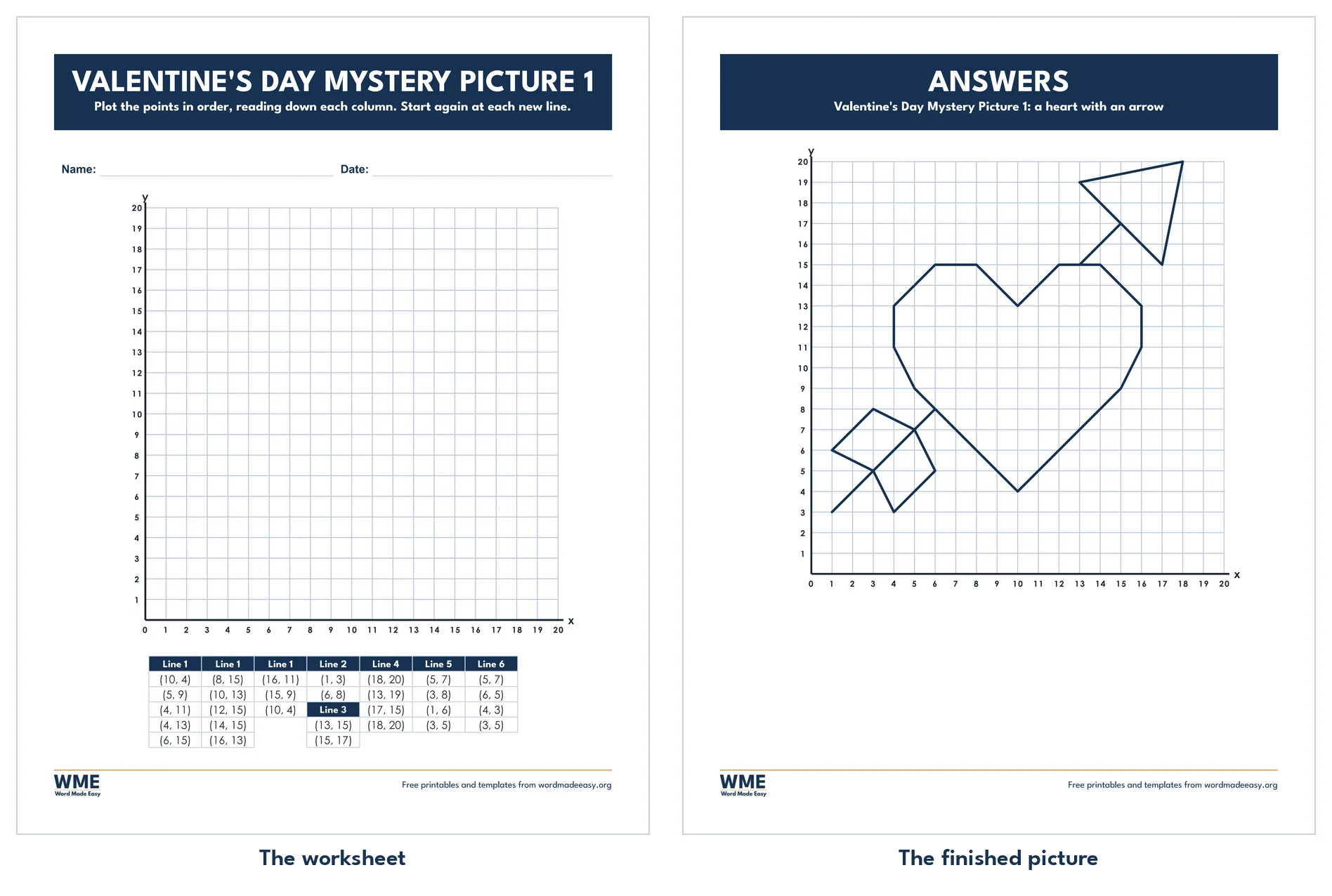
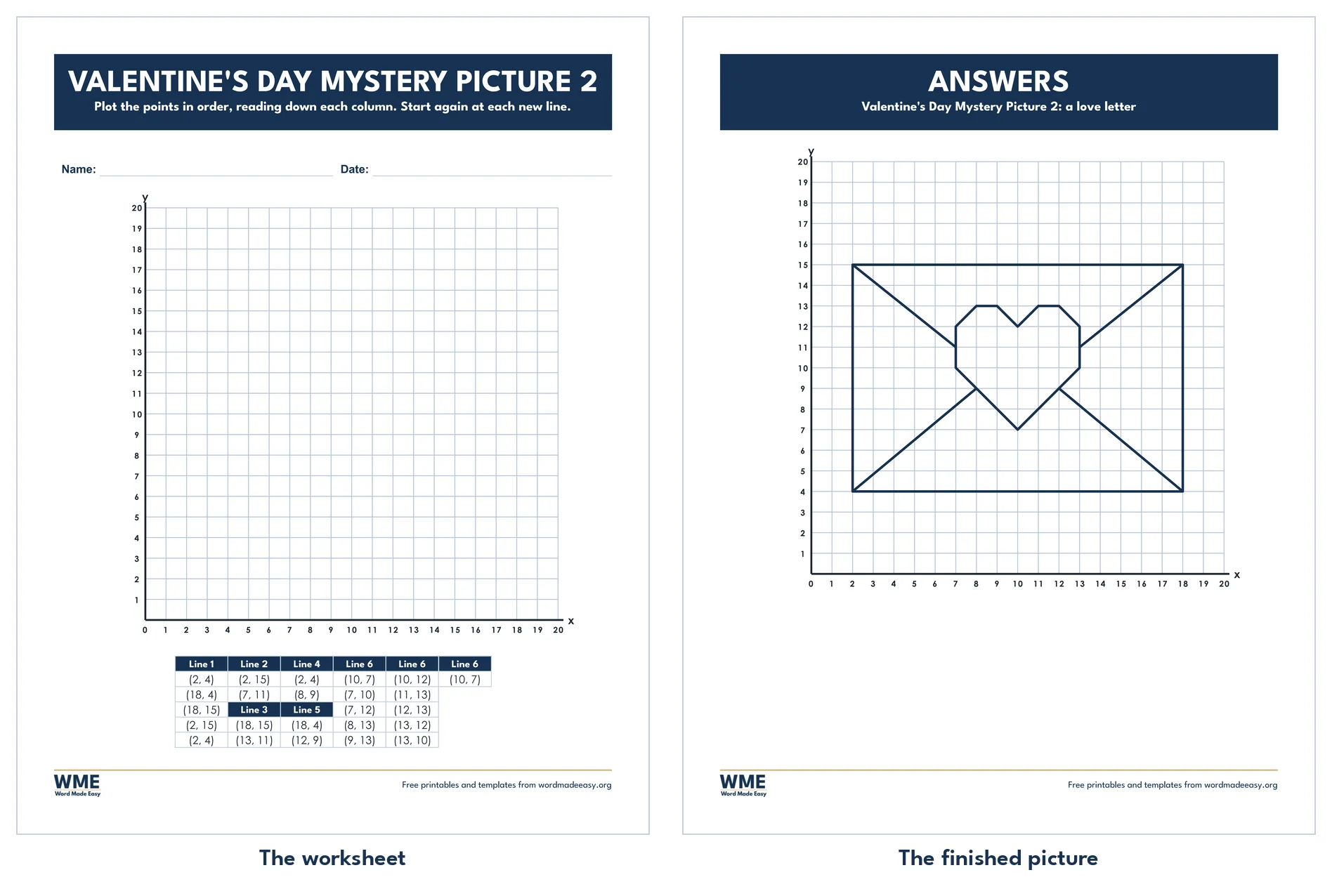
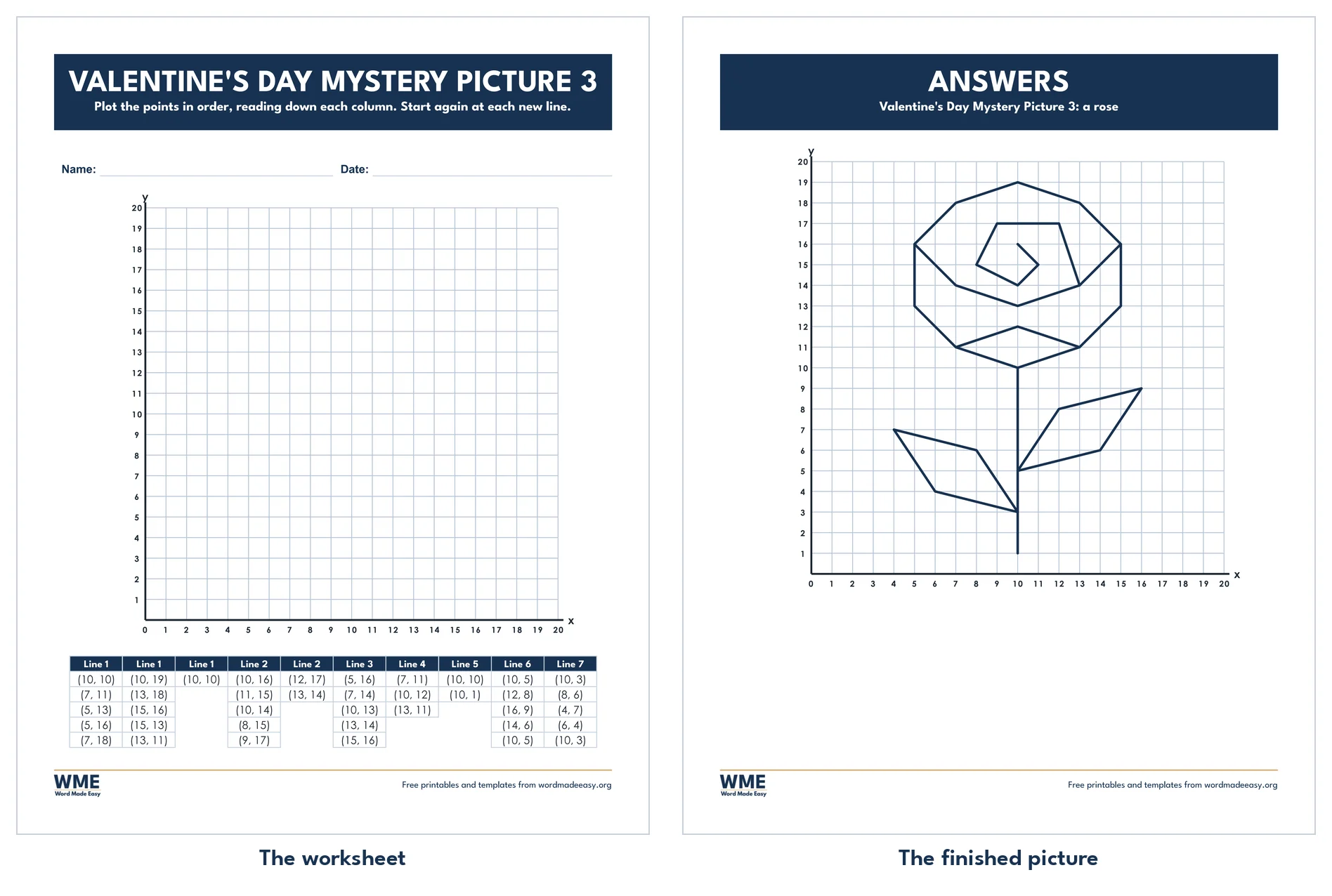
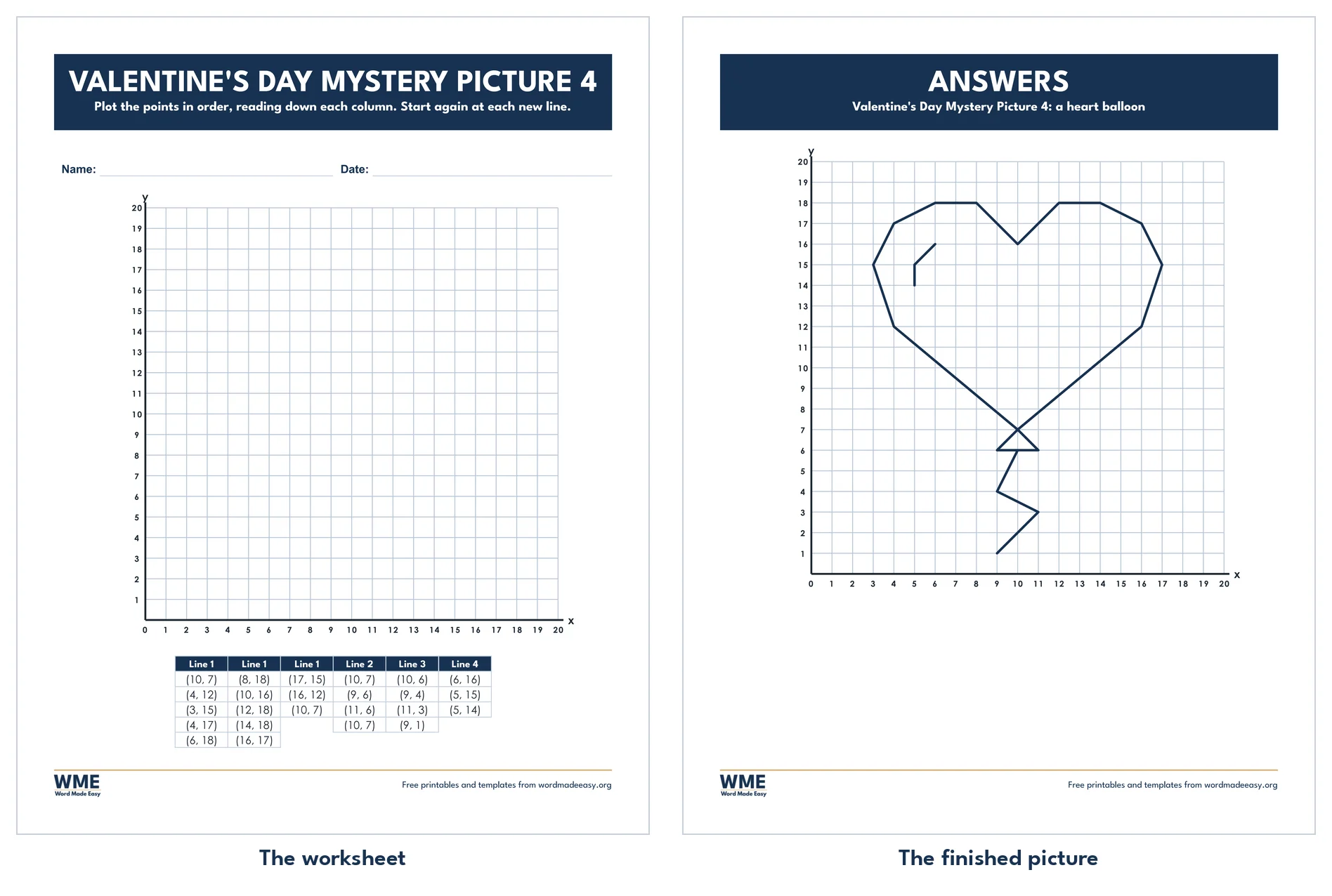
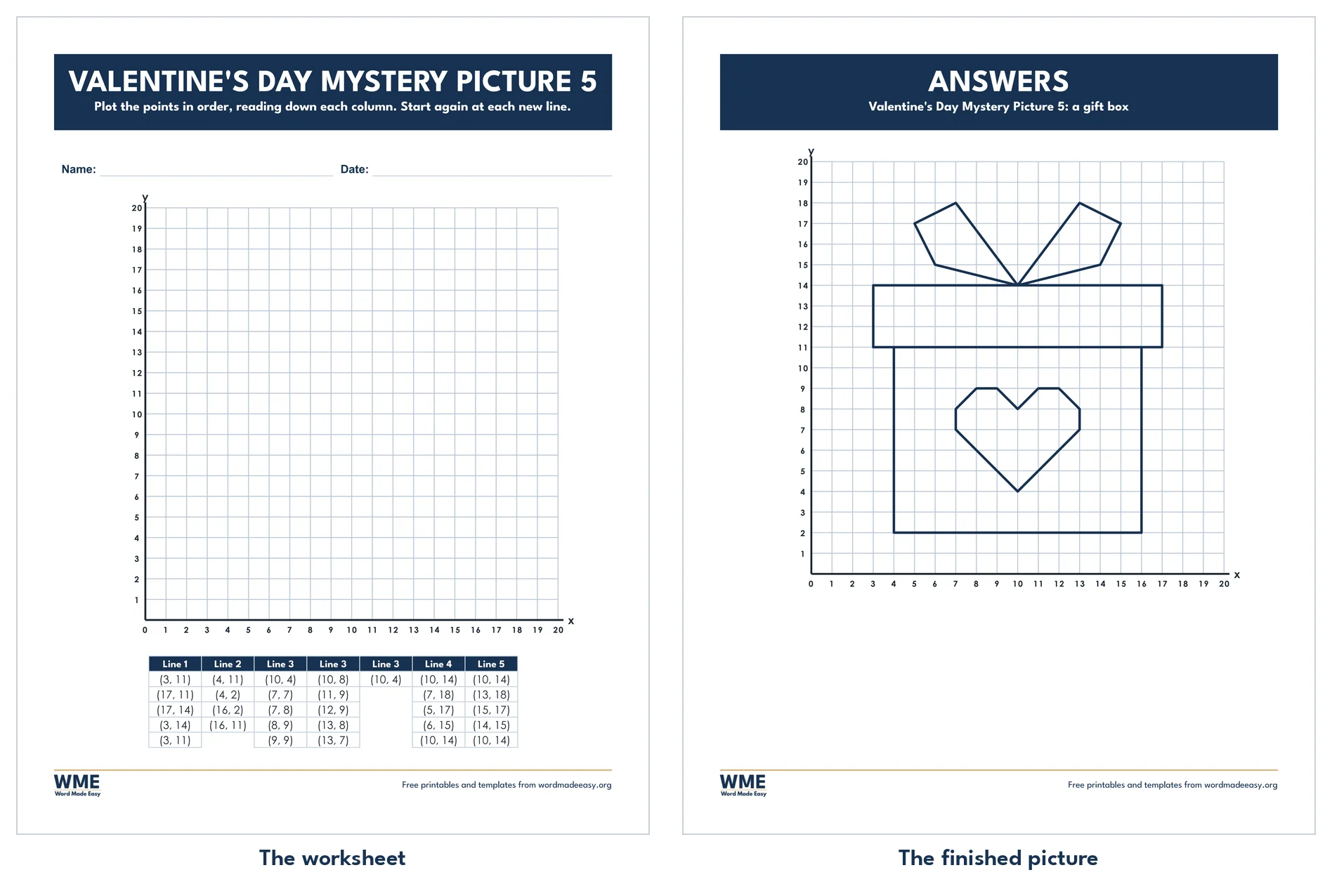
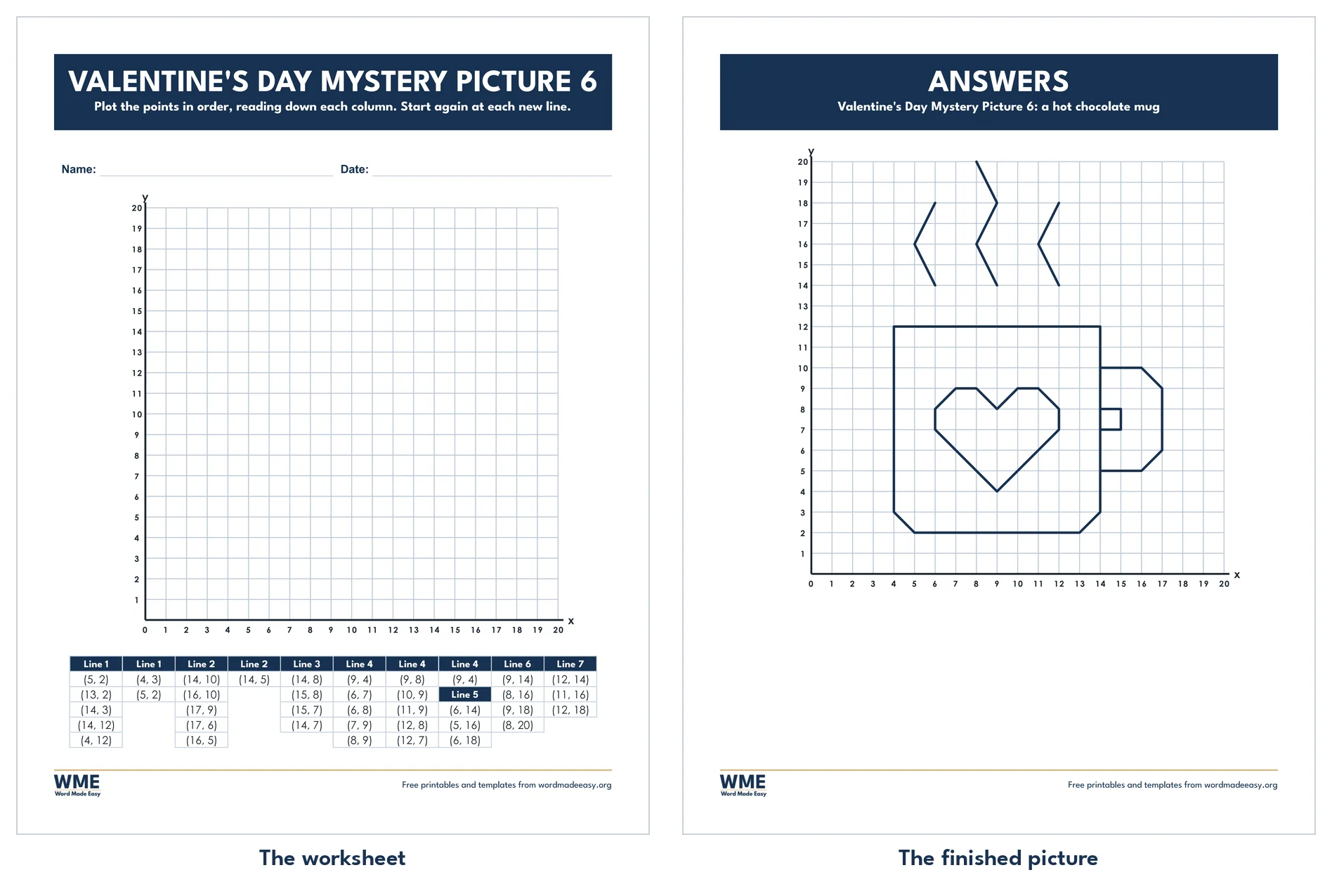
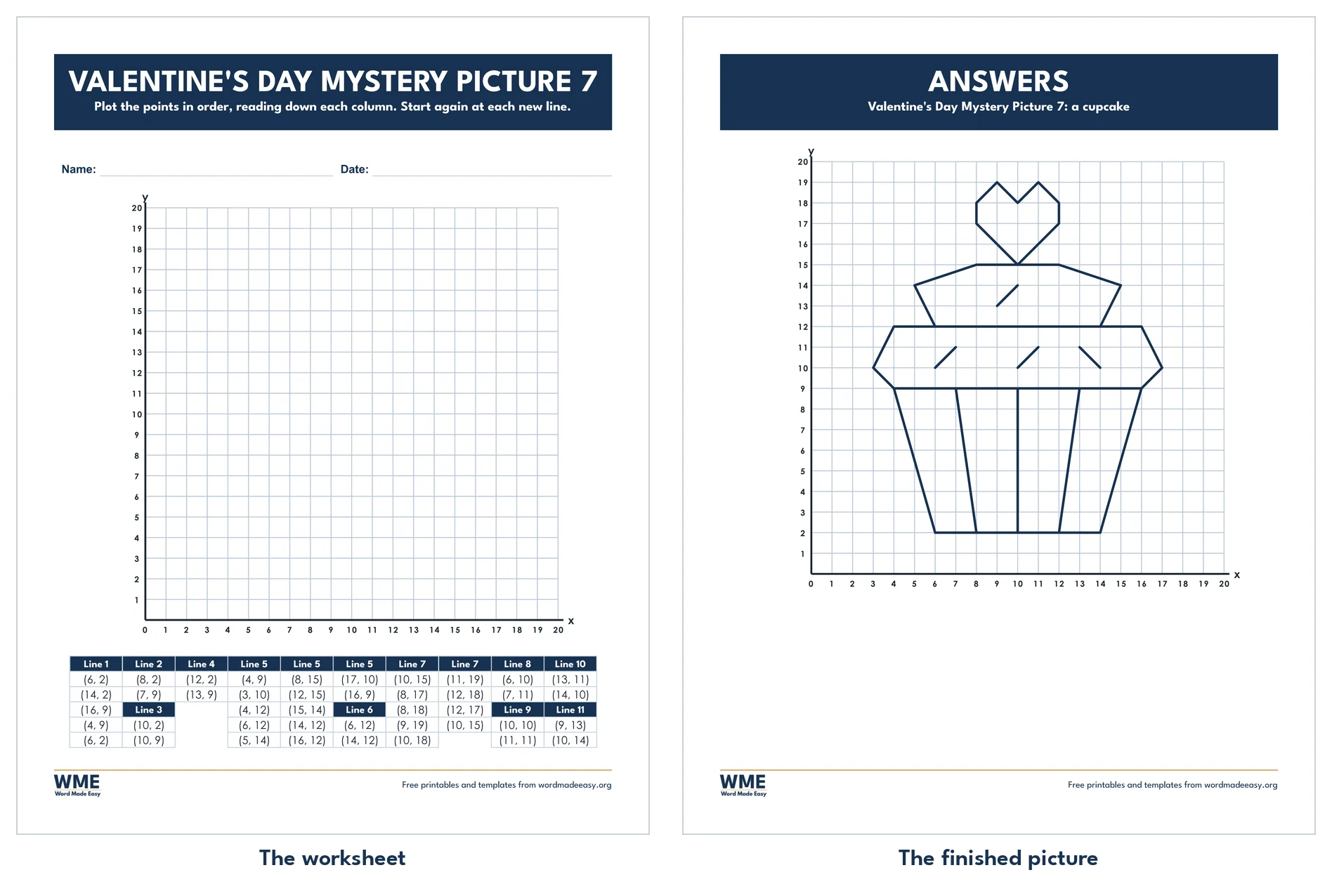
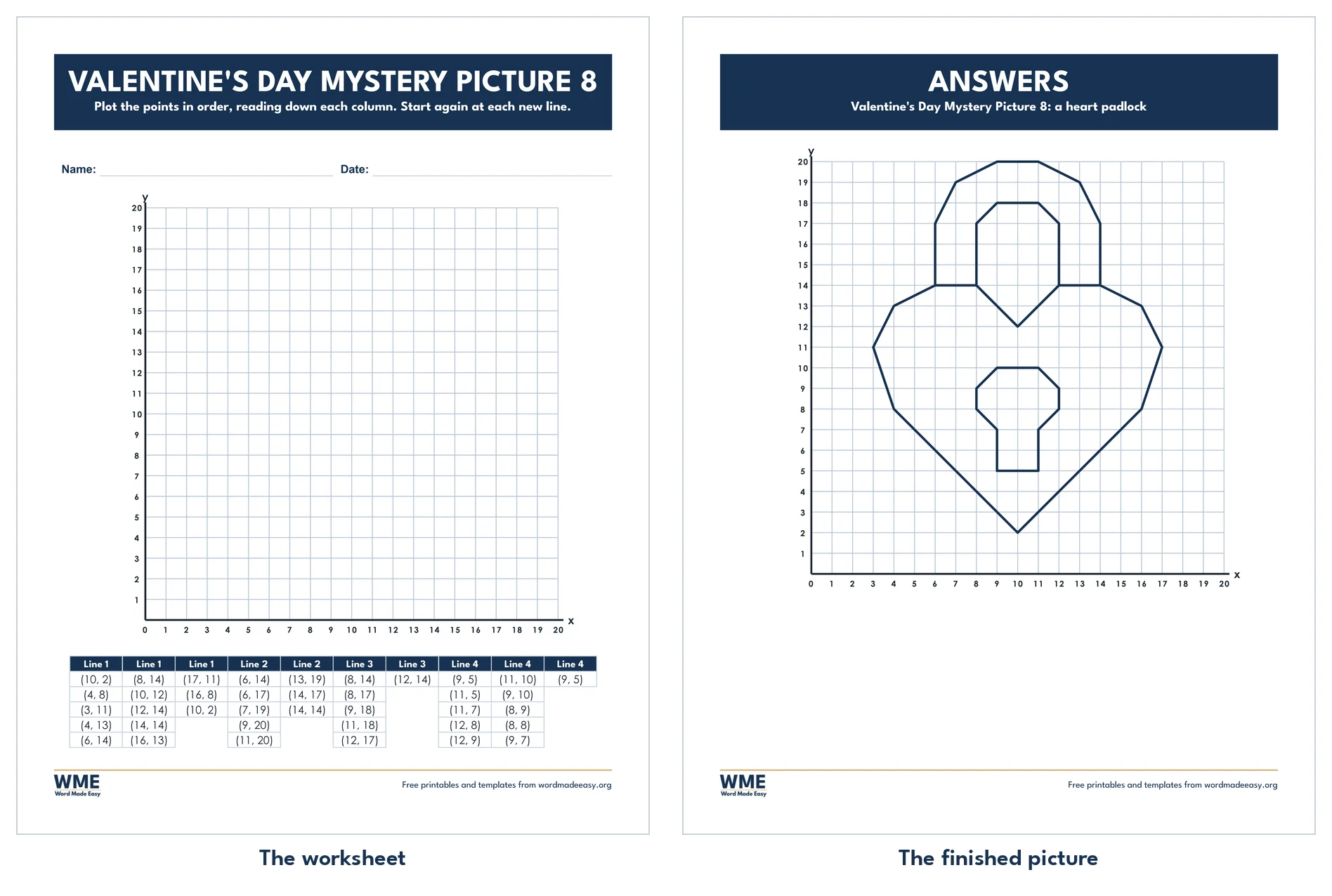
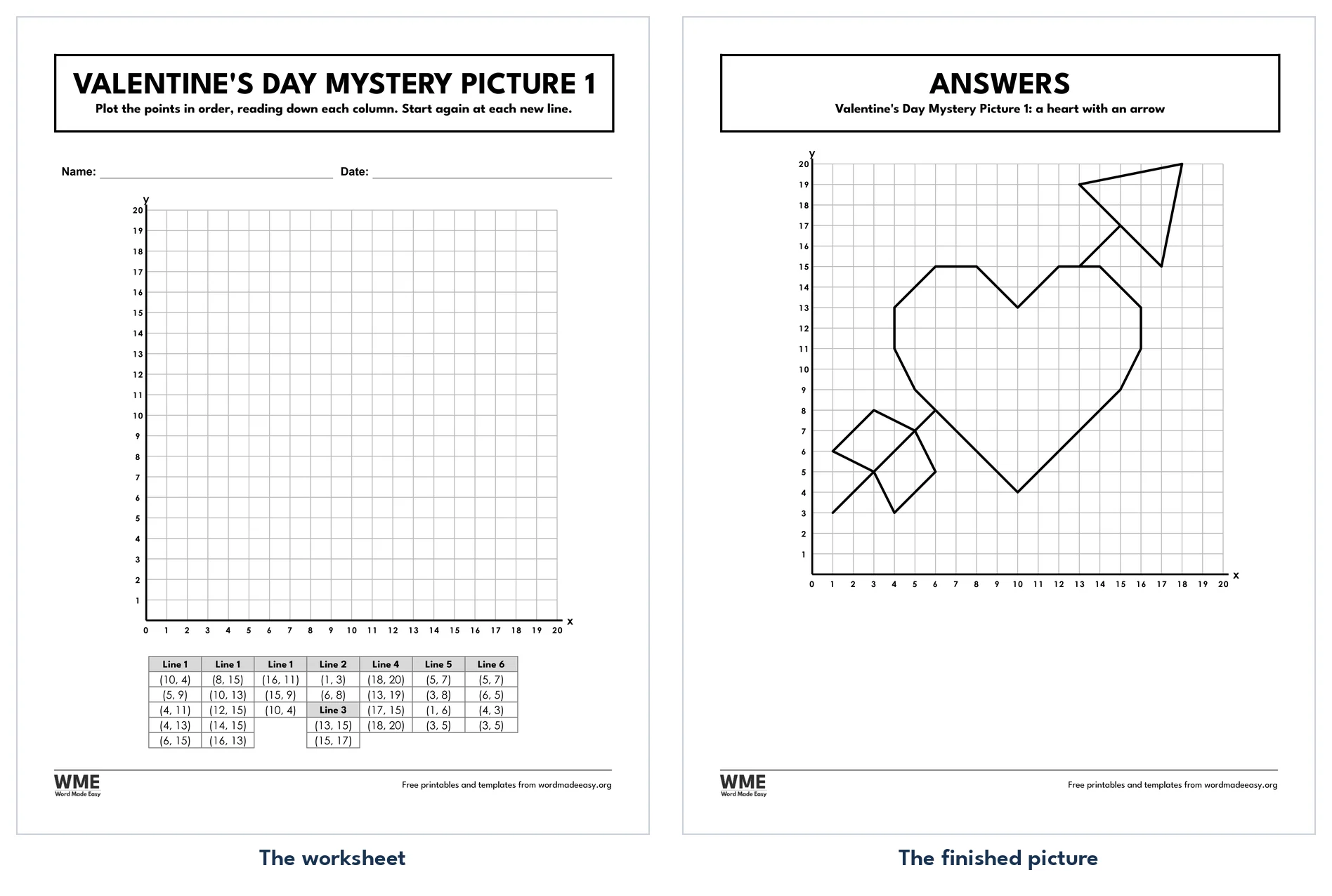
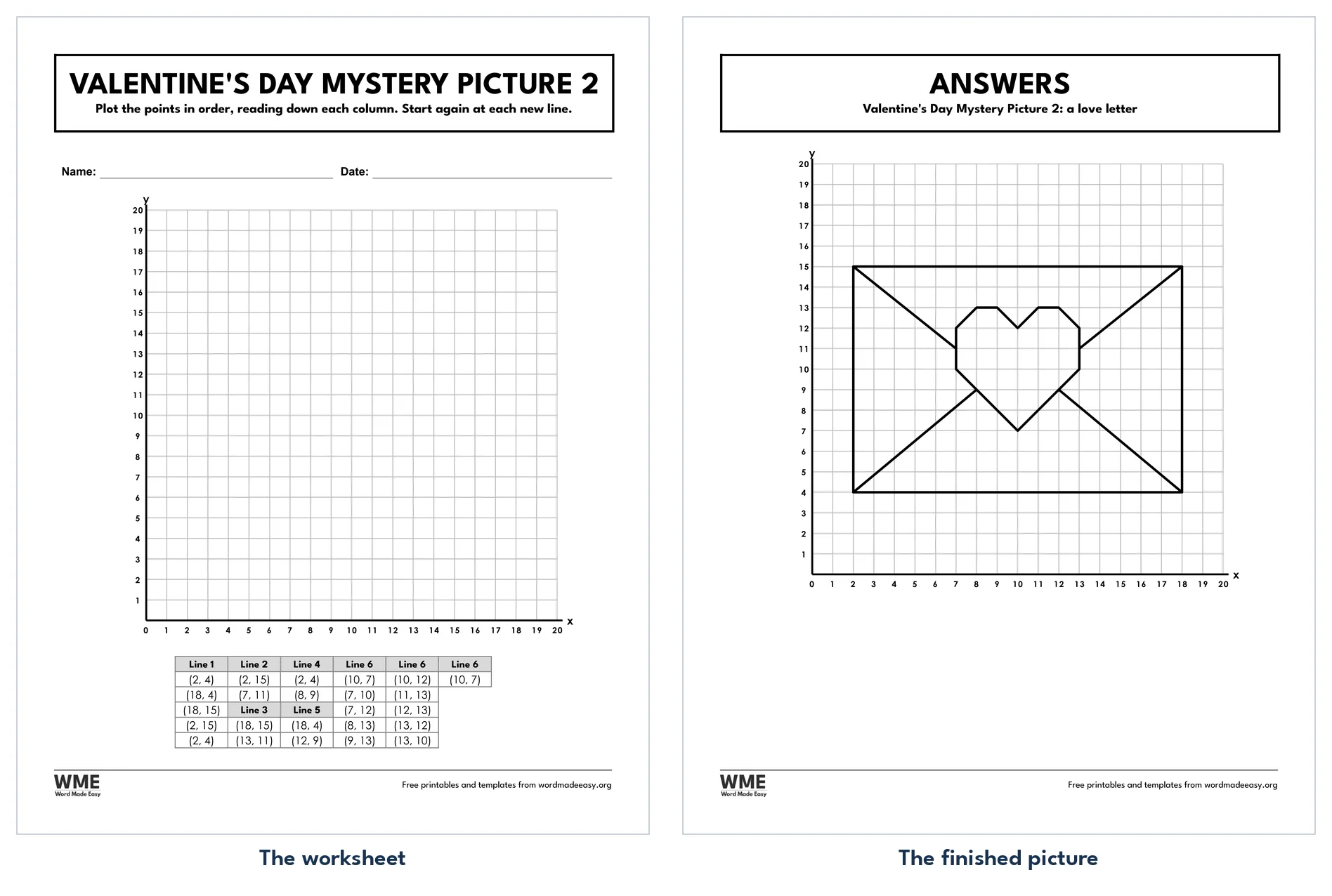
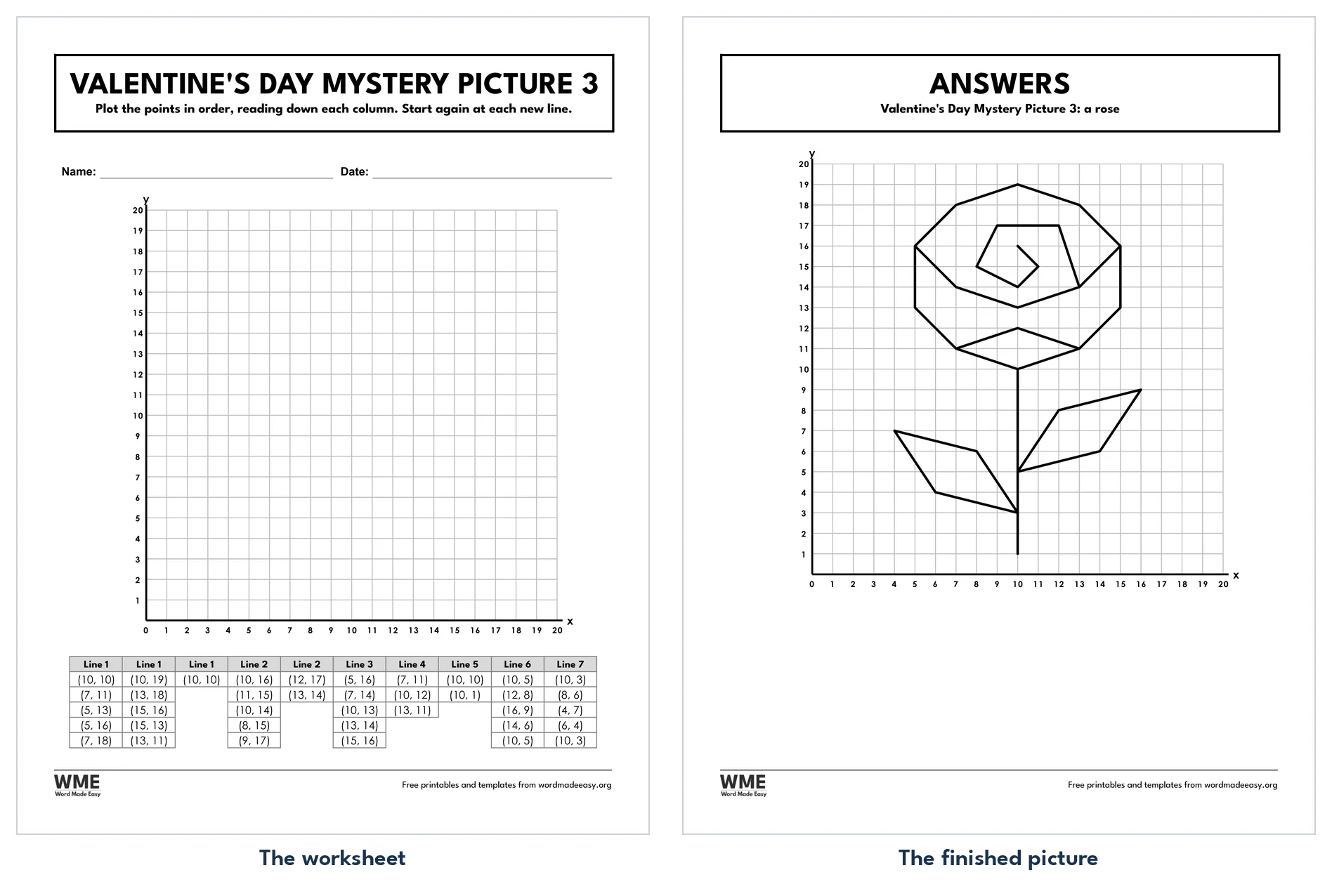
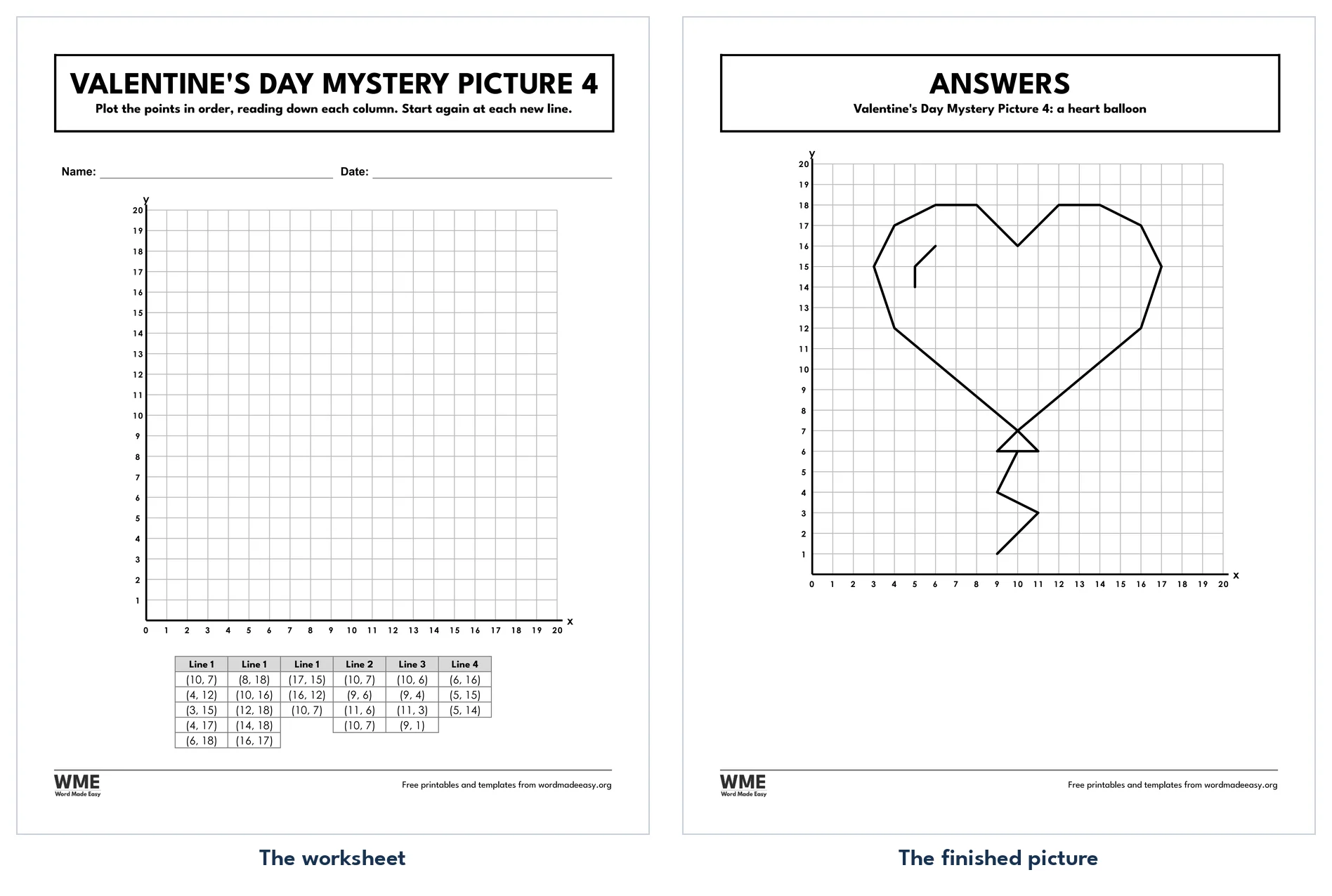
Can’t find the template you need? Request a template and I’ll make it in Word, free.
Get new free printables first: follow Word Made Easy on Pinterest
These free Valentine’s Day coordinate graphing mystery pictures give you 16 valentines coordinate graphing worksheets, each in its own Word document with an answer page, on US Letter and A4, in colour and in black and white. I’m Patrick Elliott, a teacher and Inclusion Lead. I drew every picture point by point on a 0 to 20 grid and built each worksheet myself in Microsoft Word, then checked that every line joins up exactly on the answer page.
In this guide, you’ll find how the mystery pictures work, how to teach plotting points with them, and how to use the answer pages as part of your Valentine’s Day math activities.
What’s in the Valentine’s Coordinate Graphing Mystery Pictures
| Paper | What you get | Best for |
|---|---|---|
| US Letter | 16 mystery pictures, each with an answer page (US wording: ordered pairs), in color and black and white | Ages 8 to 12 |
| A4 | The same 16 mystery pictures and answer pages (UK wording: coordinates), in colour and black and white | Ages 8 to 12 |
👉 The coordinates are typed into a Word table, so you can print the pictures as they are or change a point in seconds.
What Is a Valentine Mystery Picture?
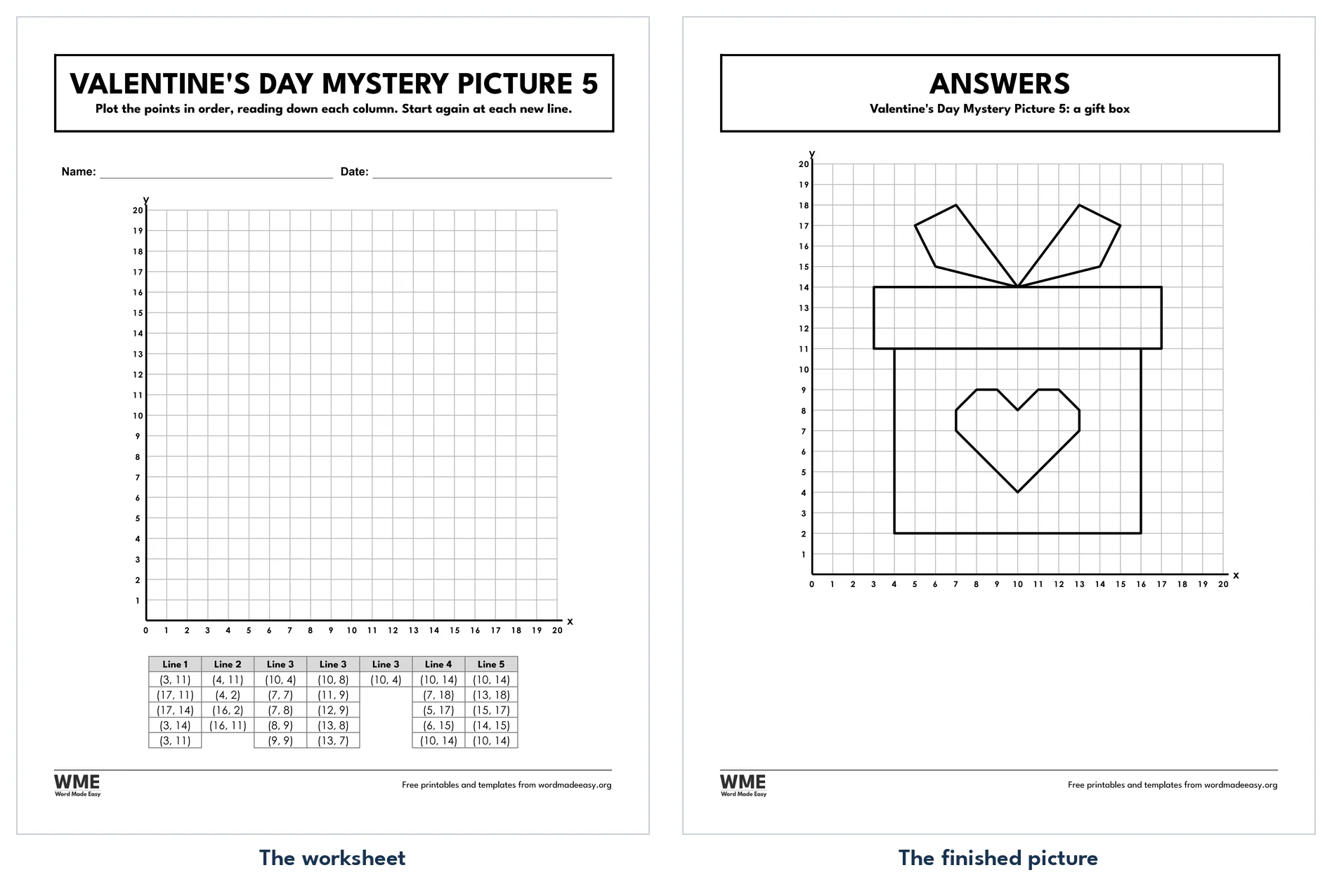
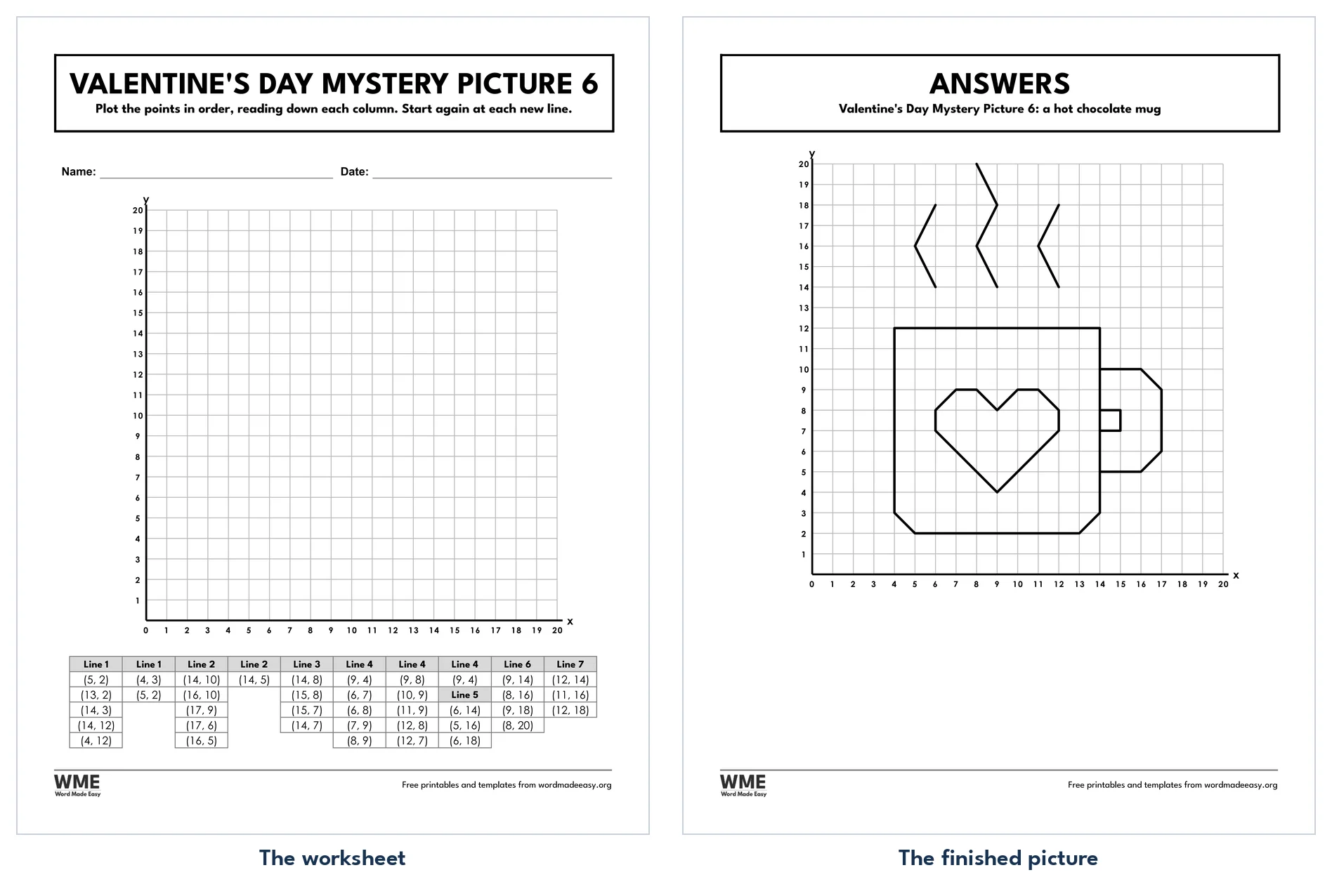
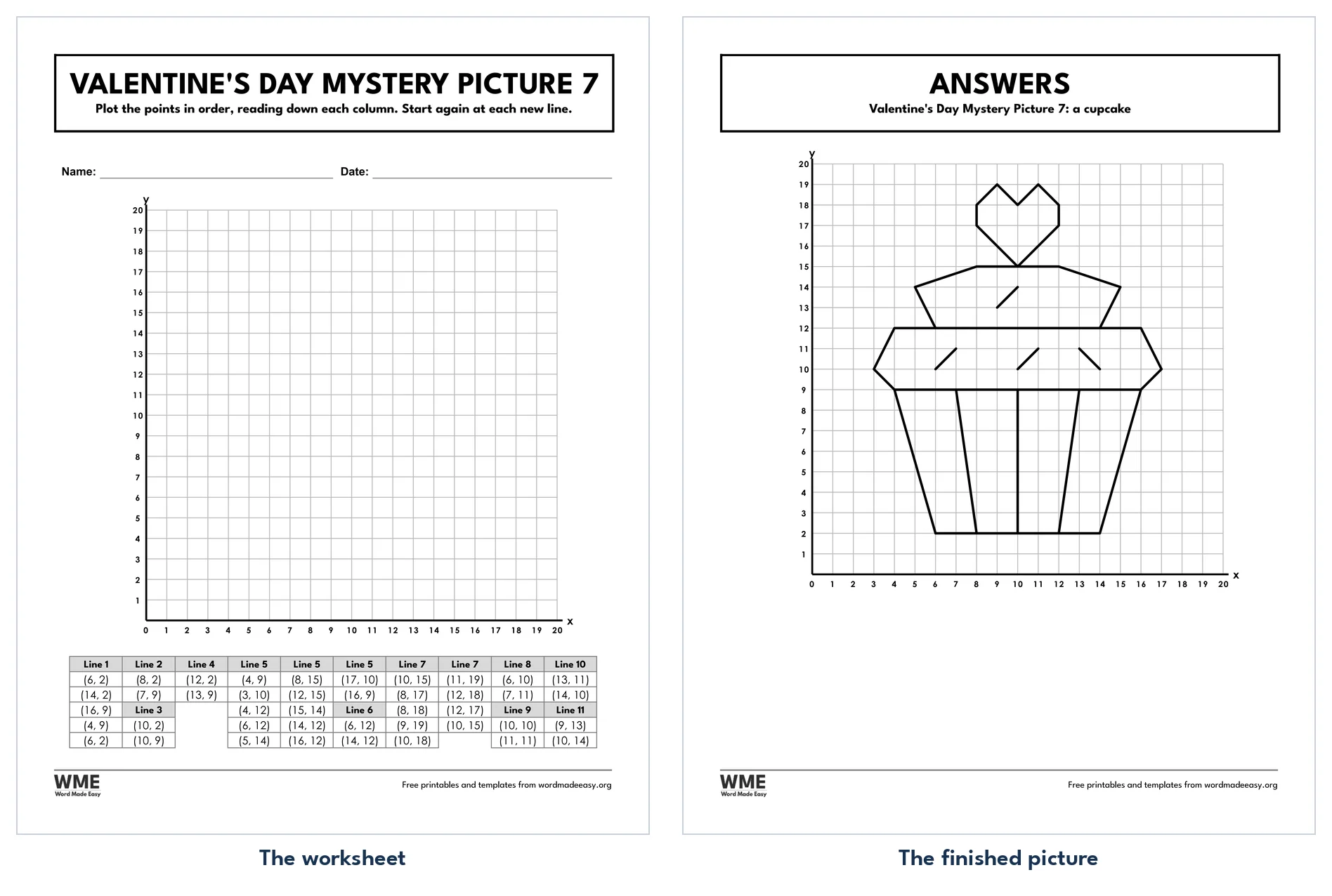
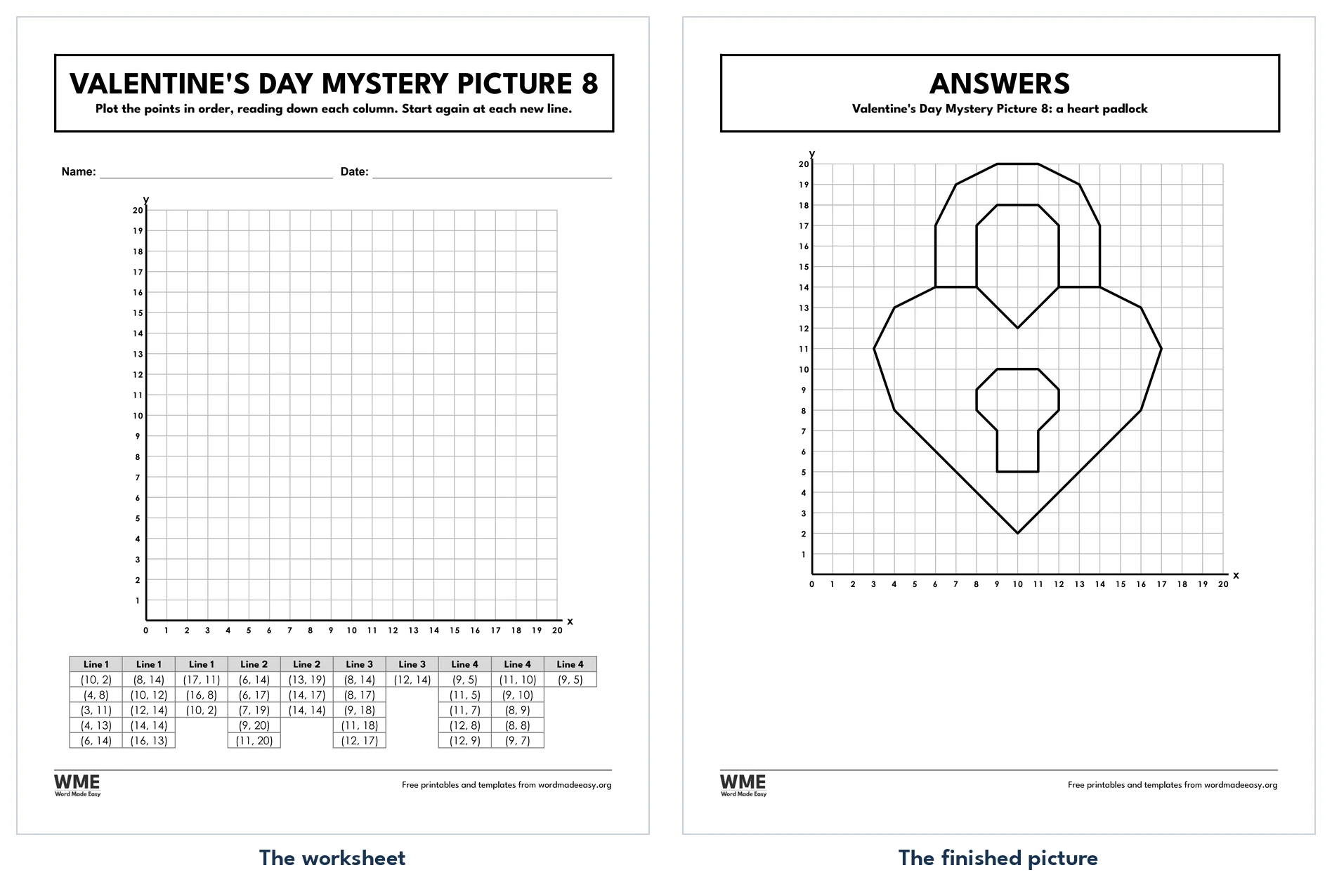
A valentine mystery picture is a list of points to plot on a coordinate grid. Children plot each point, join the points in order, and a Valentine’s Day picture appears: a heart, a rose or a love bug. Because the picture only appears if every point is right, it is a fun way to practise reading coordinates carefully, and one of the most popular Valentine’s math worksheets for grades 3 to 6.
What Is in the Pack?
- 16 mystery pictures: a heart with an arrow, love letter, rose, heart balloon, gift box, hot chocolate mug, cupcake, heart padlock, love bug, mailbox, heart chocolate box, ring, an “I Heart U” message, bouquet of flowers, valentine card and heart eyes face.
- A 0 to 20 grid: whole numbers in the first quadrant, so children only need positive coordinates.
- Points listed line by line: each new line starts fresh, so children never join the wrong points.
- An answer page for every picture: the finished picture on the grid, for marking or self-checking.
- US and UK wording: the US Letter files say ordered pairs, and the A4 files say coordinates.
- Black and white versions: every mystery picture also comes in a printer-friendly black and white version, to save ink.
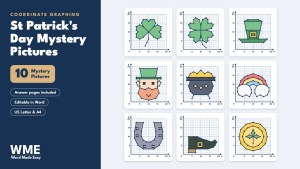
- More seasonal packs: the same style of mystery pictures for St Patrick’s Day, Easter, Spring, Halloween, Thanksgiving and Christmas.
How to Use the Mystery Pictures
- Teach the rule first: along the x-axis, then up the y-axis.
- Give each child one picture, a sharp pencil and a ruler.
- Plot every point in a line, then join them in order before starting the next line.
- Check with the answer page, then let children colour in their picture for a Valentine’s Day display.
Start with the shorter pictures, such as the love letter, the valentine card and the heart balloon, and save the bouquet of flowers and the love bug for confident plotters. Mark each point with a small dot before joining, so mistakes are easy to spot. If a picture looks wrong, the most common slip is swapping x and y. UK teachers say along the corridor, then up the stairs. For other times of year, try the Halloween mystery pictures and the Thanksgiving mystery pictures.
How to Print the Mystery Pictures
Print at 100% (Actual size) so the grid squares stay square. Page 1 is the worksheet and page 2 is the answer page: print page 1 only for the class and keep page 2 for marking. The black and white versions print the grid and the answer lines in black and grey, to save ink.
FAQs
Are these Valentine’s mystery pictures free?
Yes. Choose US Letter or A4, colour or black and white, and download all 16 mystery pictures in one ZIP file at no cost.
Who made these mystery pictures?
Patrick Elliott, a teacher and Inclusion Lead, drew every picture point by point and built each worksheet by hand in Microsoft Word.
Is there an answer page?
Yes. Every mystery picture has a second page that shows the finished picture on the grid, for marking or self-checking.
How do children plot the points?
Start at 0, go along the x-axis to the first number, then up to the second number, and mark the point. Join the points in order with a ruler, and start each new line fresh.
What grid do the pictures use?
Every picture uses a 0 to 20 first-quadrant grid with whole numbers only, so children only need positive coordinates.
What age are these Valentine’s math worksheets for?
They suit ages 8 to 12 (grades 3 to 6). The shorter pictures work well for children who are new to plotting points.
Is there a black and white version?
Yes. Every mystery picture comes in colour and in black and white, on US Letter and A4. Choose Black and white, or All, in the download box.
Can I remove the Word Made Easy footer?
Yes. Double-click the bottom of the page, click the logo and the web address, and press Delete.
Conclusion
These Valentine’s Day coordinate graphing mystery pictures make plotting points a puzzle children want to finish, human-made by a teacher and ready to print from Word.
Choose your paper size above, download the ZIP, and for 50 more pictures all year round, try the coordinate graphing mystery pictures.
Related Tutorials
- Free Coordinate Graphing Mystery Pictures for Word
- Free Christmas Coordinate Graphing Mystery Pictures for Word
- Free Coordinate Grid Worksheets for Word
Word Templates
Recently Added Word Templates
Browse the complete collection of free printable Word templates for home and school, all made by a teacher.
New to Word? Our Word tutorials show you how to edit and print your templates.
Leave a comment
Have a question about these templates, or an idea for a new one? Ask below.