
CVC Word and Picture Matching Worksheet 31: Short u
Free printable CVC phonics worksheet
This CVC word picture matching worksheet 31 helps children read tub, bug, dug and hug and connect each printed word to its shuffled picture. The exact practice set is tub, bug, dug and hug.
Worksheet preview
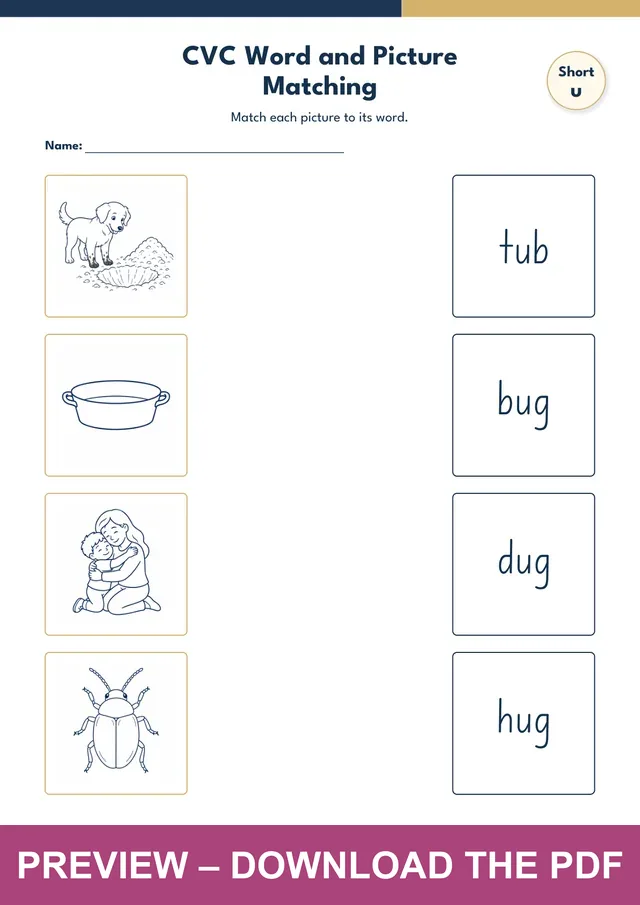
Preview of the short u word and picture matching worksheet (Worksheet 31). Download the PDF for the clean printable page.
Revisit b and d with Alphabet Chart with Picture Prompts (A-Z). For a next step involving full letter order, choose CVC Picture Word Unscrambling Puzzle.
The digging picture uses dug, the printed past-tense form, rather than dig. Hug describes the embrace. Bug names the insect, and tub identifies the shallow container. Establish those exact labels before children read the choices independently.
The short u word and picture matching worksheet page contrasts final b and g as well as the beginnings. Bug starts with the letter that ends tub, giving a useful opportunity to notice letter position.
What is included?
- Four printed word choices: tub, bug, dug, hug.
- Four pictures down the left side, ordered dug, tub, hug, bug.
- A matching activity on page 1 and a separate answer key with the correct connections on page 2.
- The four-page PDF also contains a thank-you page and terms of use.
Teaching this worksheet
Read tub together and locate its container picture second on the left. Blend t-u-b, then compare bug by listening to both the beginning and ending.
For short u word and picture matching worksheet, describe the digging scene with a sentence using dug. Read d-u-g from the choices, then contrast hug and identify the embracing figures.
Use the answer key after all four connections are attempted. Ask pupils to say the matched label while tracing each line. If dug is read as dig, point back to the printed u before changing the connection.
Picture-word activities
- Build bug and dug with tiles and compare their first b and d.
- Read tub beside bug and locate b at different ends.
- Say dug and hug in short spoken sentences to reinforce their different meanings.
Teaching notes and quick assessment
On this CVC word picture matching worksheet 31, notice whether the pupil reads the whole word or matches from the shared ending and picture position. Ask for the difference between tub and bug before accepting either line.
A secure reader blends all four labels, identifies the distinguishing grapheme and checks the connection for hug by rereading it. This follows the decoding emphasis in the Department for Education reading framework. Keep the answer page hidden until all four choices are explained.
Support and next steps
Introduce dug orally if the learner says digging. For hug, name the action rather than the people. A child uncertain about b and d can compare those shapes before reading bug and dug again.
After short u word and picture matching worksheet, dictate tub and hug on spare paper. Ask for each whole spoken word before writing, since the two share only their middle vowel.
Use short u word and picture matching worksheet after short u and its consonants have been taught, with oral support for the form dug. The broader principles for matching supplementary reading to instruction are in the Department for Education reading framework.
Worksheet 31 answers
The answer page shows the correct connections. Reading the activity pictures from top to bottom:
- dug matches word 3 in the right-hand column.
- tub matches word 1 in the right-hand column.
- hug matches word 4 in the right-hand column.
- bug matches word 2 in the right-hand column.
Resource licence
Free for personal, homeschool or single-classroom use under the terms included in the PDF. Resale, redistribution and uploading the file to another website are not permitted.
Questions about this worksheet
Which words are used in worksheet #31?
The resource uses tub, bug, dug and hug.
What do pupils do on WME-286?
They read four labels and connect each one to its picture.
Is an answer page included with worksheet #31?
Yes. The second resource page contains the completed answers.
How can I introduce tub and bug?
Say the picture names, blend the printed words and ask the pupil to point to each grapheme before responding.
What should I assess with WME-286?
Check sound order, attention to the medial vowel and an independent blend-back of hug.
Leave a Reply