
Money Worksheets: 10 Free Counting Coins and Change Sheets in 6 Currencies
Choose your currency, preview every worksheet, then download your money worksheets in one small ZIP file.
UK, US, Australia, Canada, Philippines and India10 worksheets, 6 currenciesFree
Can’t find the template you need? Request a template and I’ll make it in Word, free.
Get new free printables first: follow Word Made Easy on Pinterest
These free money worksheets come in the money your class actually uses. Pick UK pounds and pence, US dollars and cents, Australian dollars, Canadian dollars, Philippine pesos and sentimo, or Indian rupees, and every sheet uses that country’s coins and notes. The ten designs climb from counting small coins to adding prices, making an amount, finding the fewest coins, comparing purses and giving change, then a shopping list and word problems. Every total, change amount and fewest-coins answer is worked out and checked.
Below you’ll find what each sheet practises, how the currencies differ, and the counting slips to look out for.
What’s in the Money Worksheets
| Worksheet | What is on it |
|---|---|
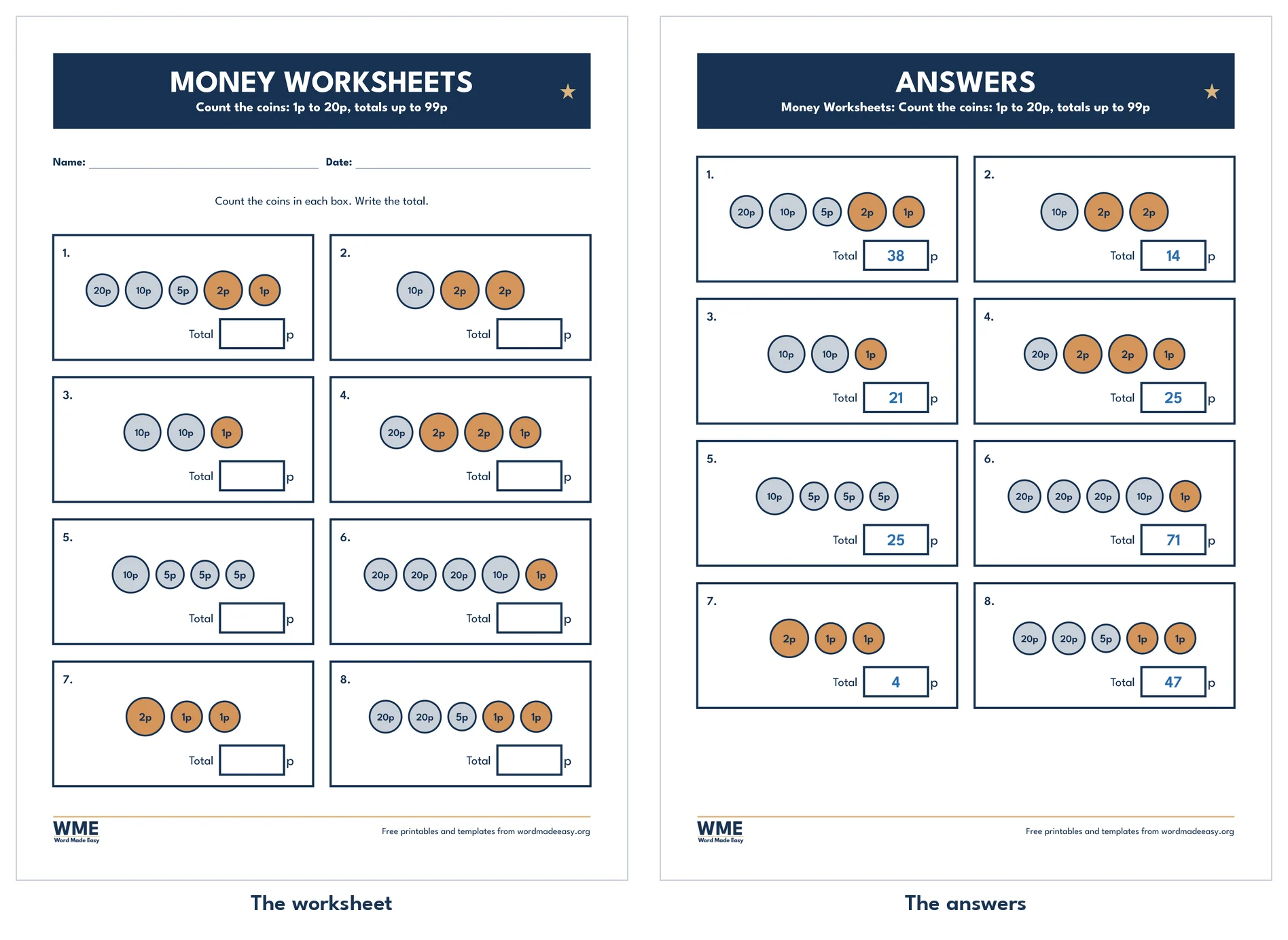
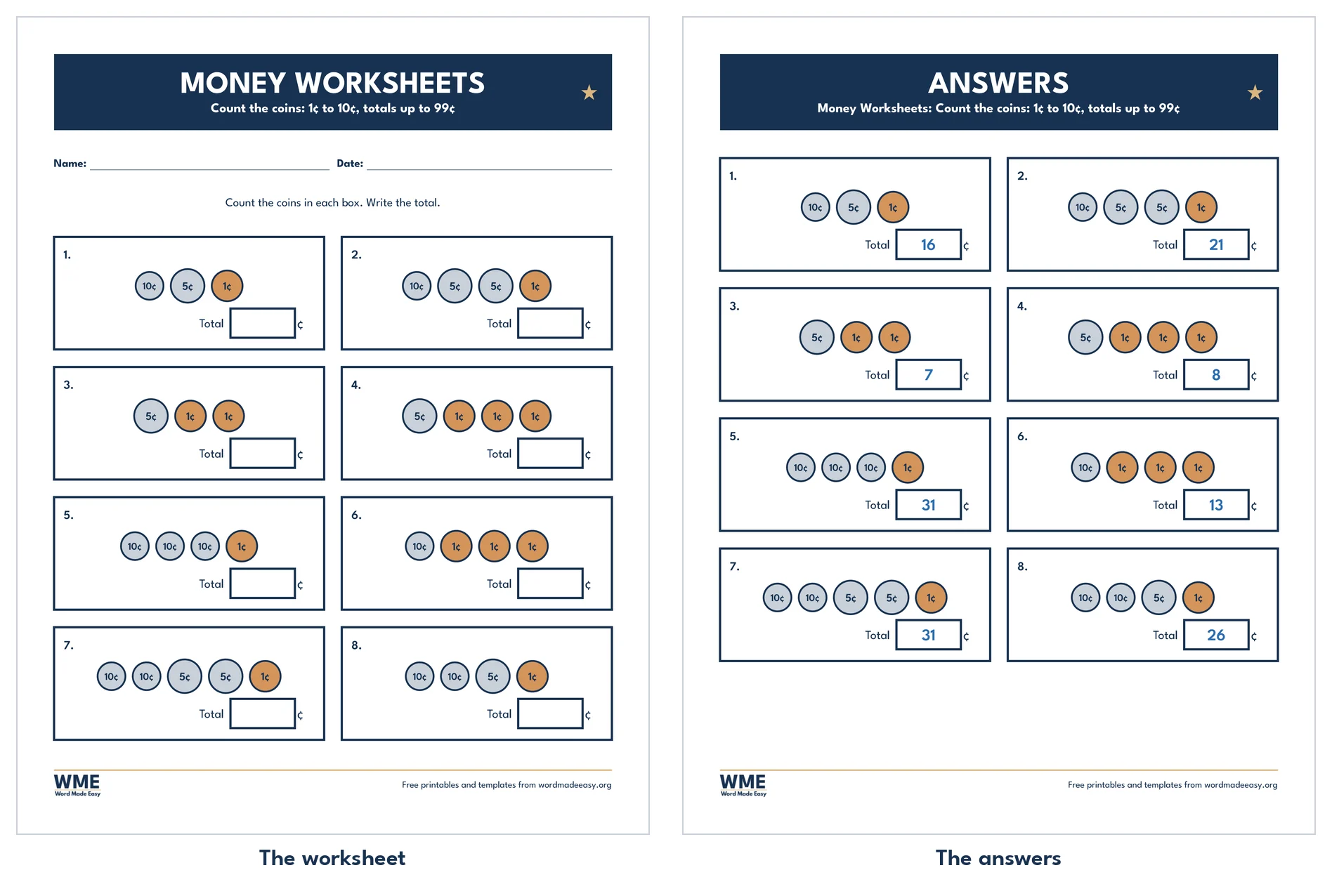
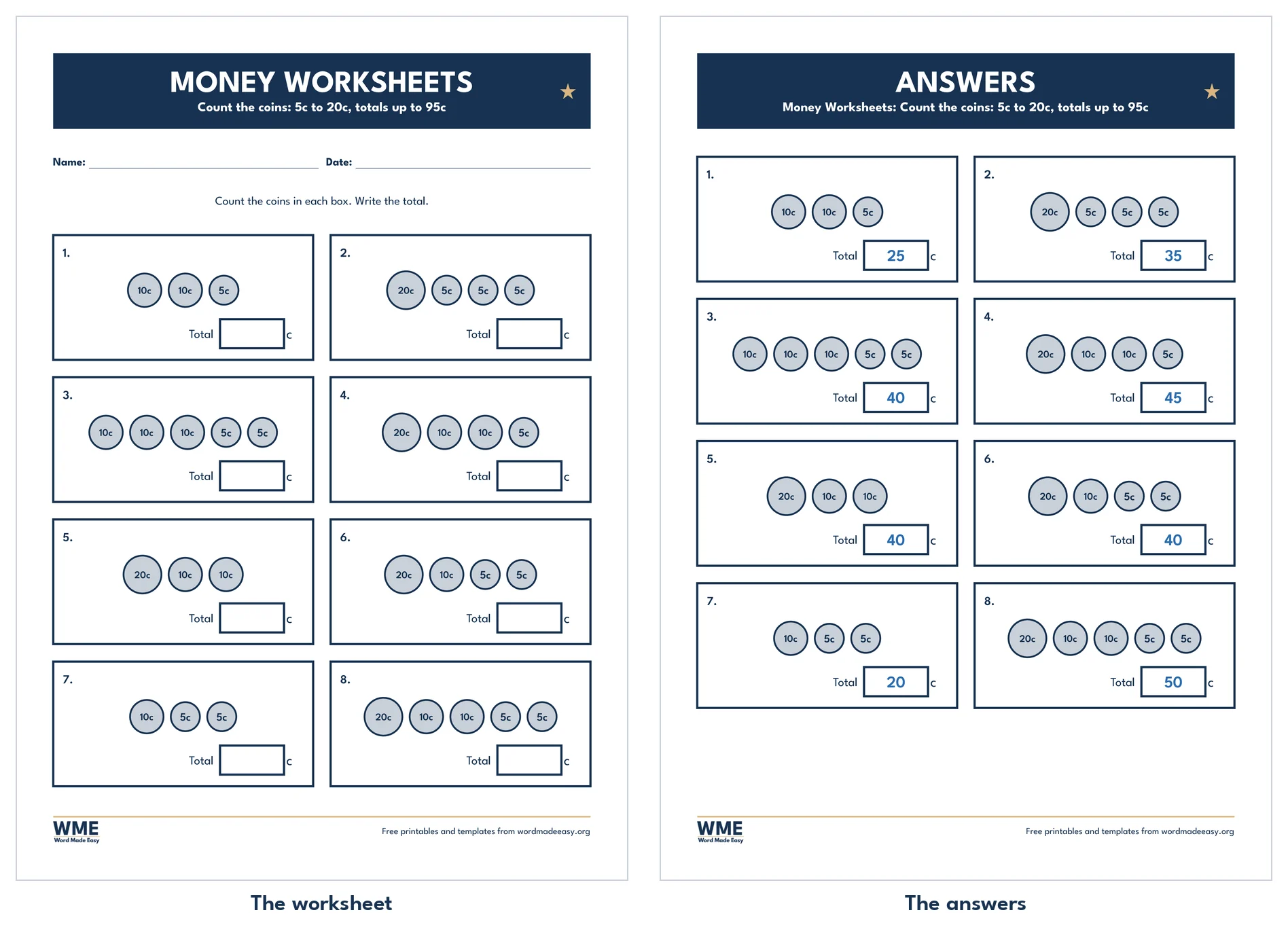
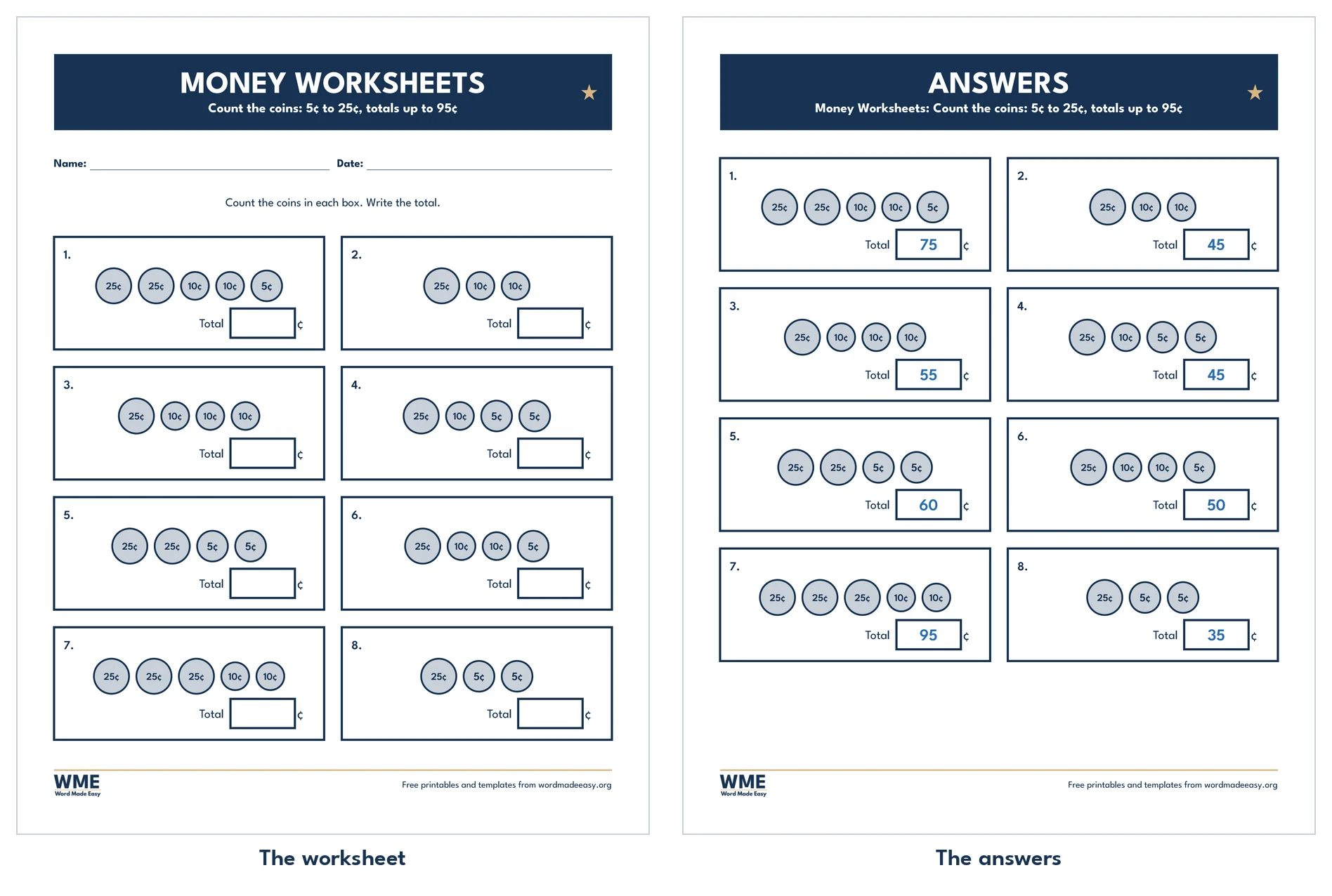
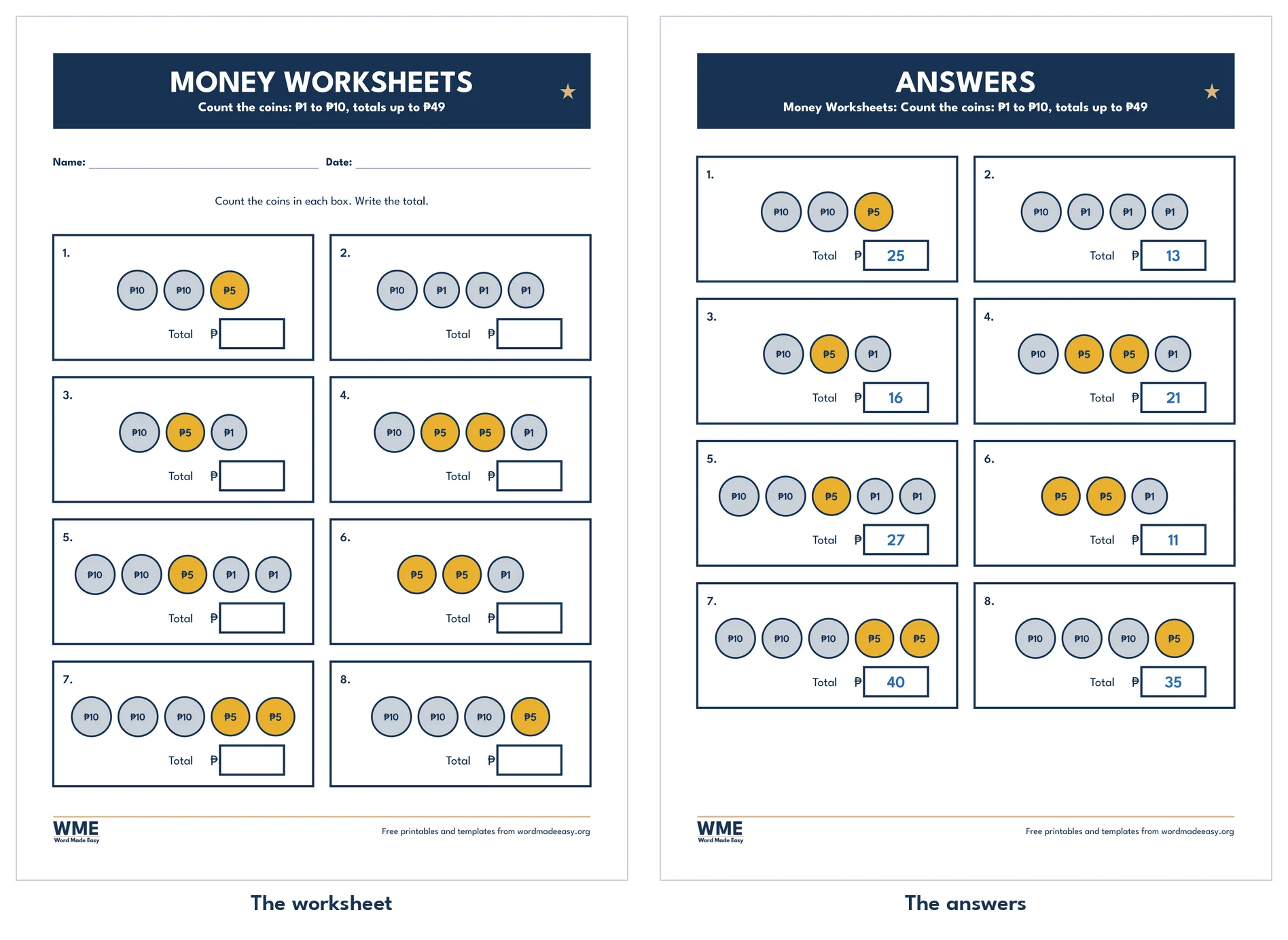
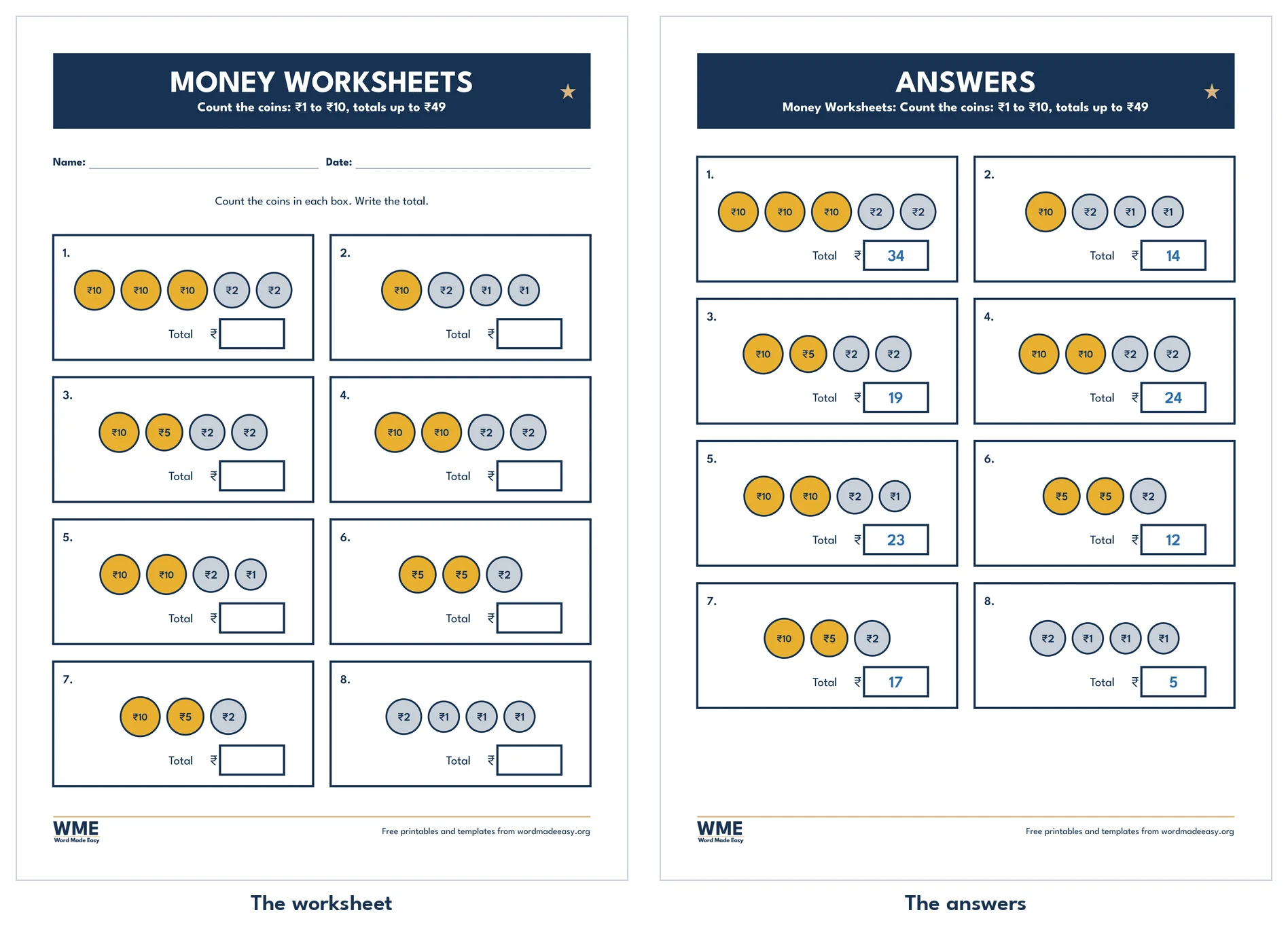
| Count the Coins 1 | 1 star: Count the coins: 1p to 20p, totals up to 99p, with answers |
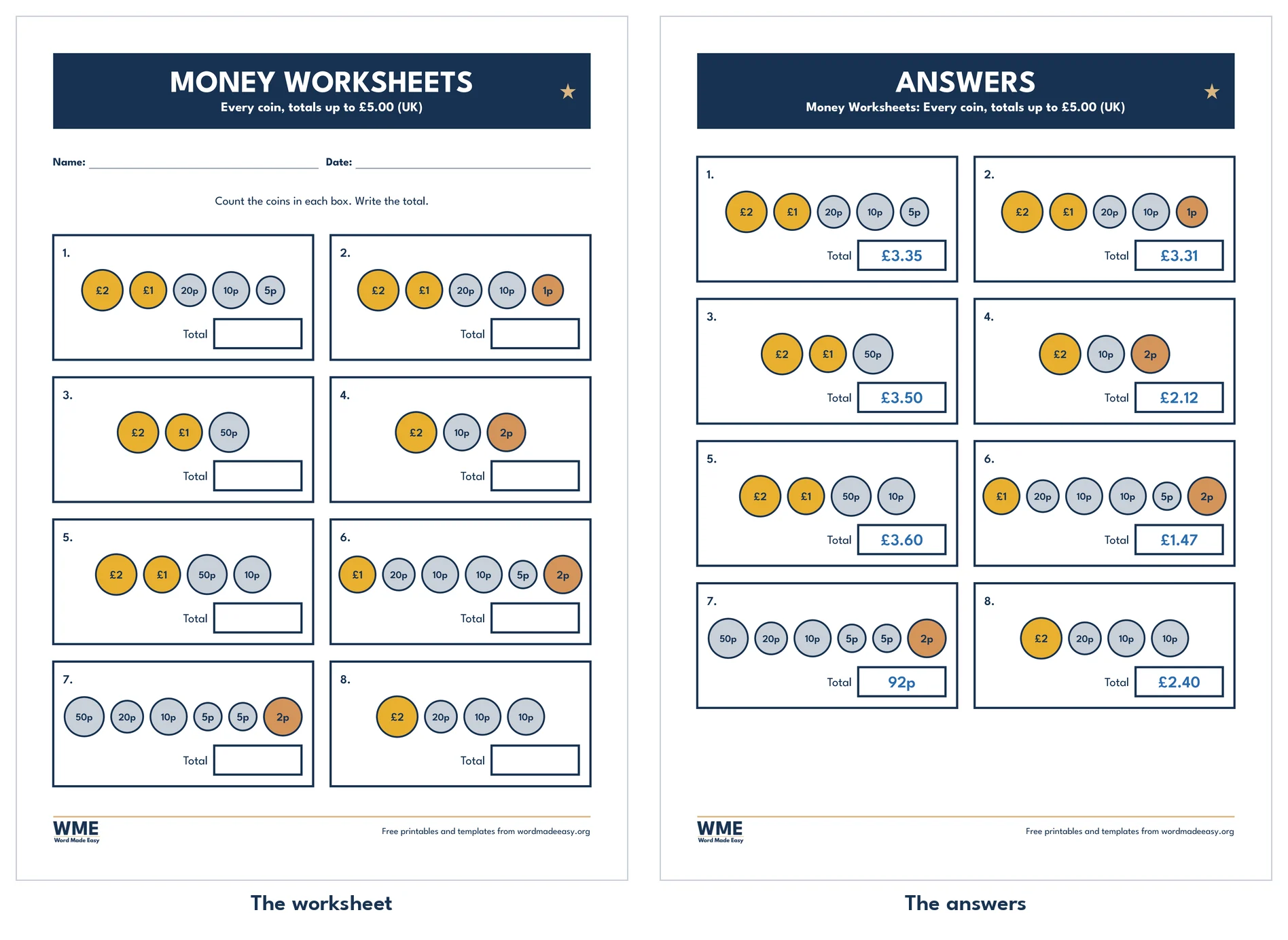
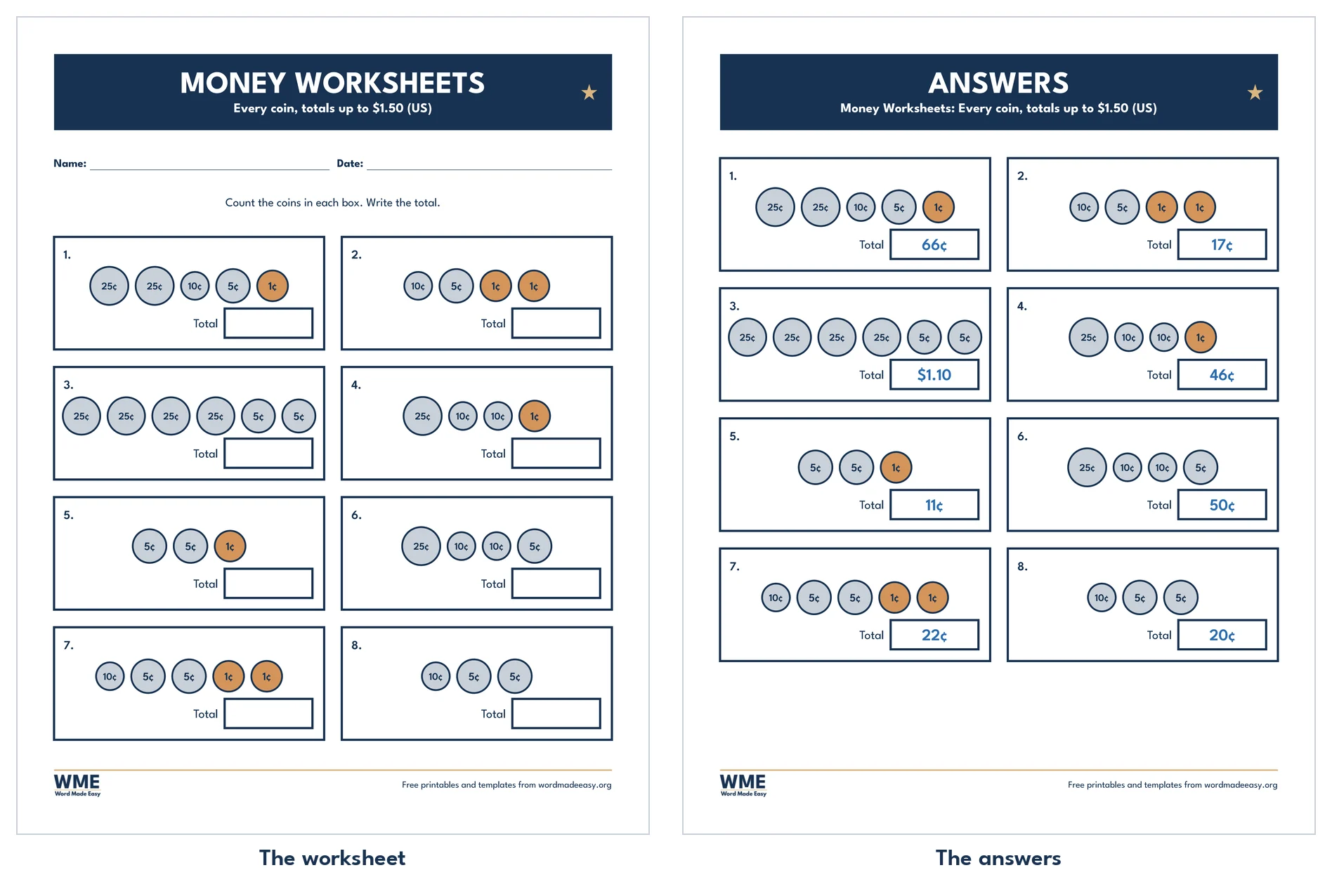
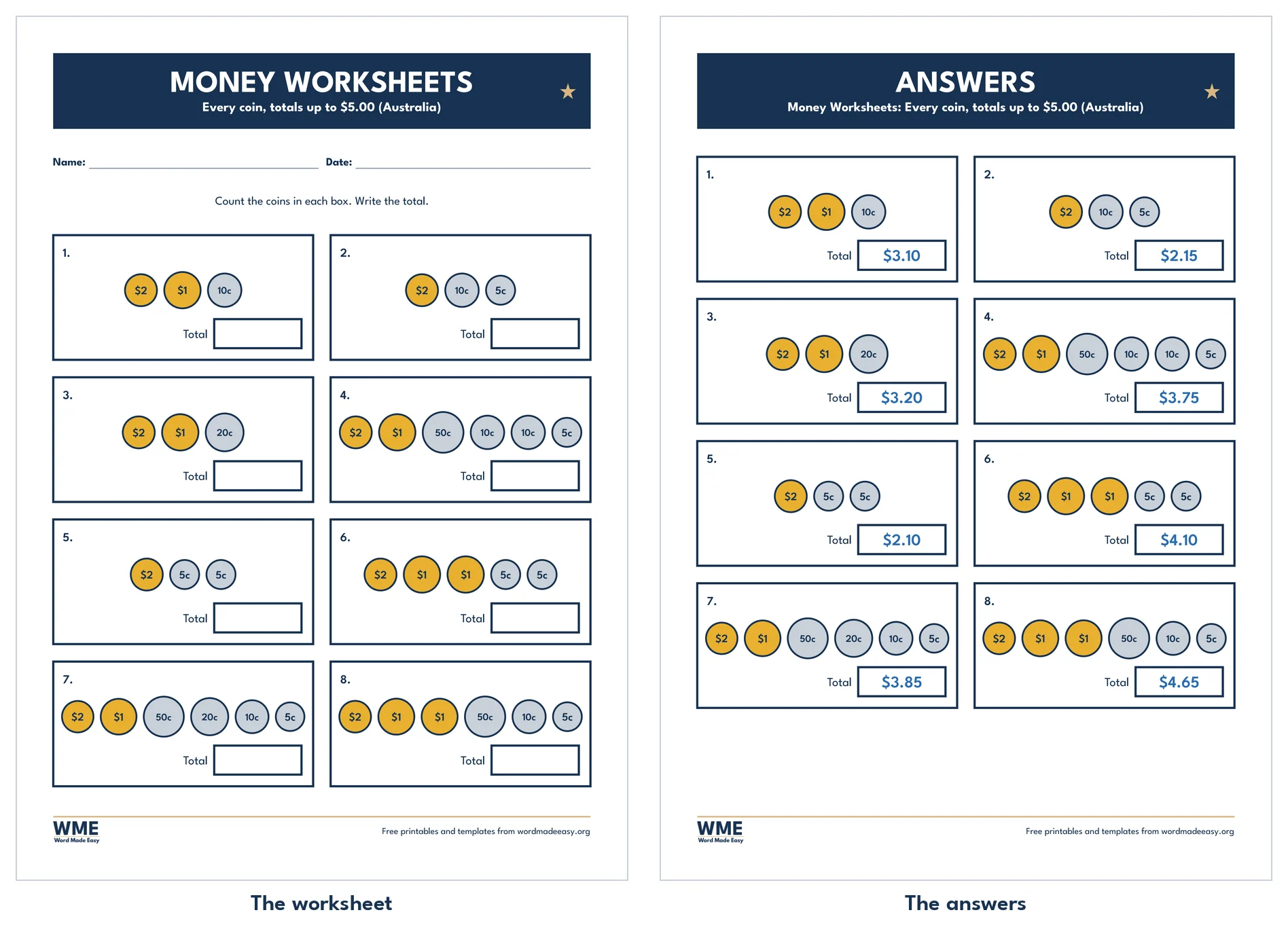
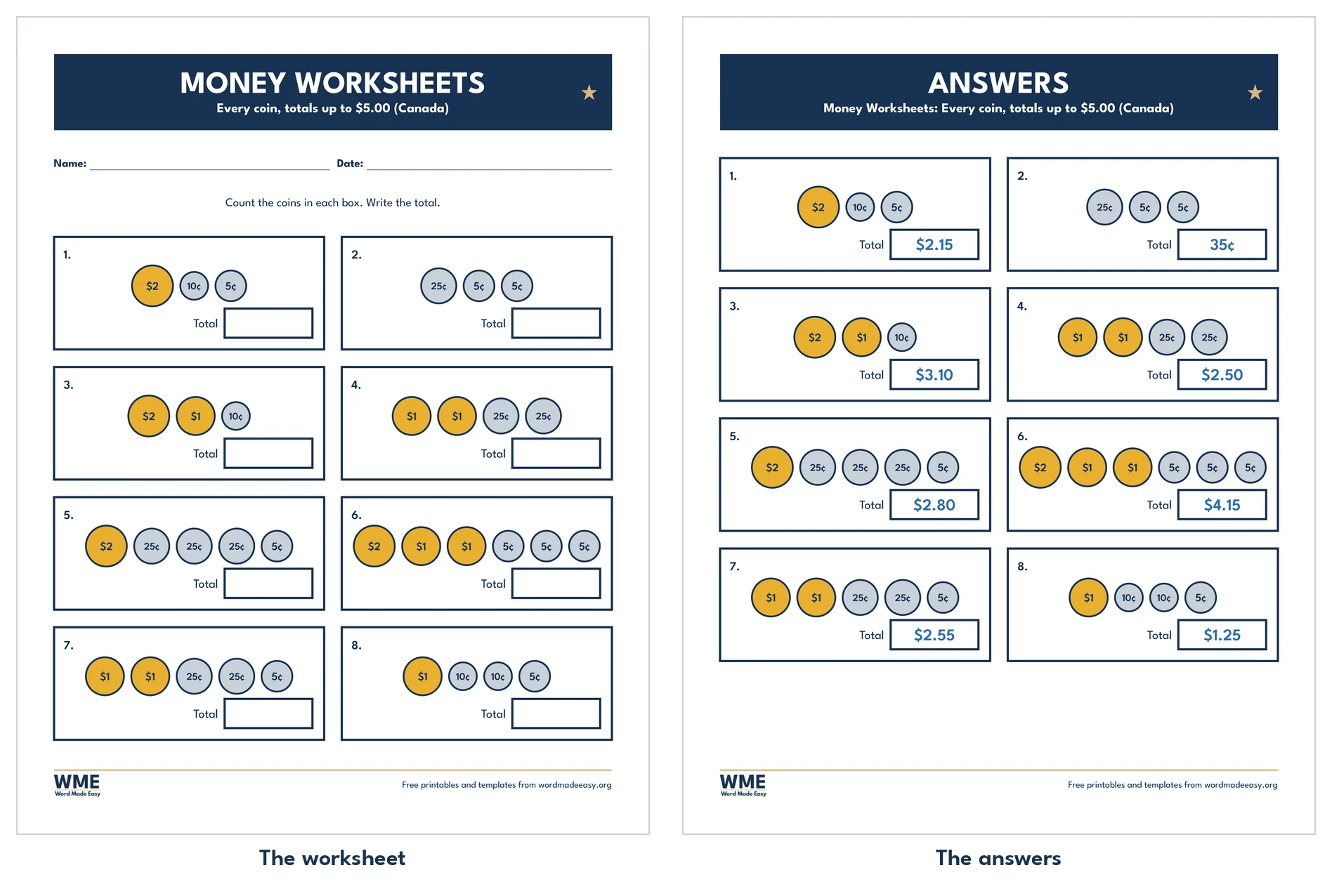
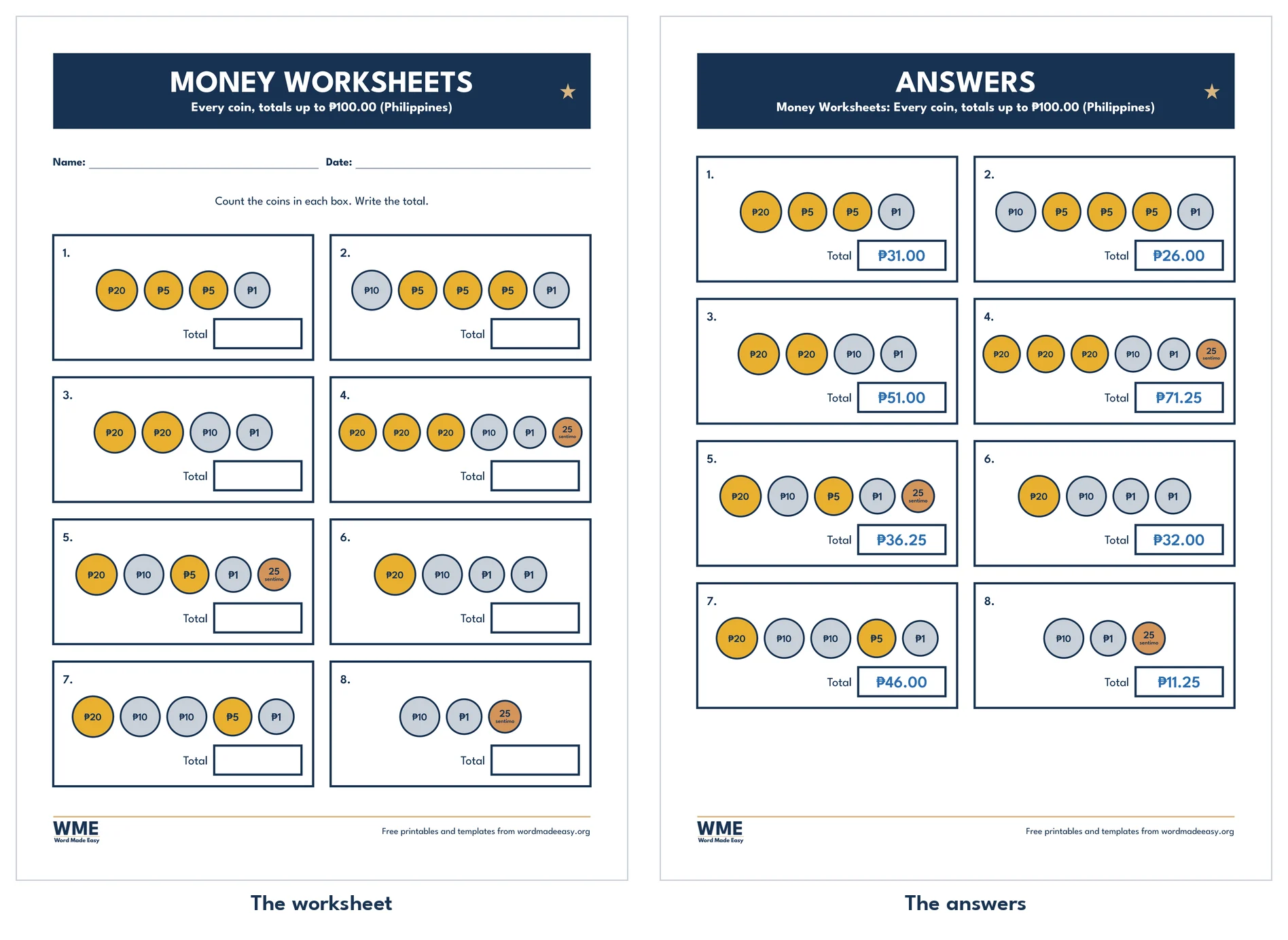
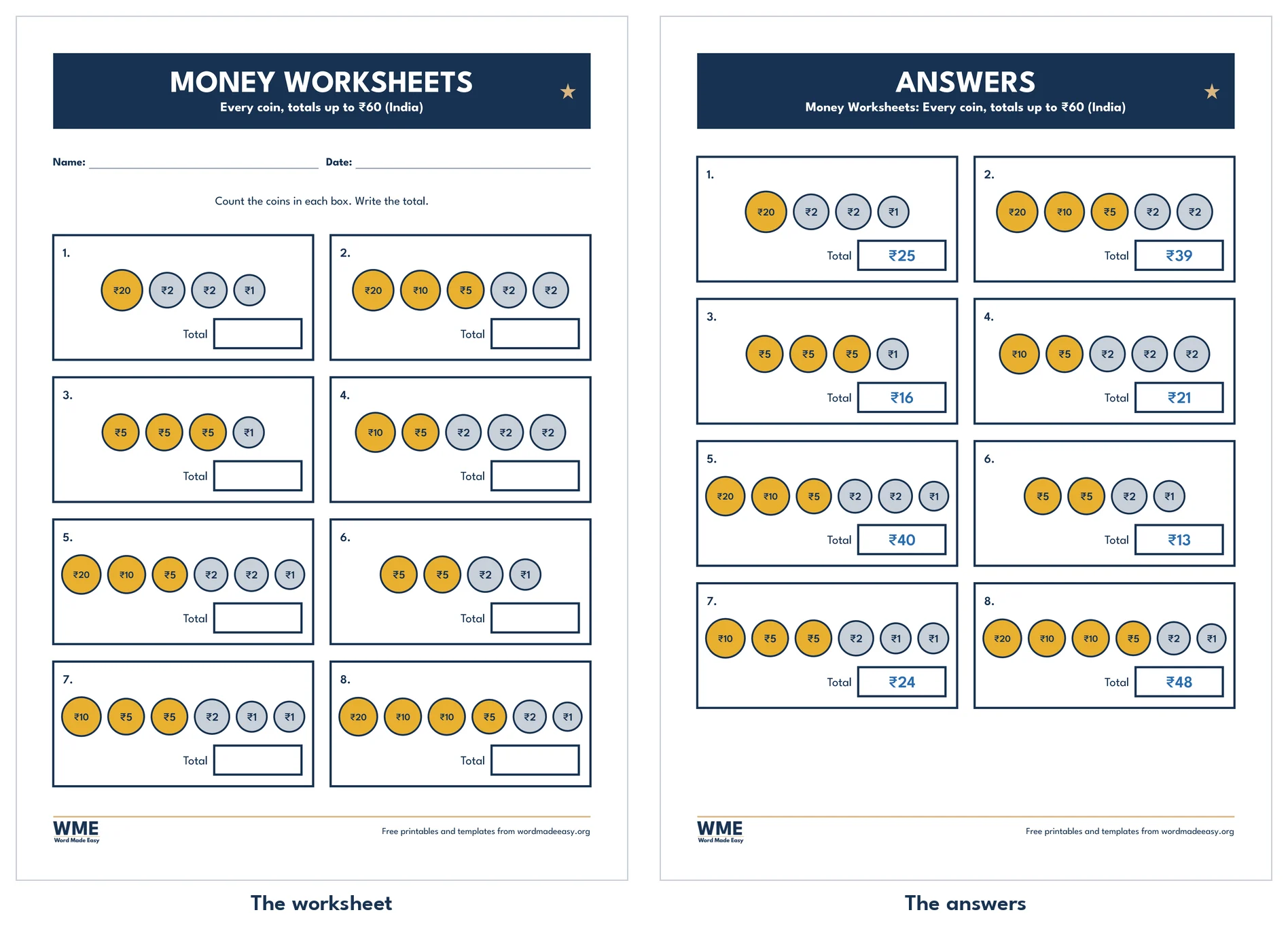
| Count the Coins 2 | 1 star: Every coin, totals up to £5.00, with answers |
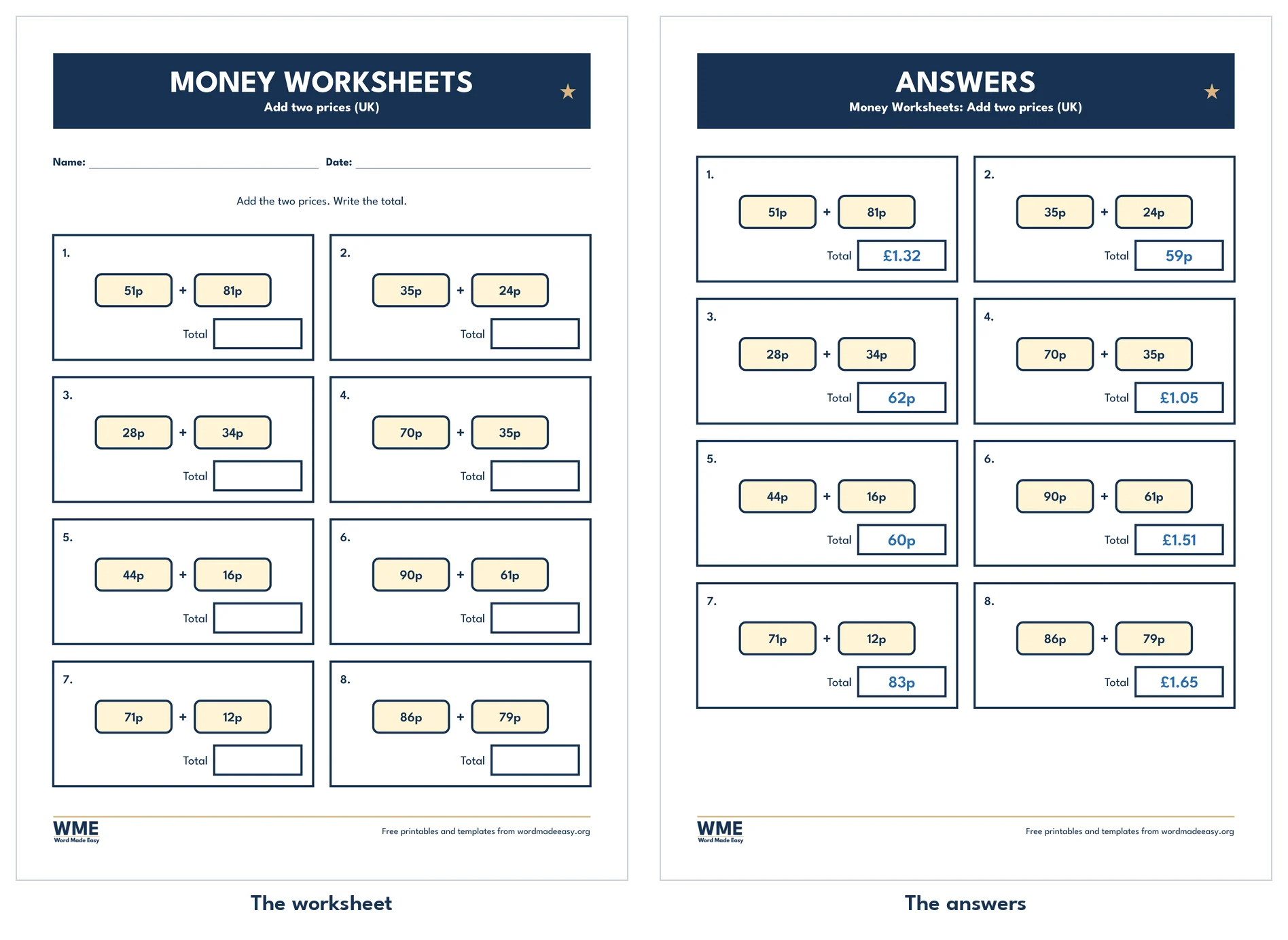
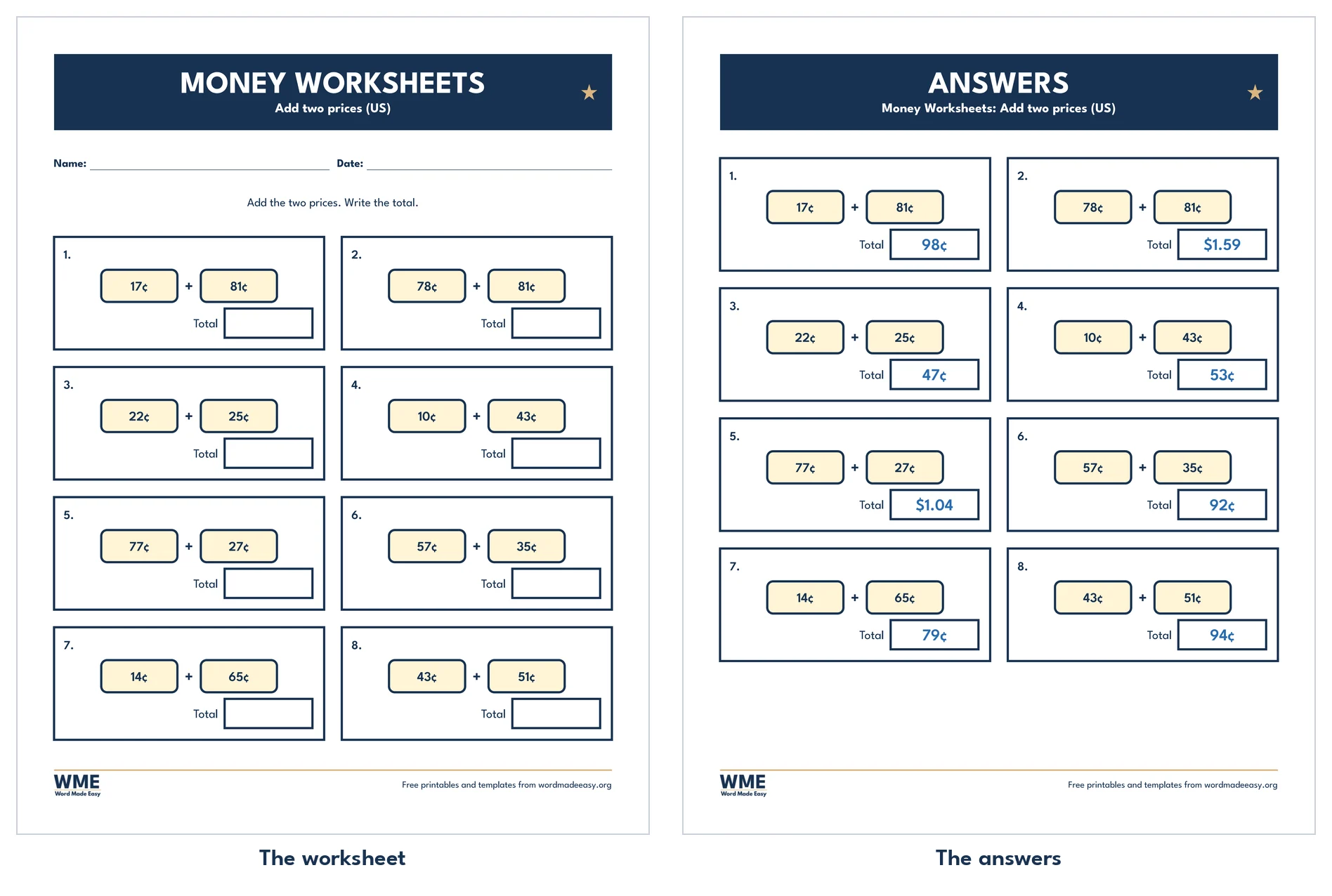
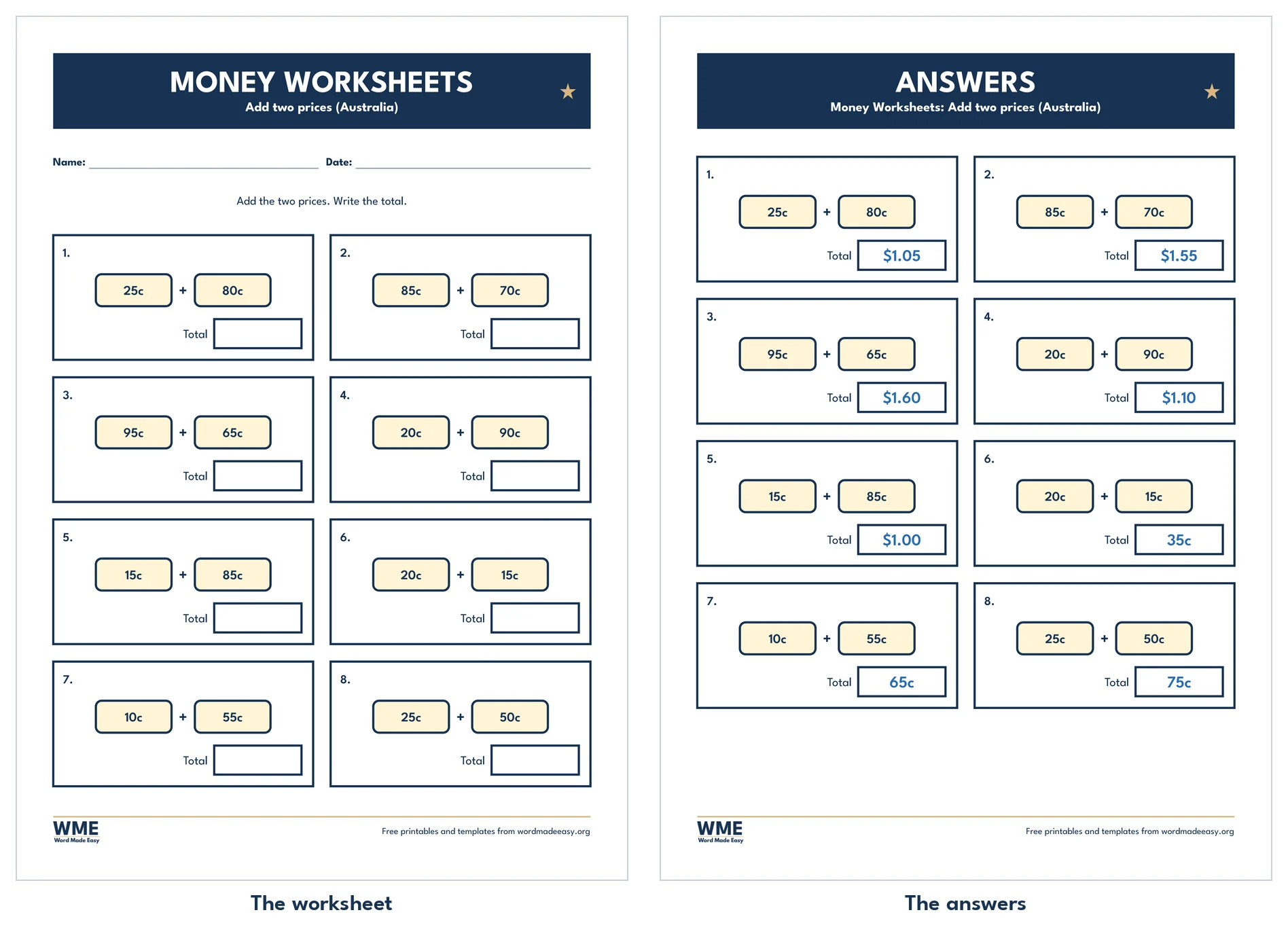
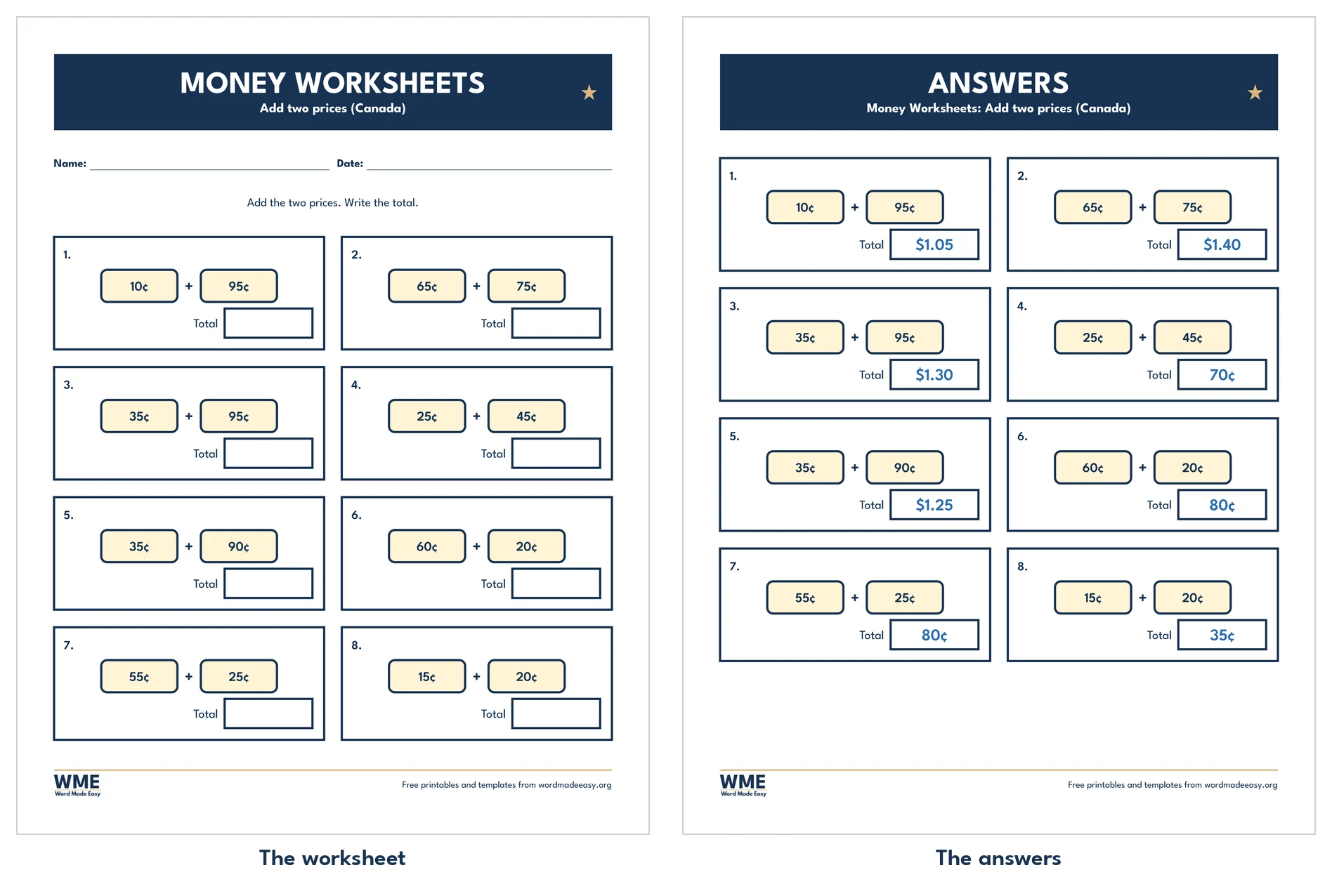
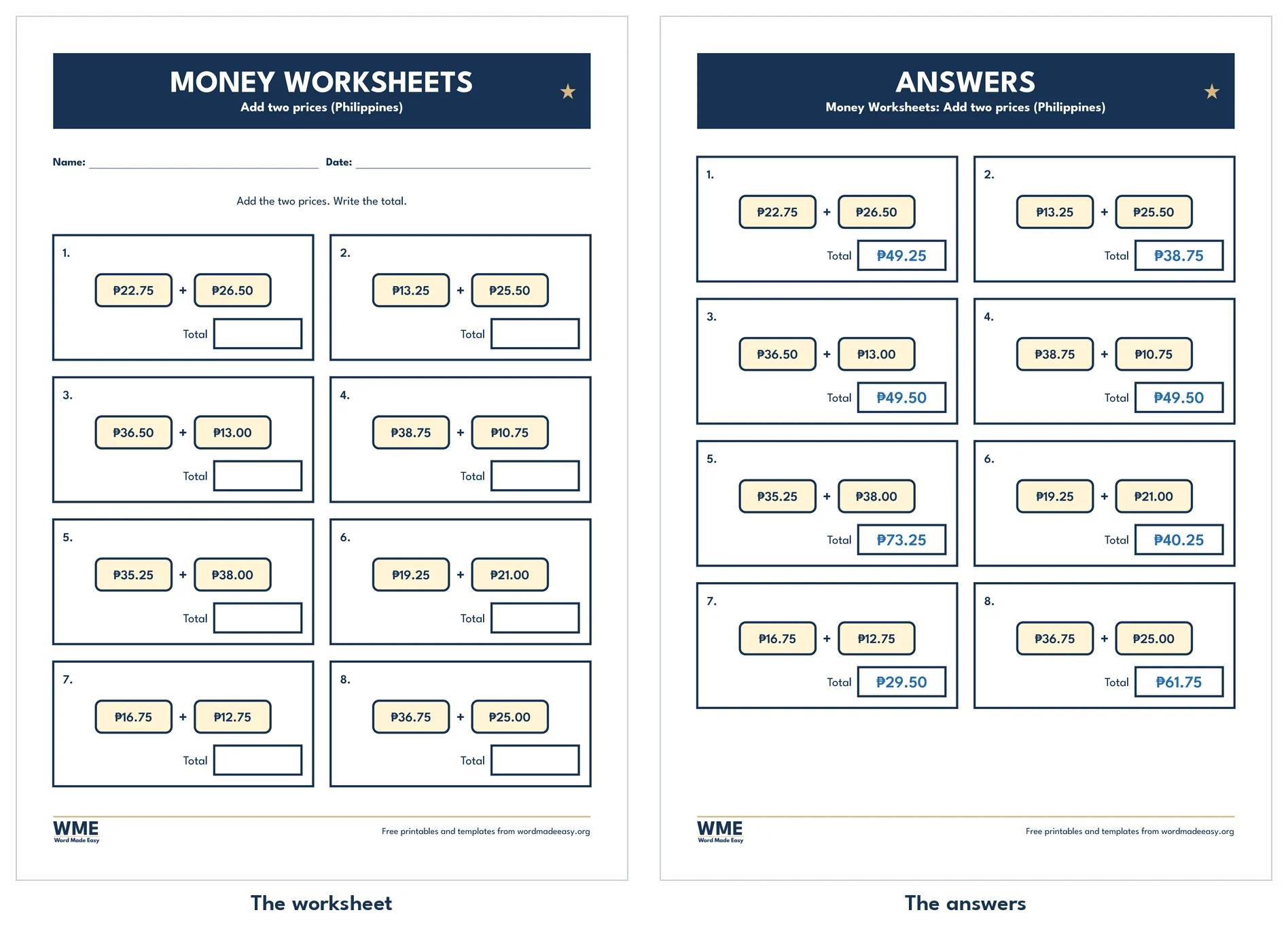
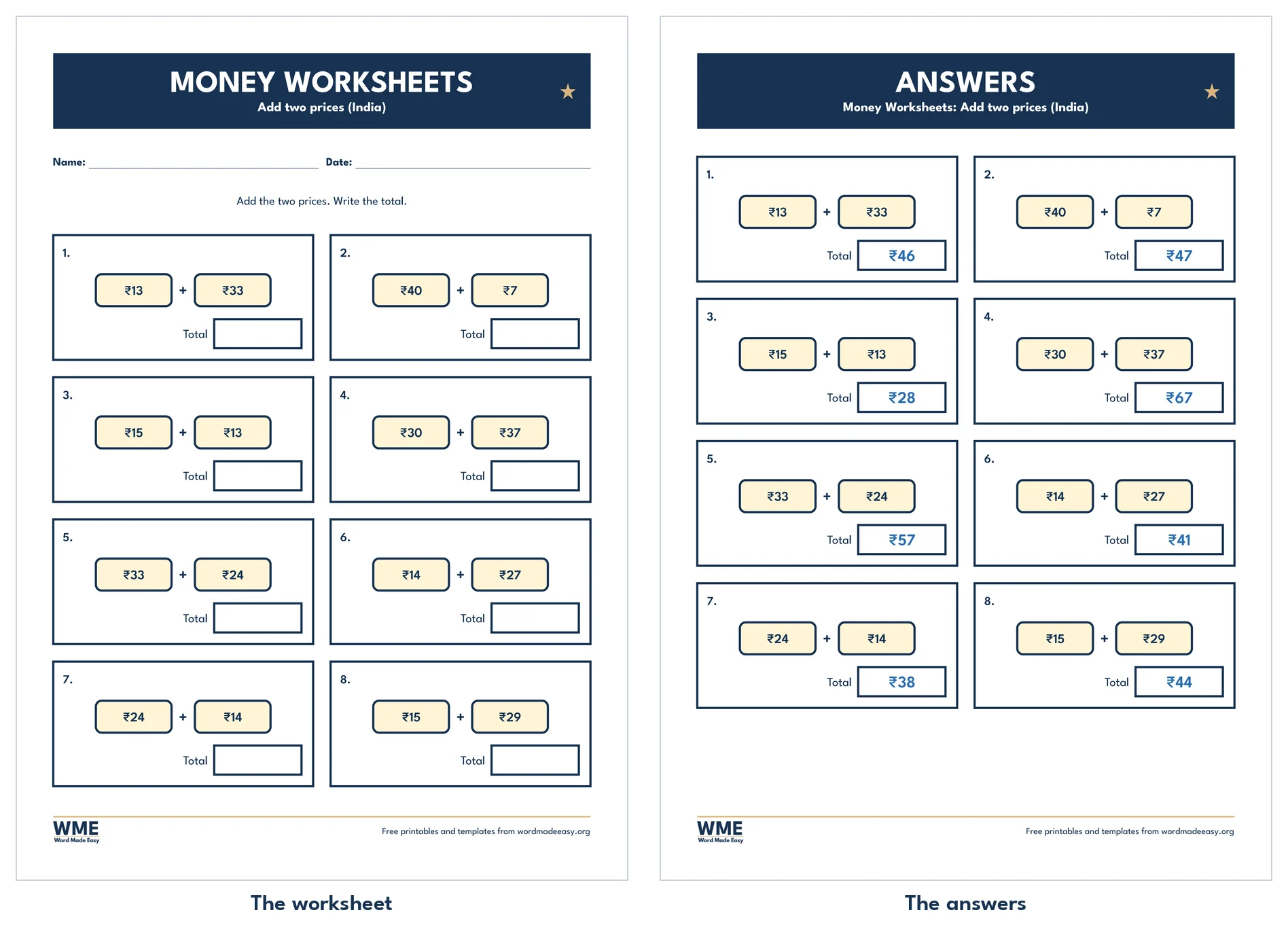
| Add Two Amounts 3 | 1 star: Add two prices, with answers |
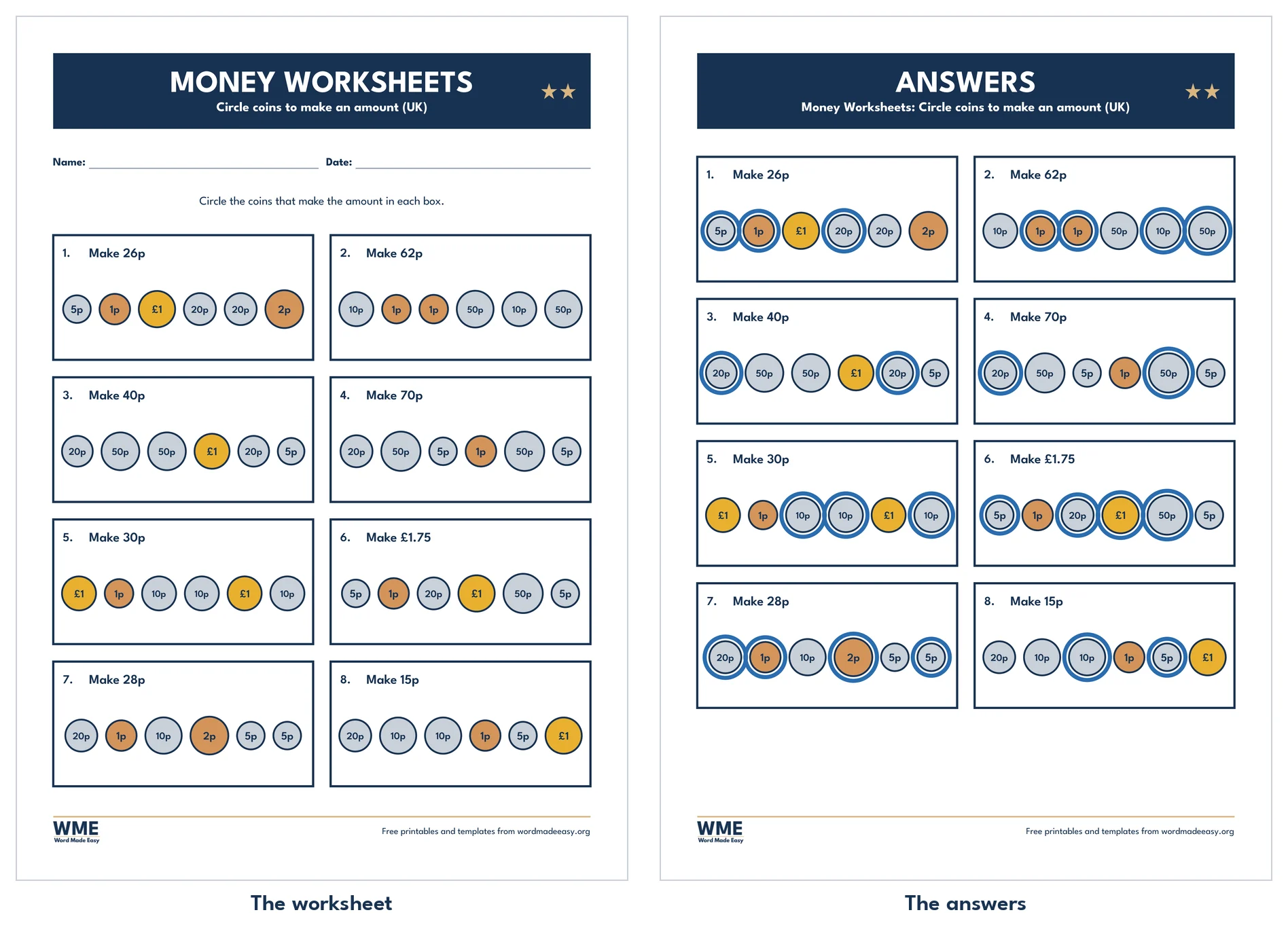
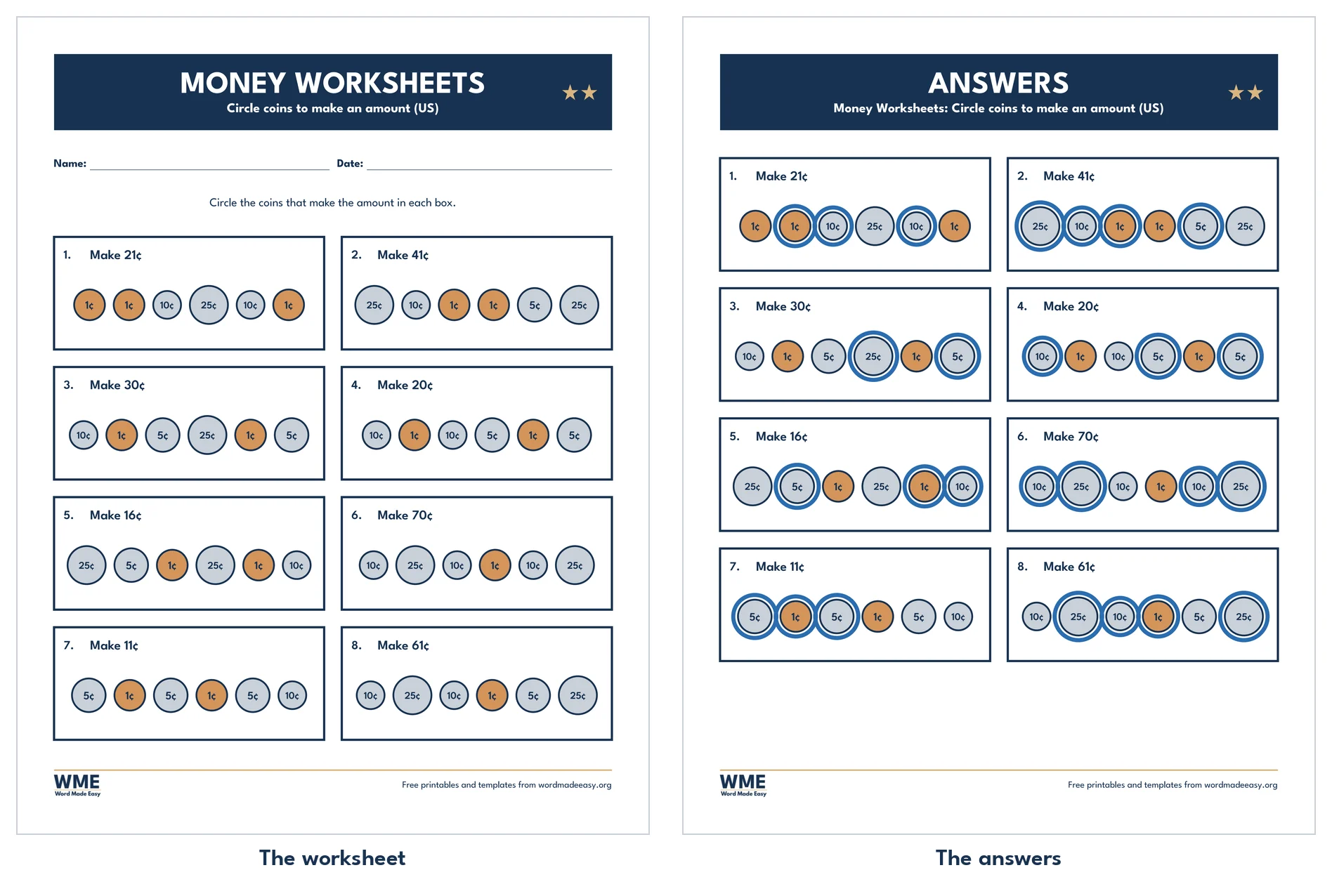
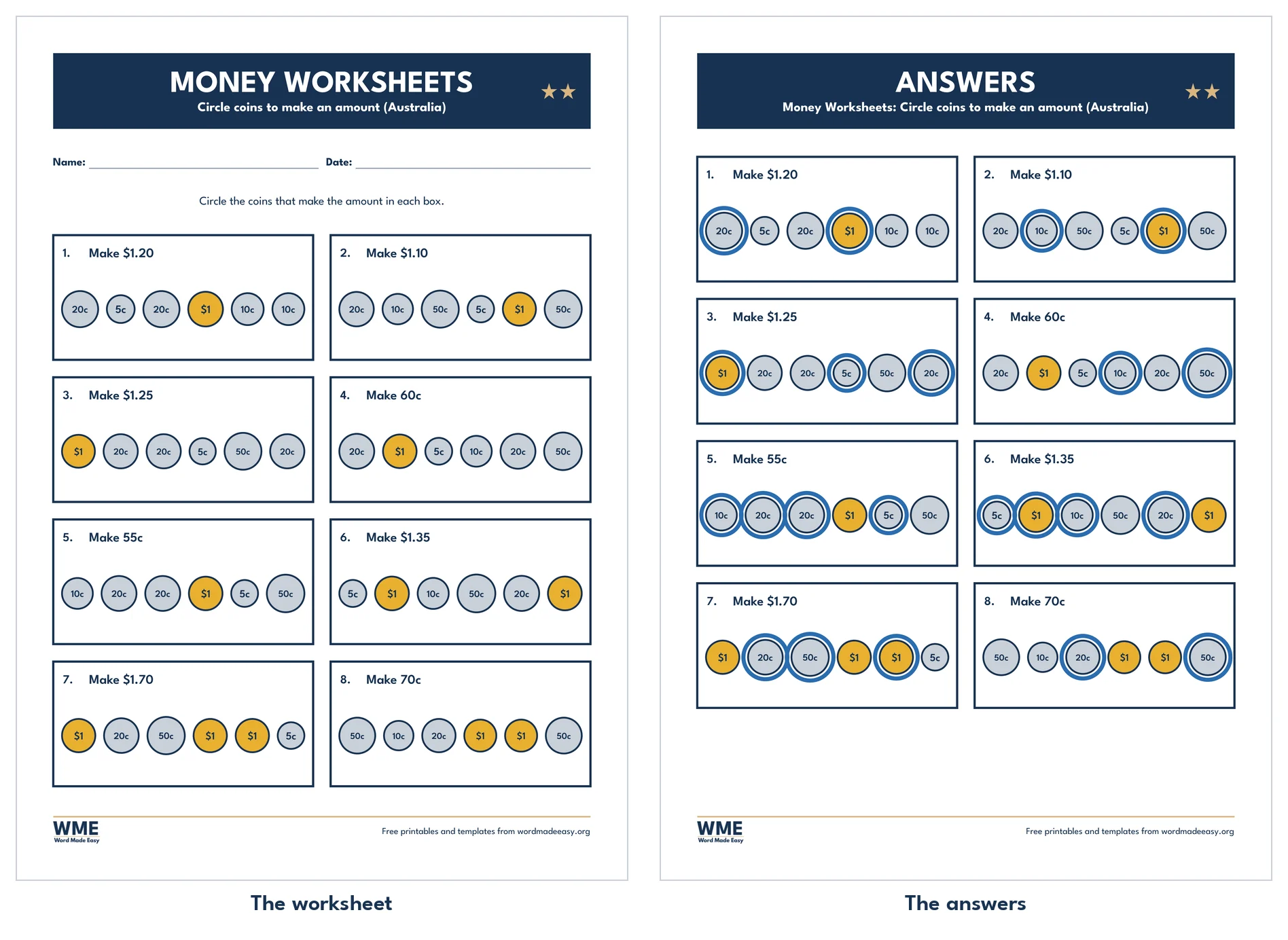
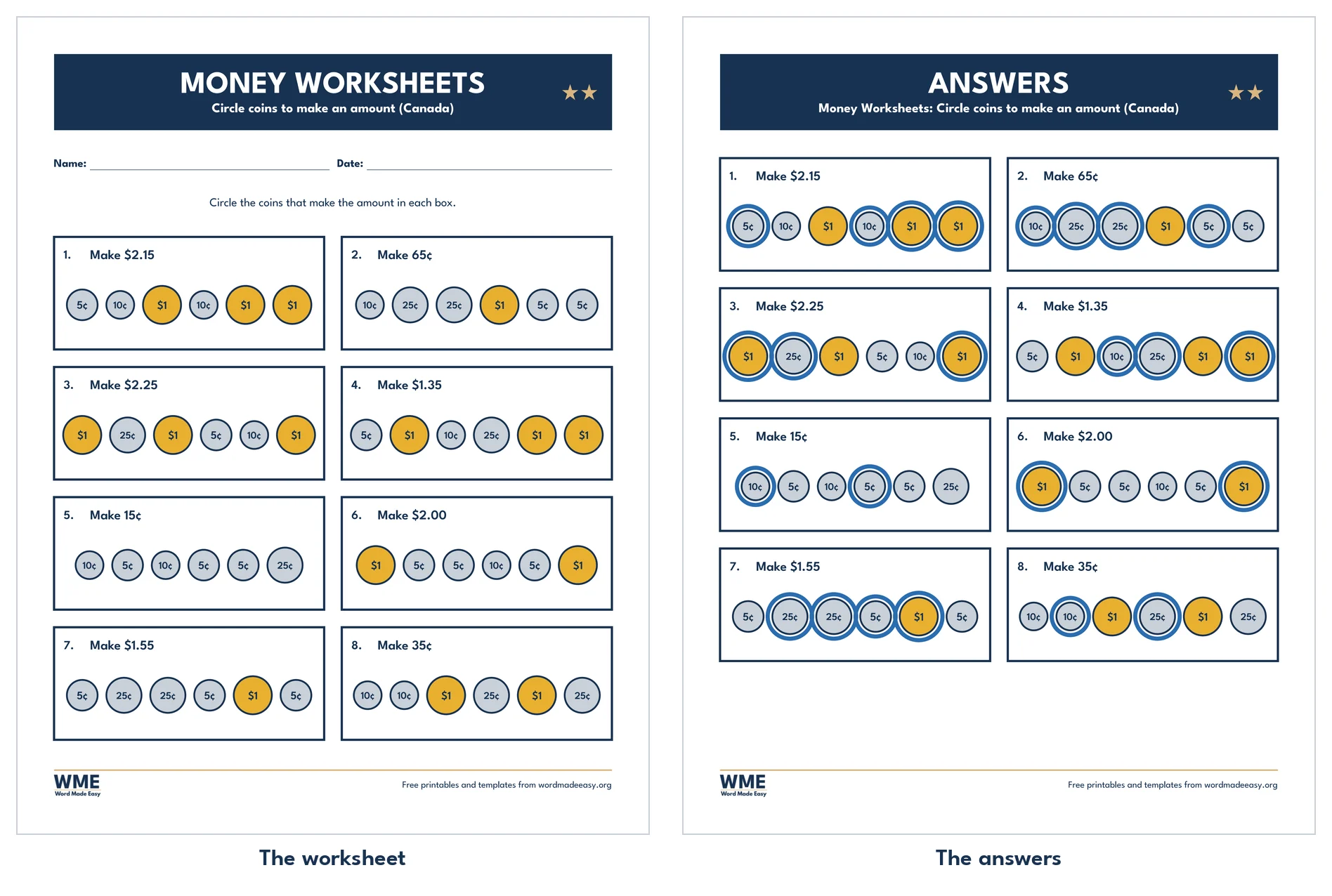
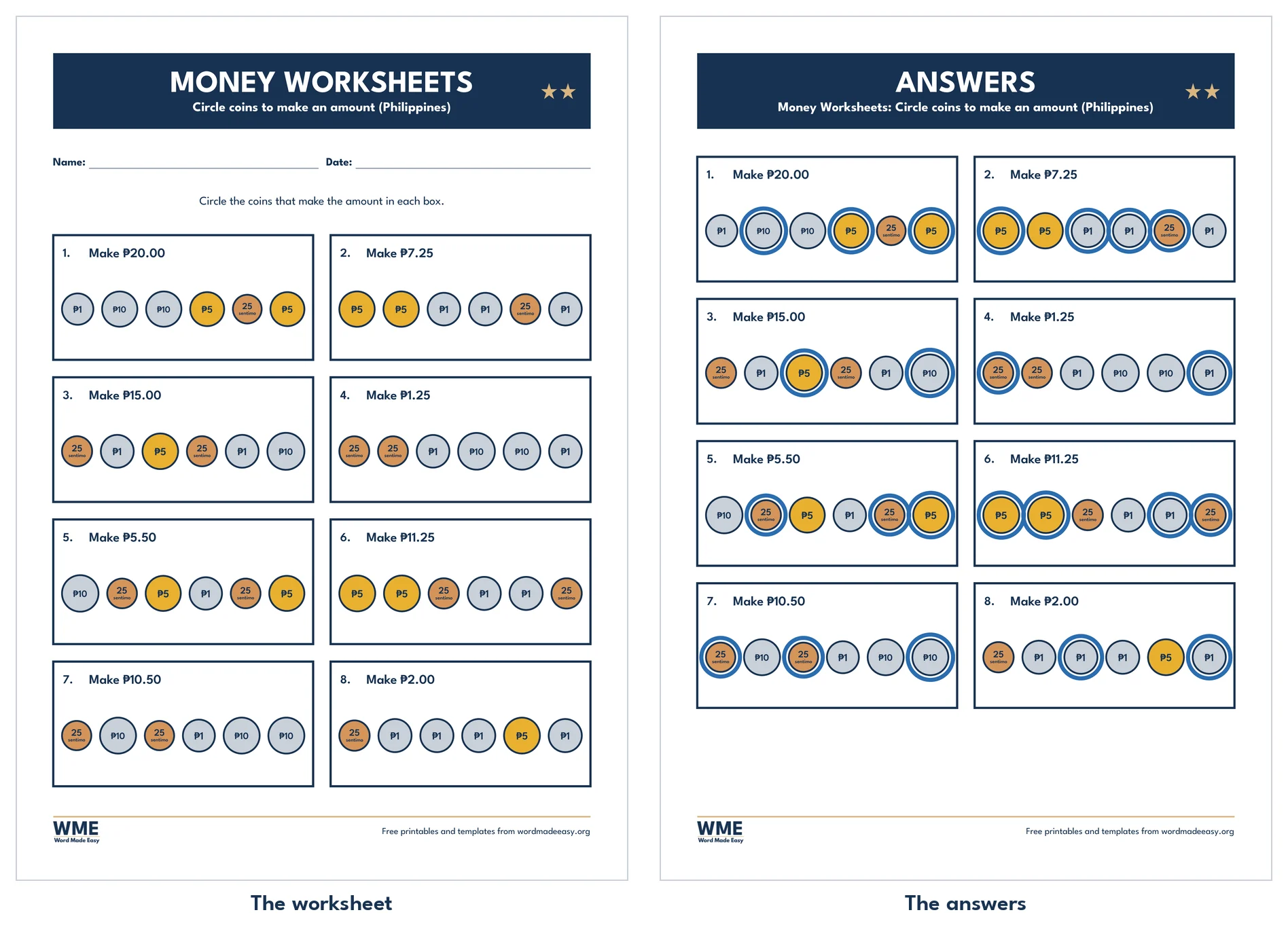
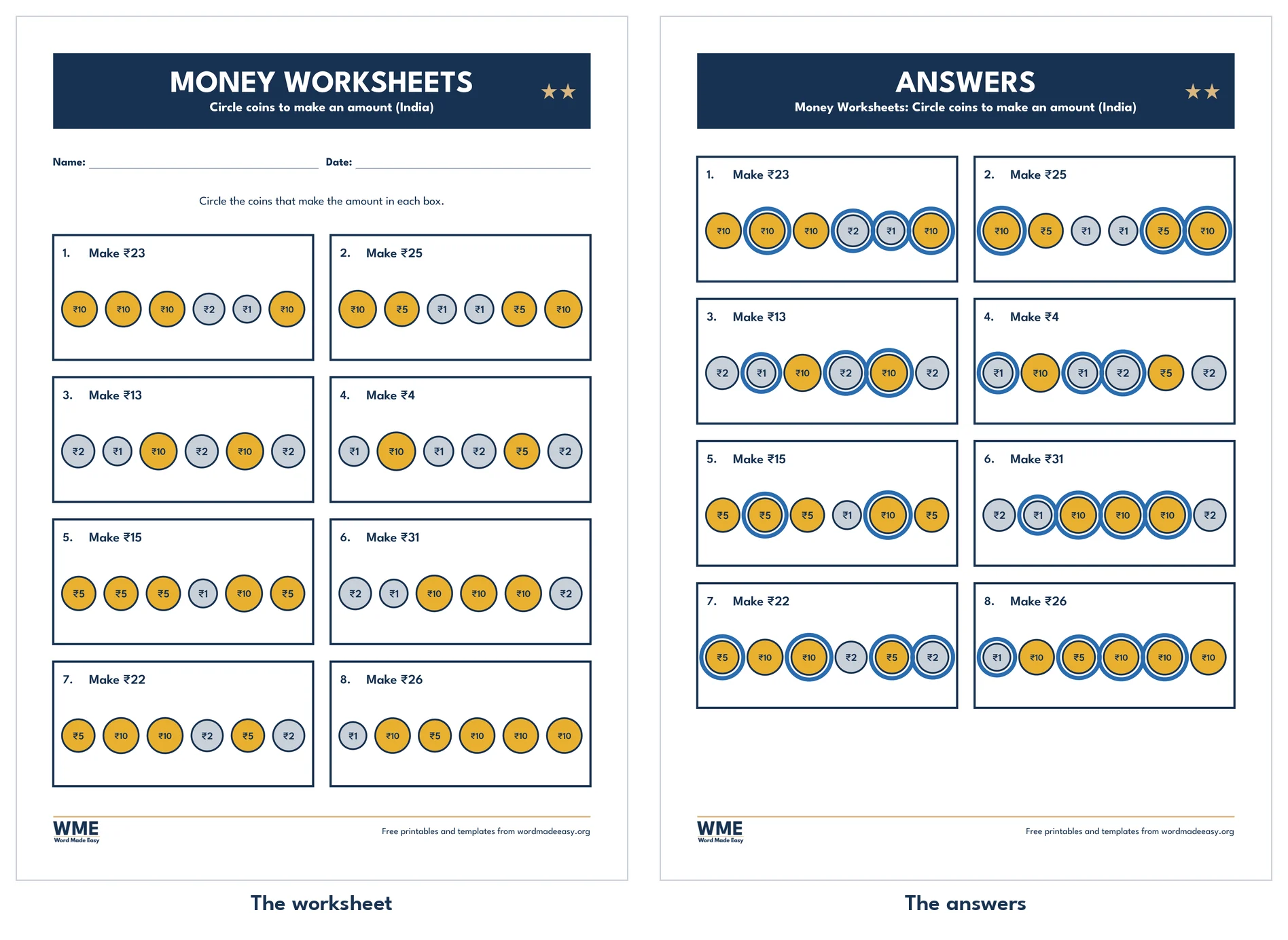
| Make the Amount 4 | 2 stars: Circle coins to make an amount, with answers |
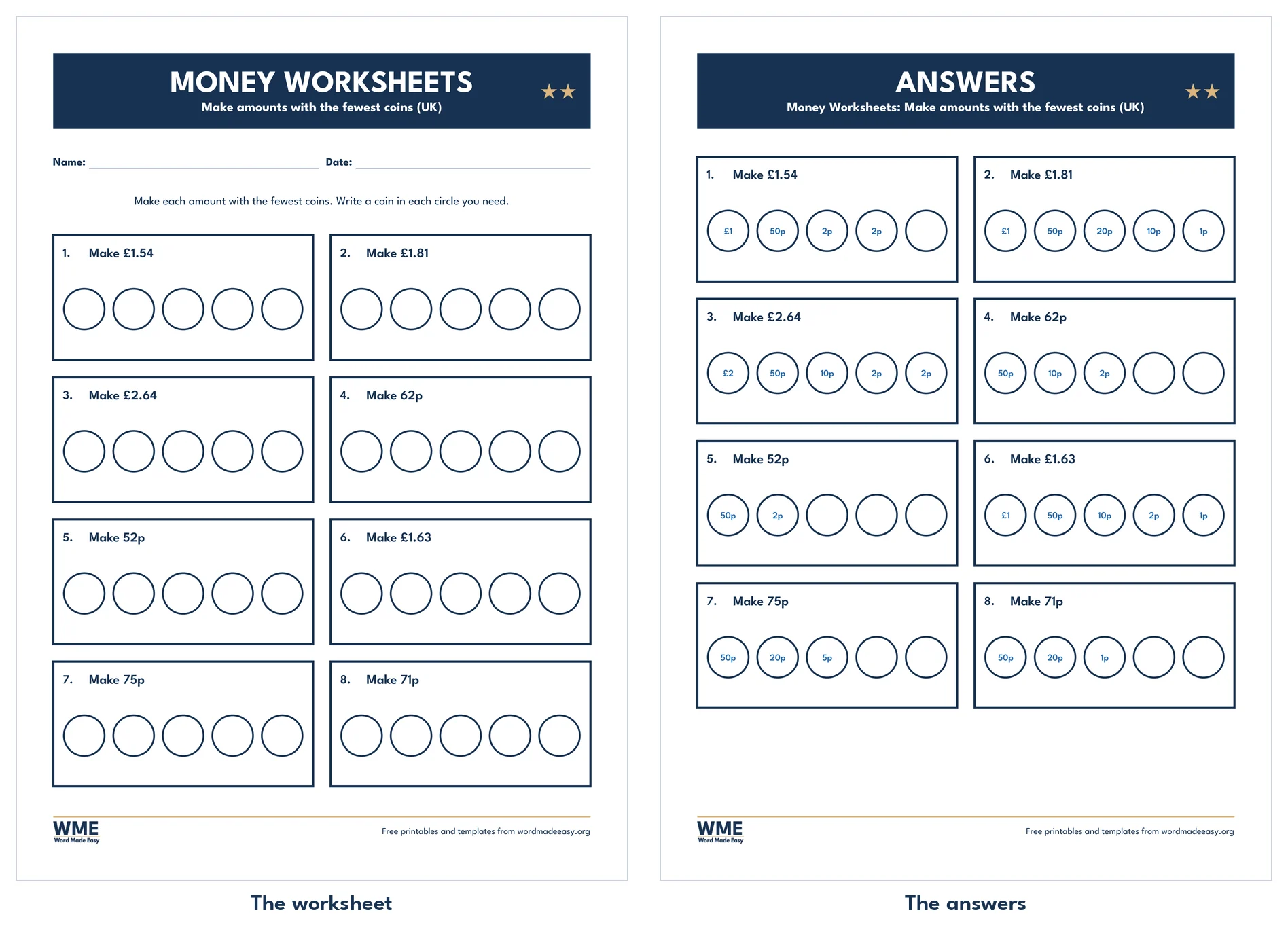
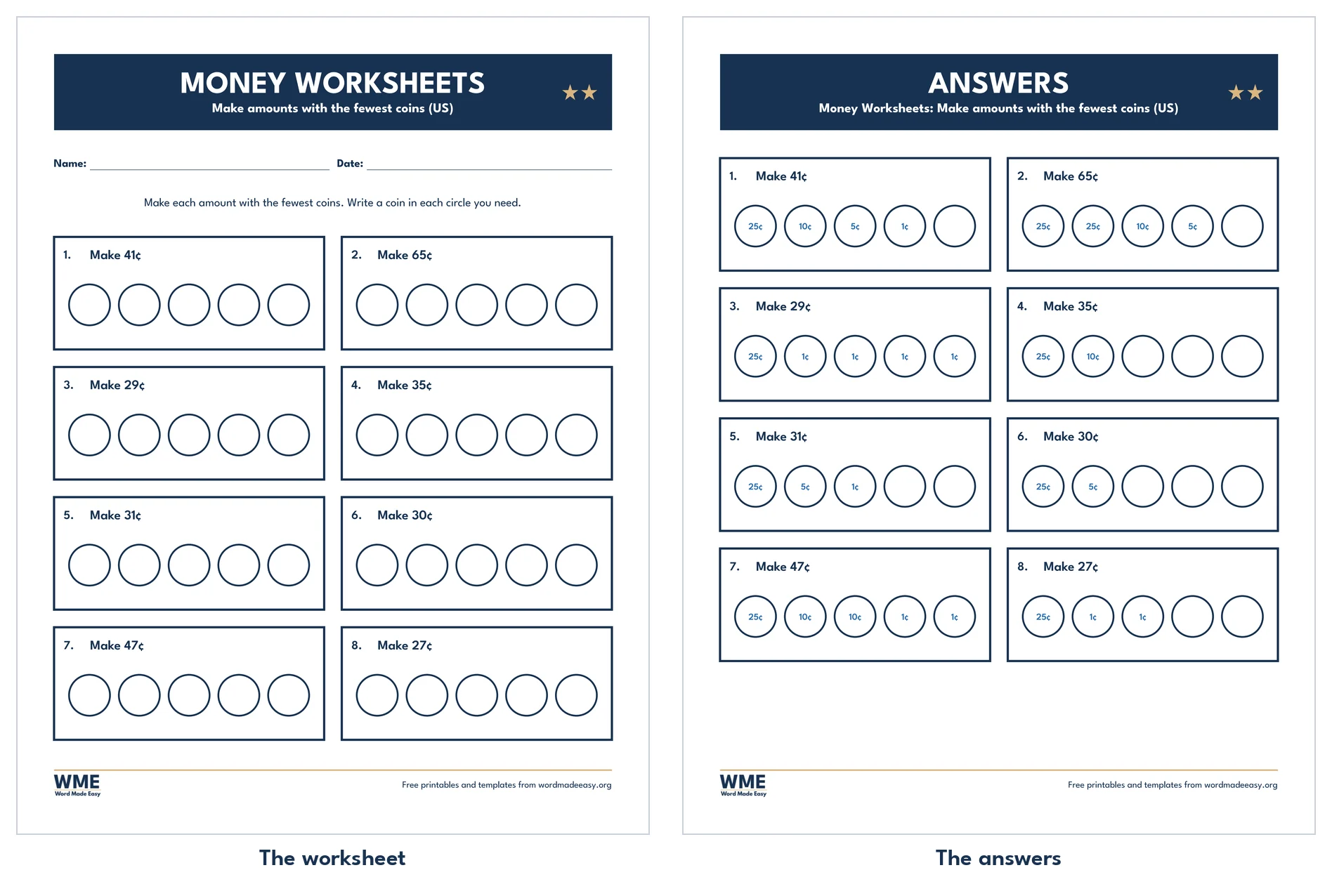
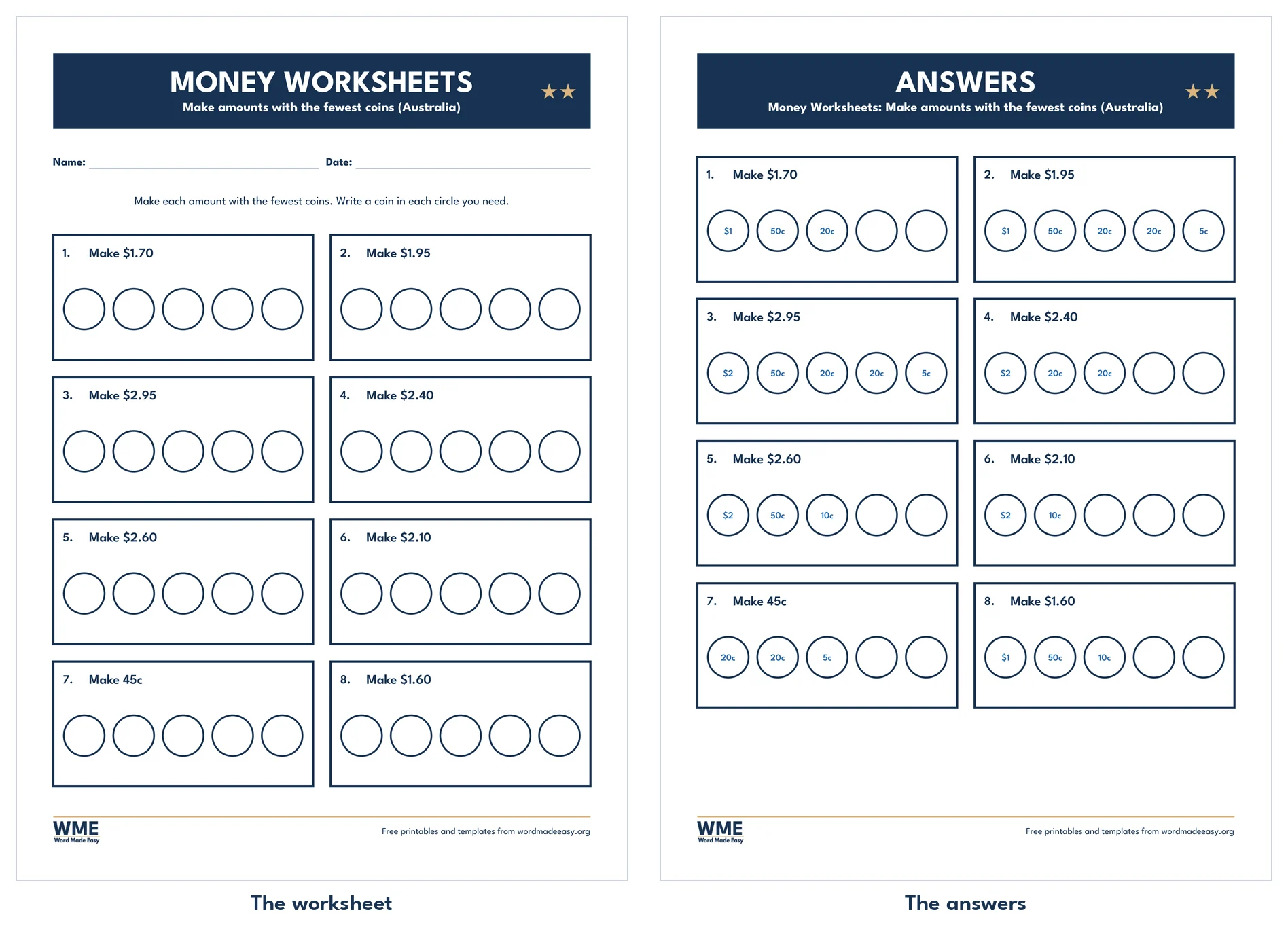
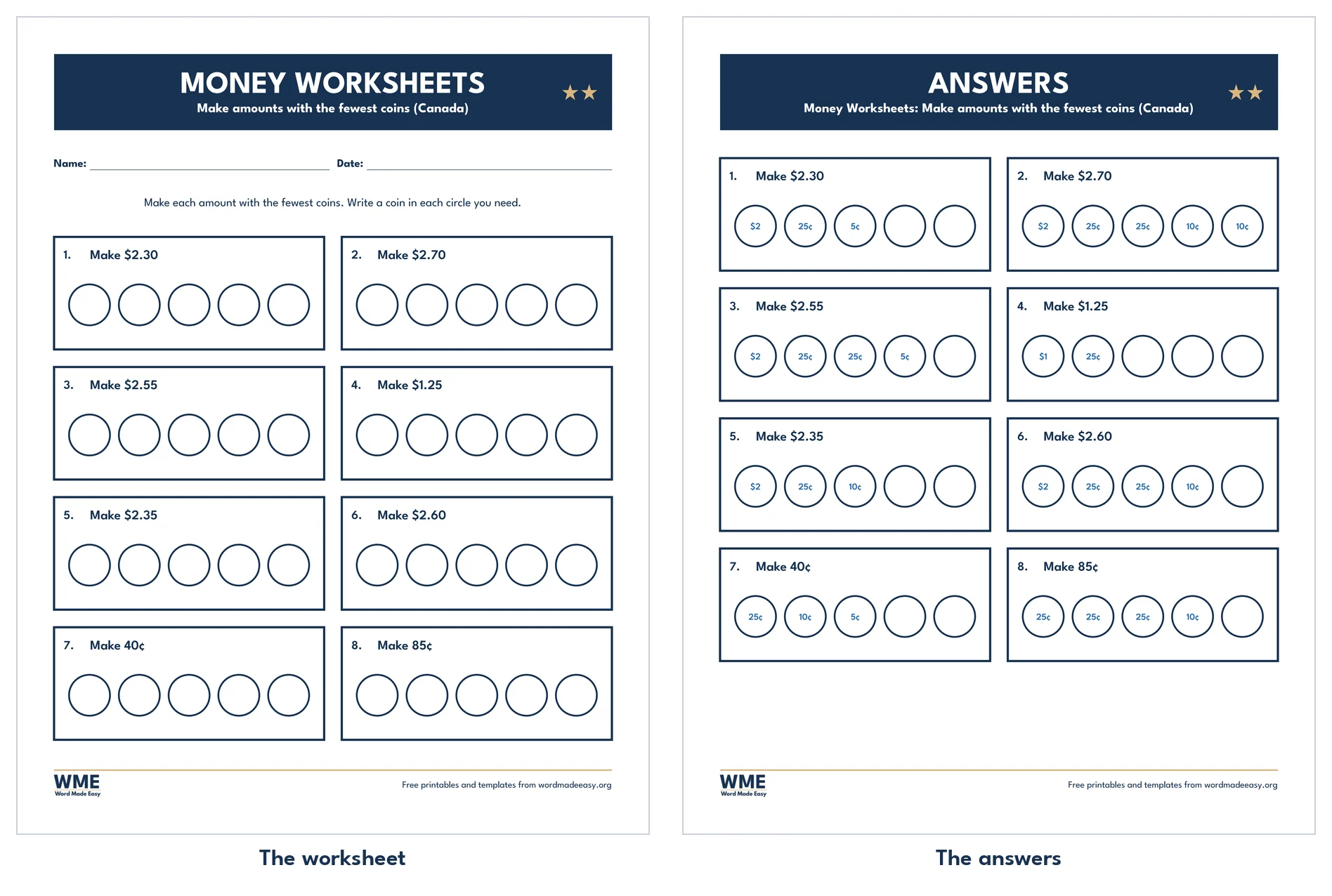
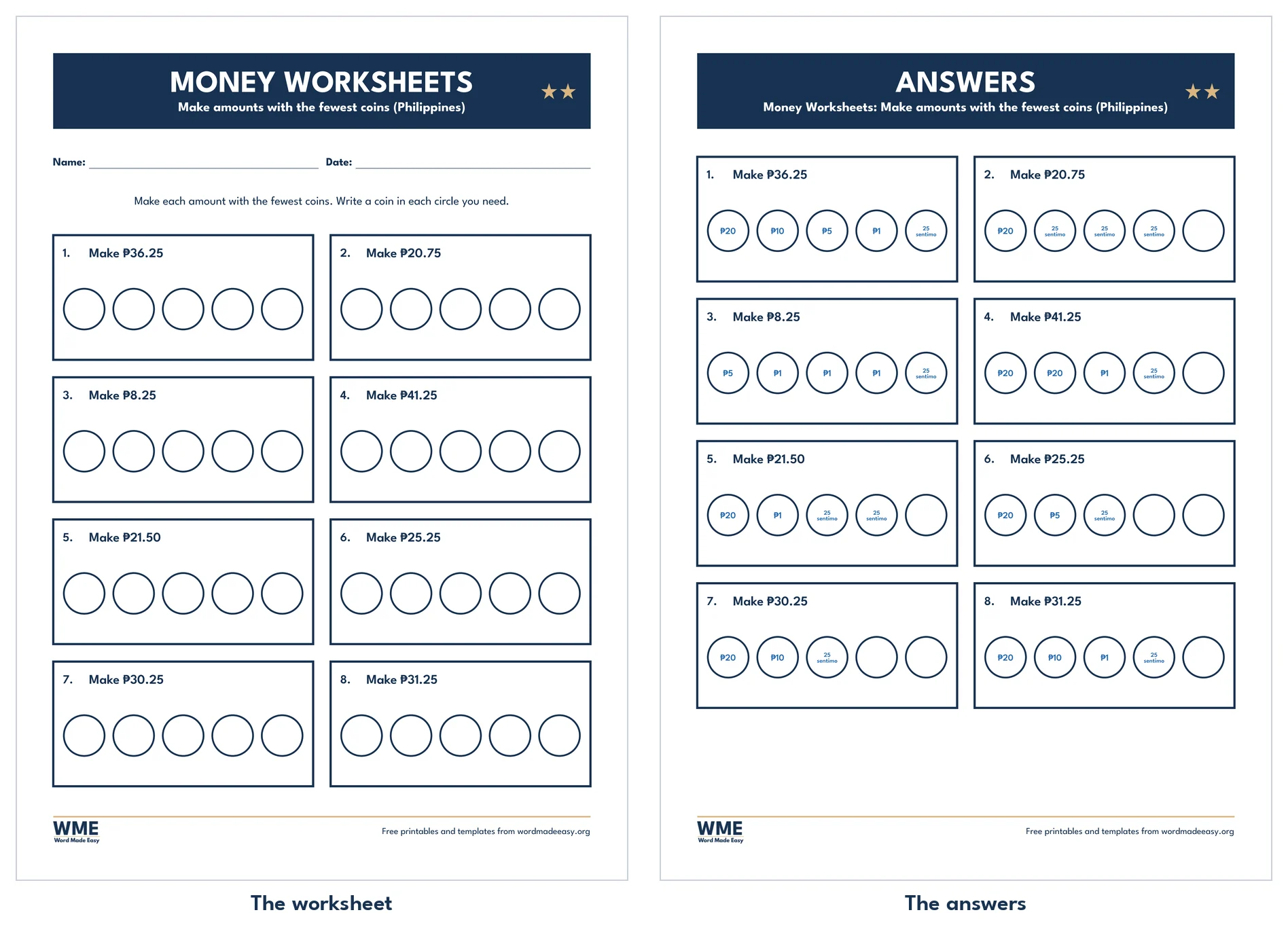
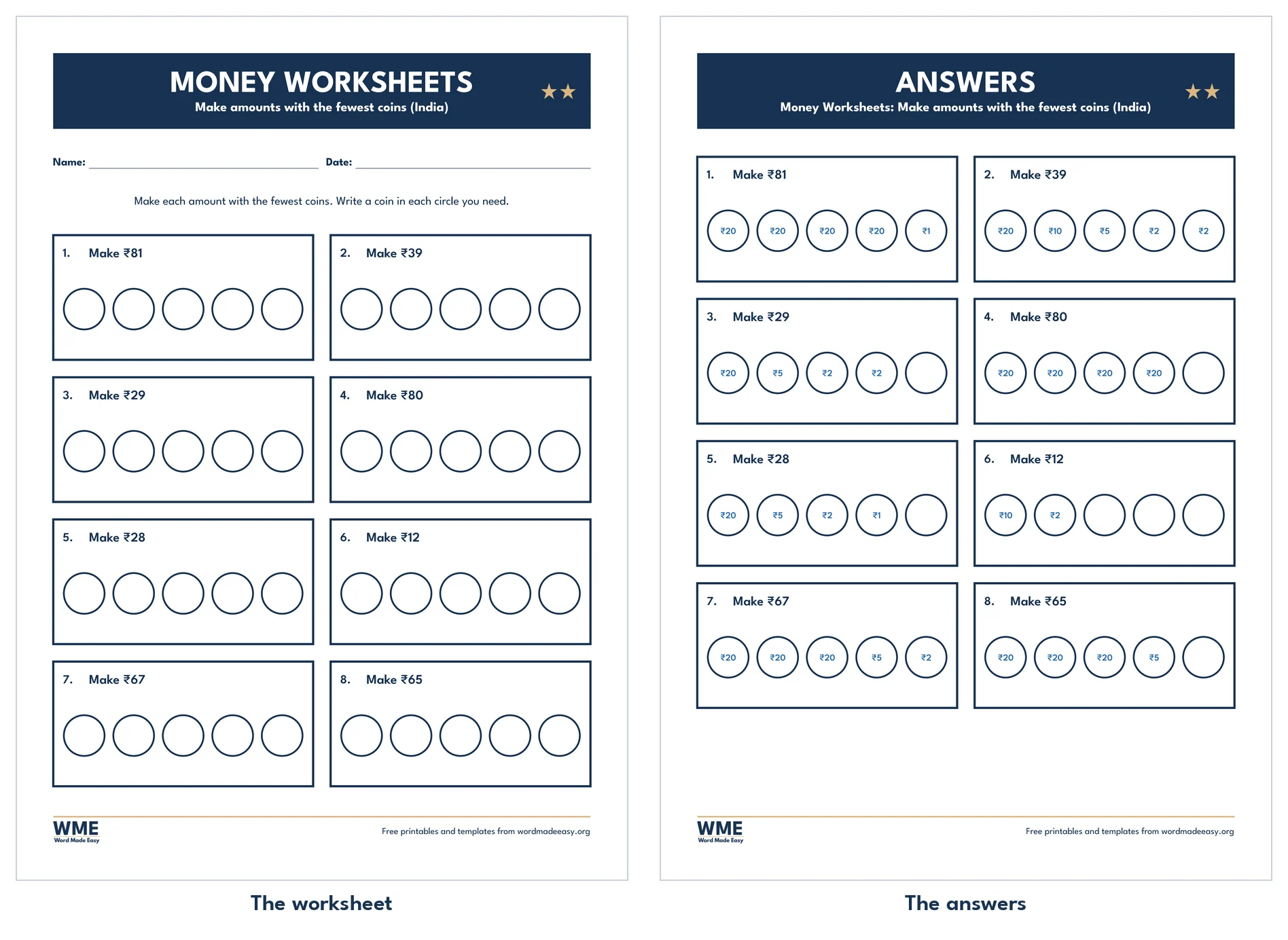
| Fewest Coins 5 | 2 stars: Make amounts with the fewest coins, with answers |
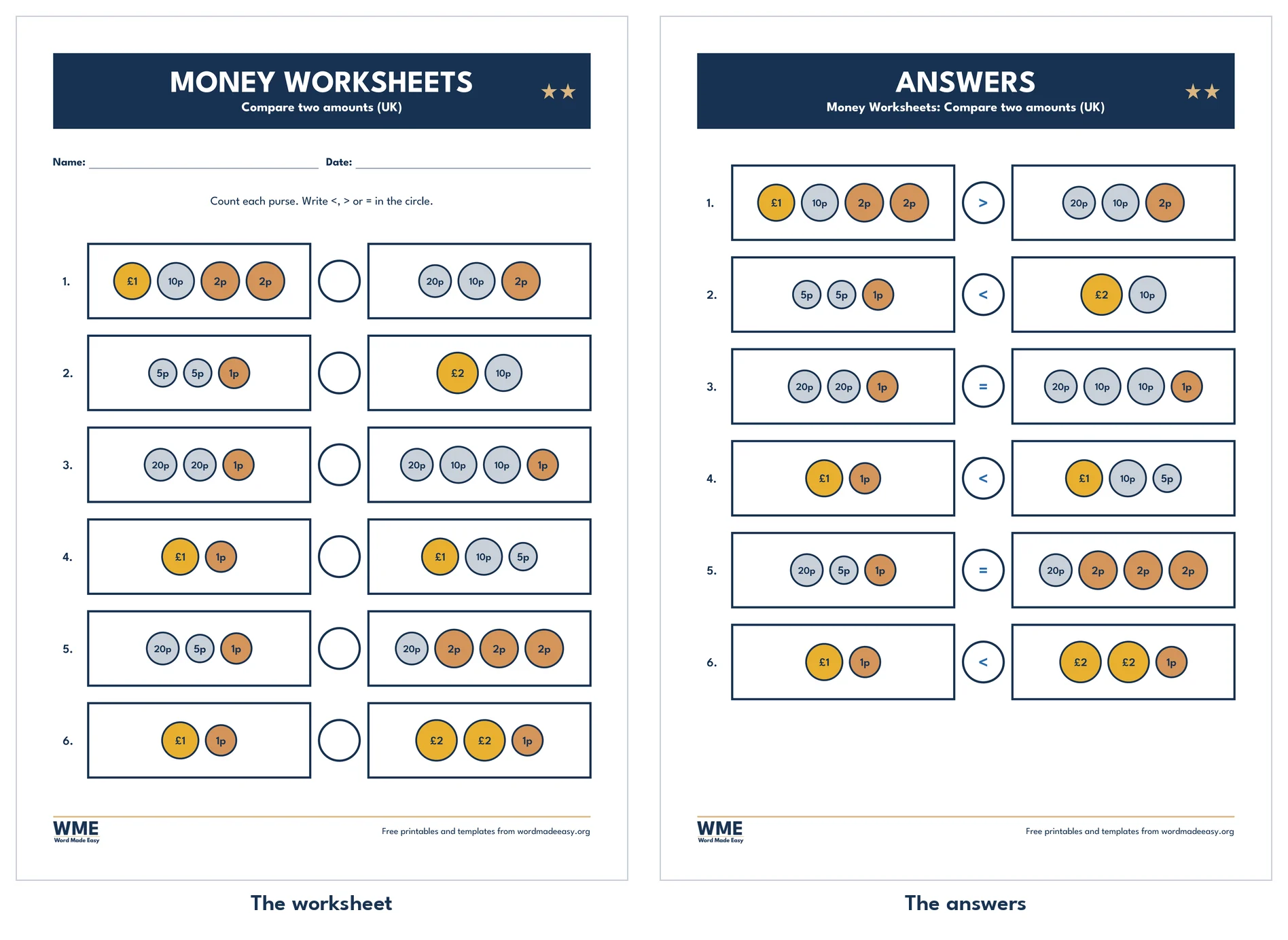
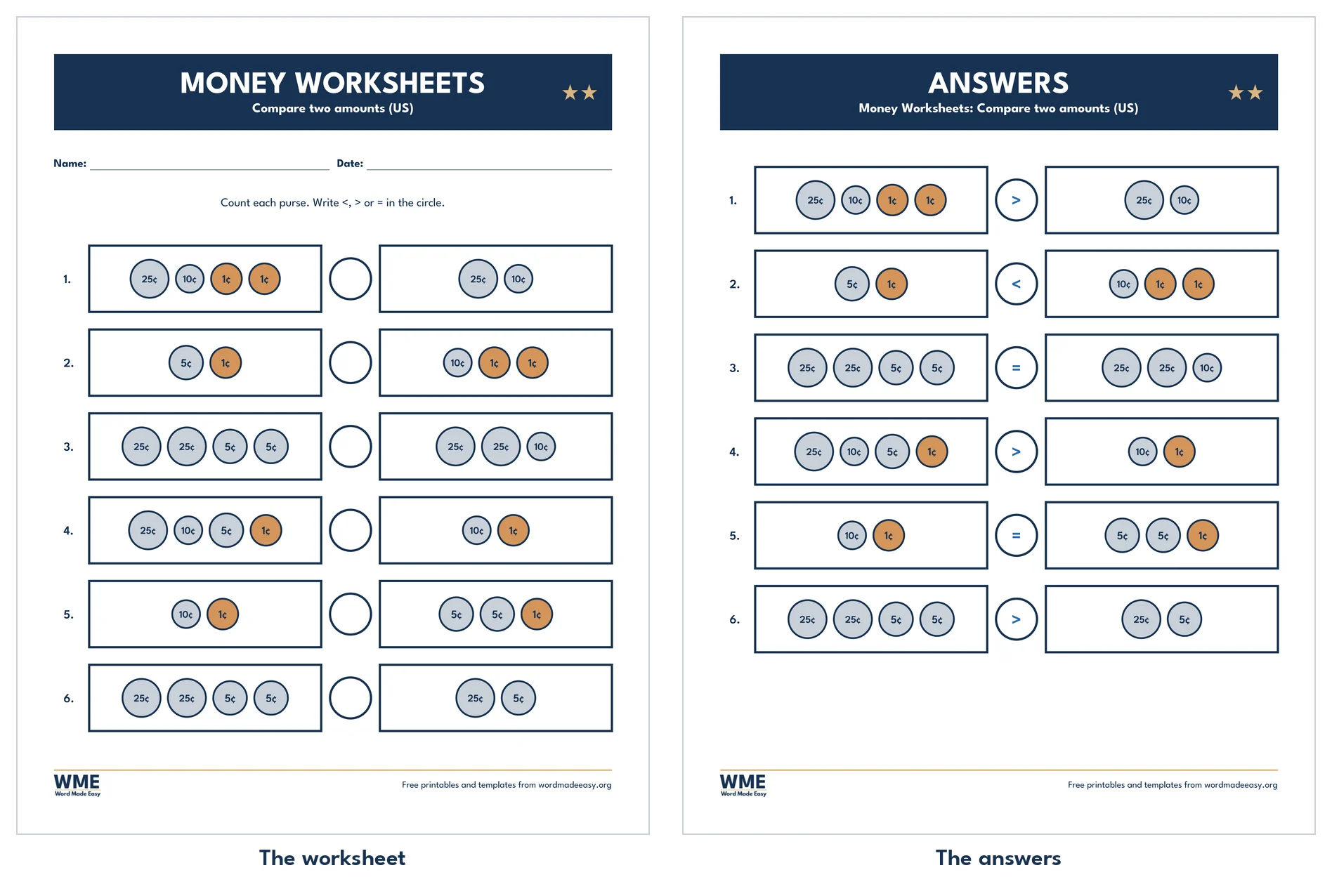
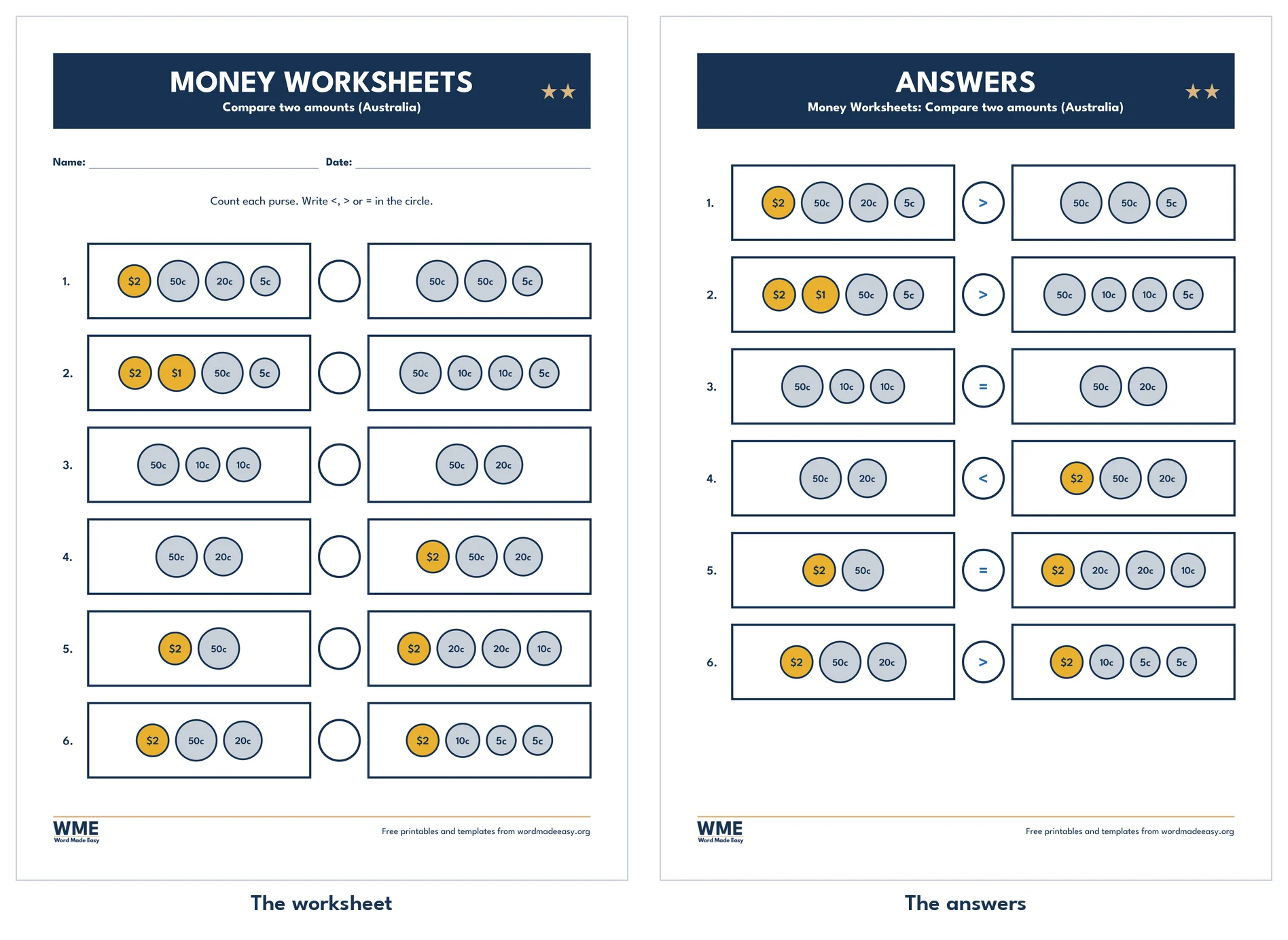
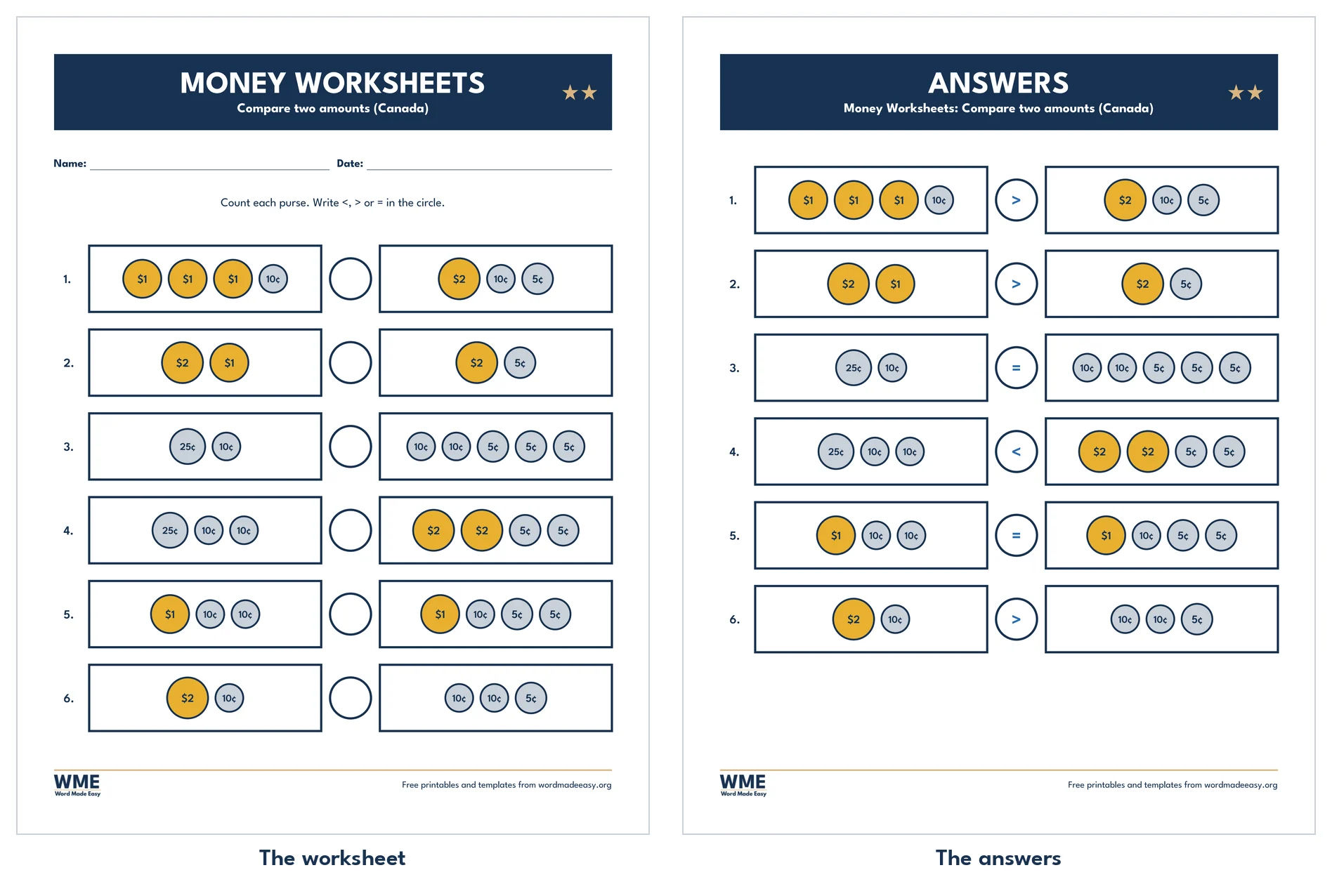
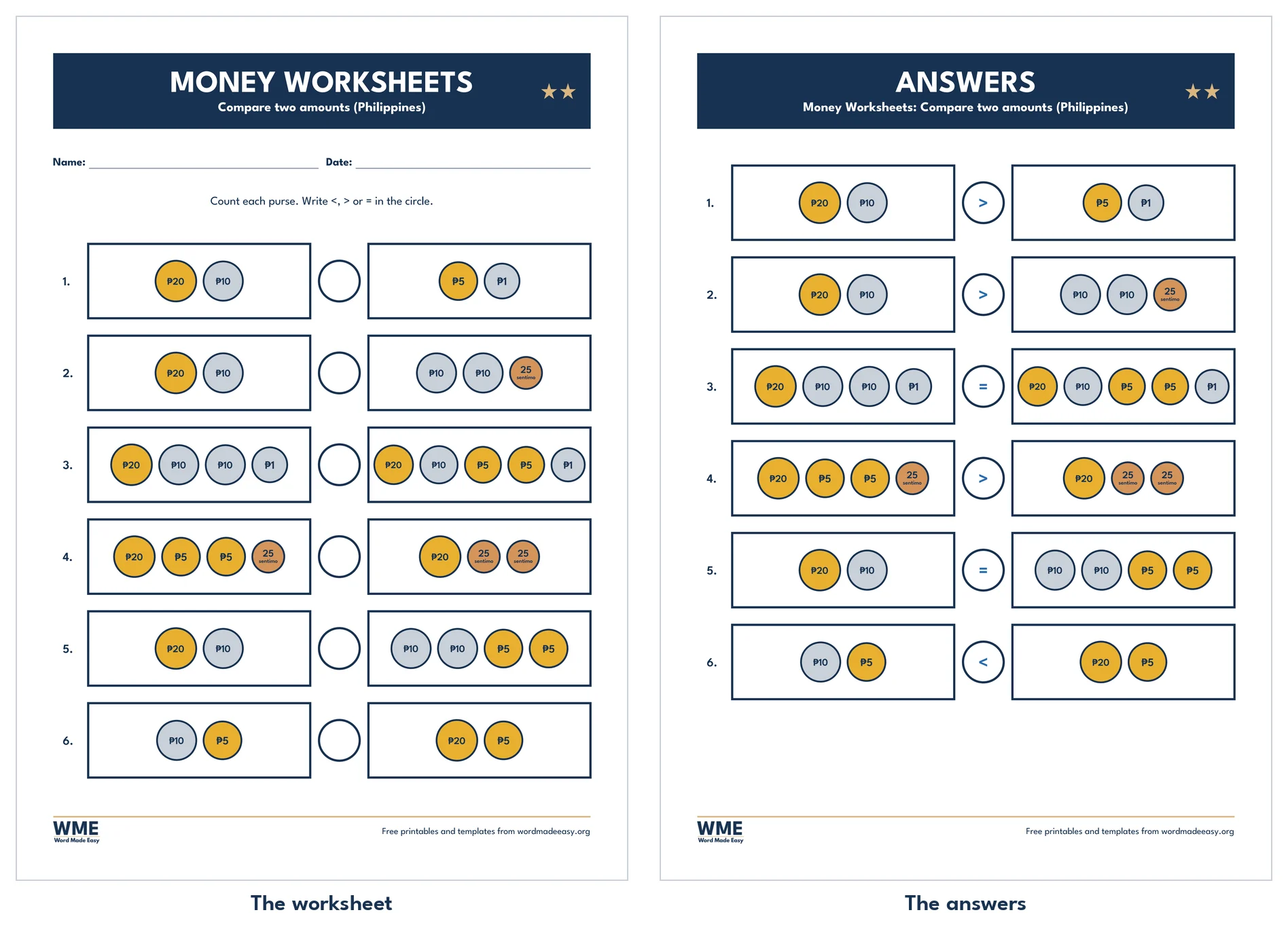
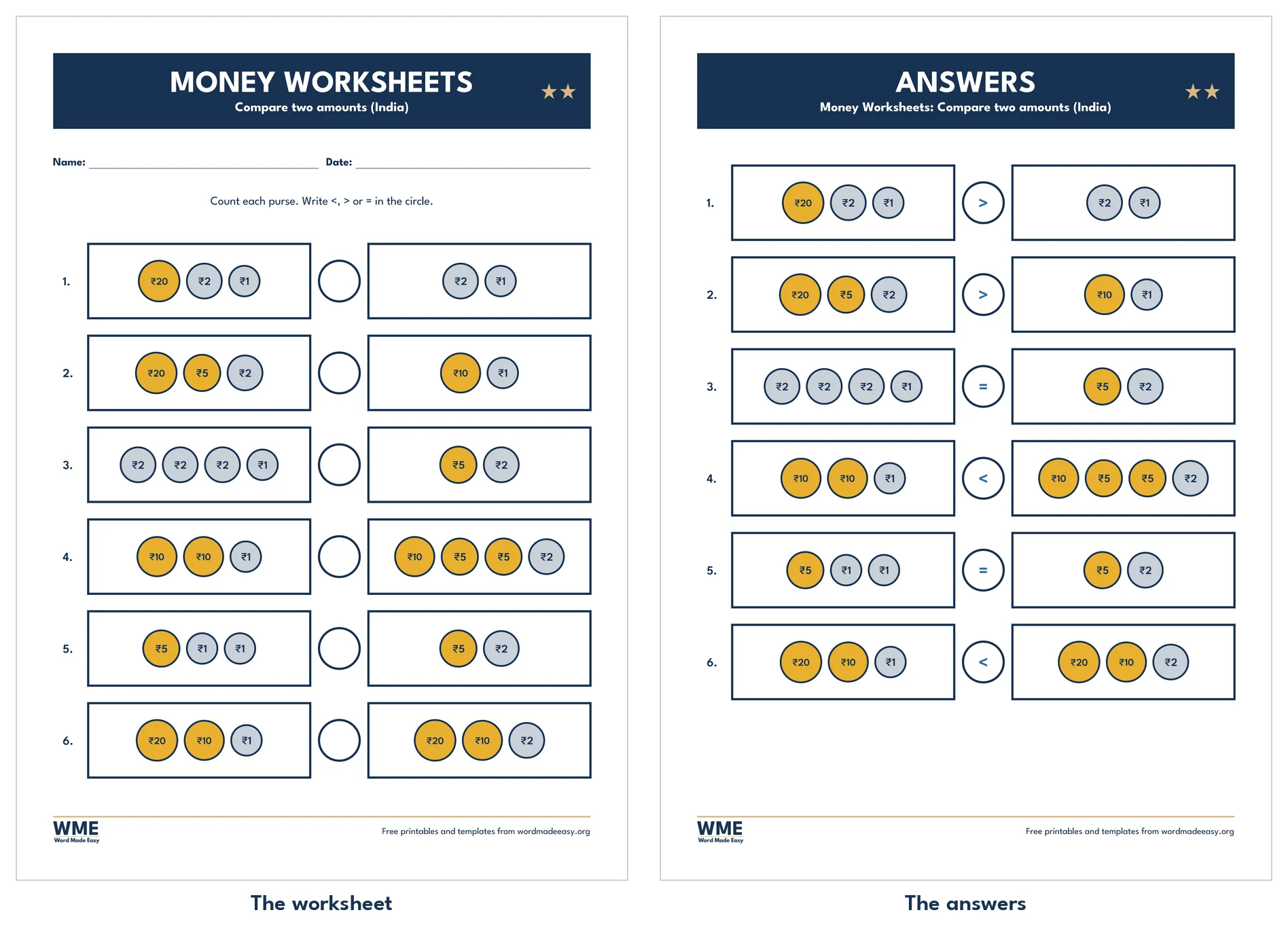
| Compare Amounts 6 | 2 stars: Compare two amounts, with answers |
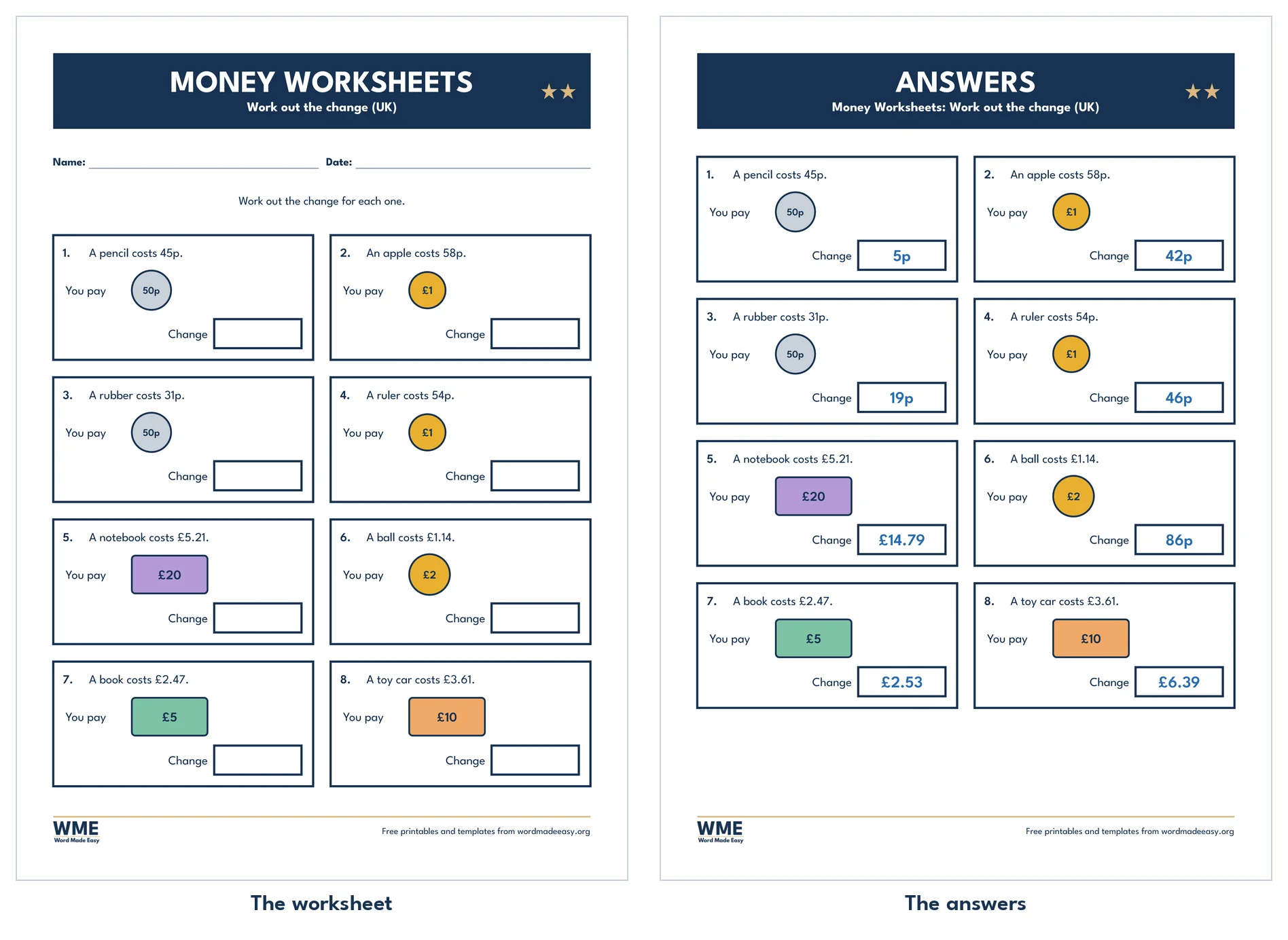
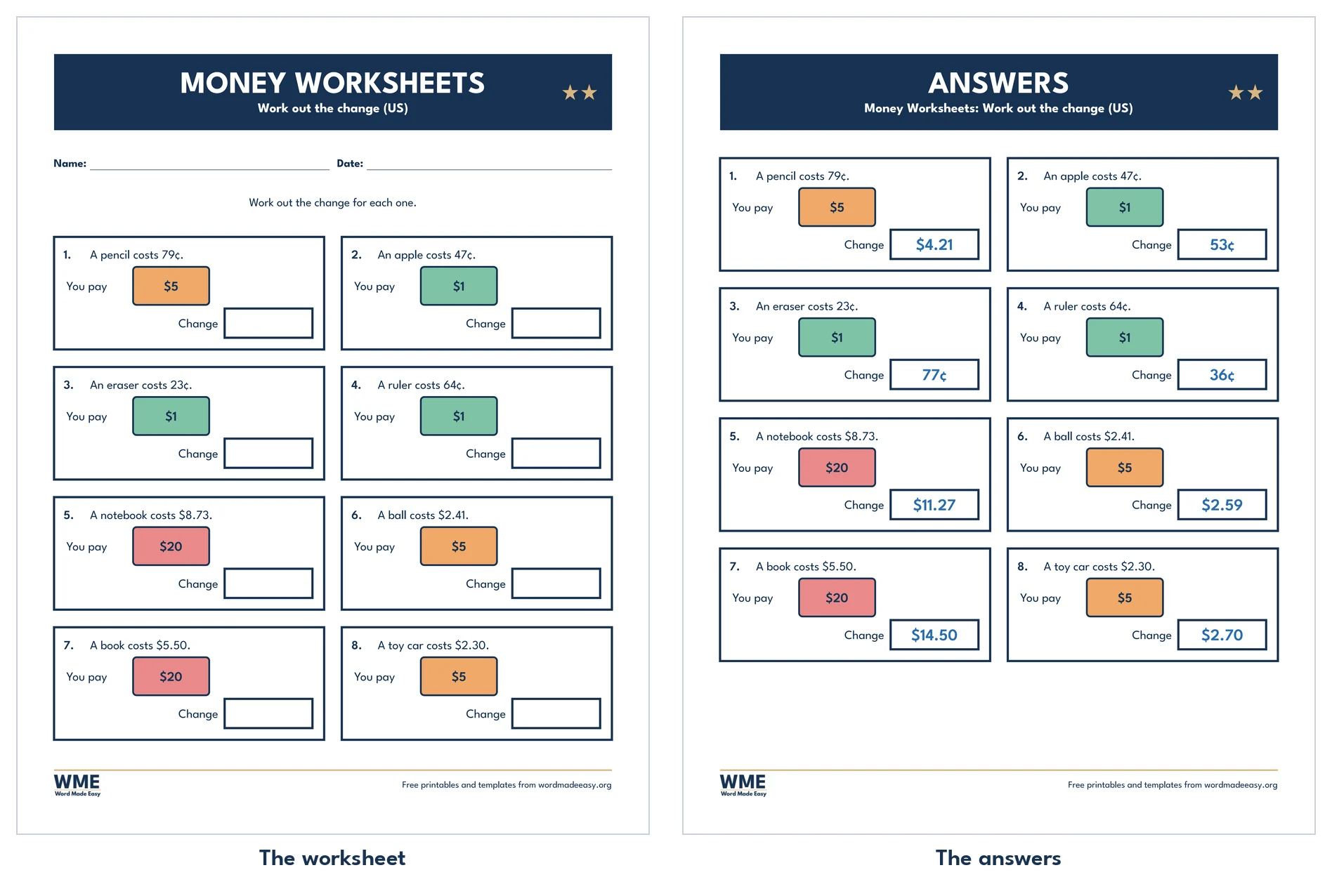
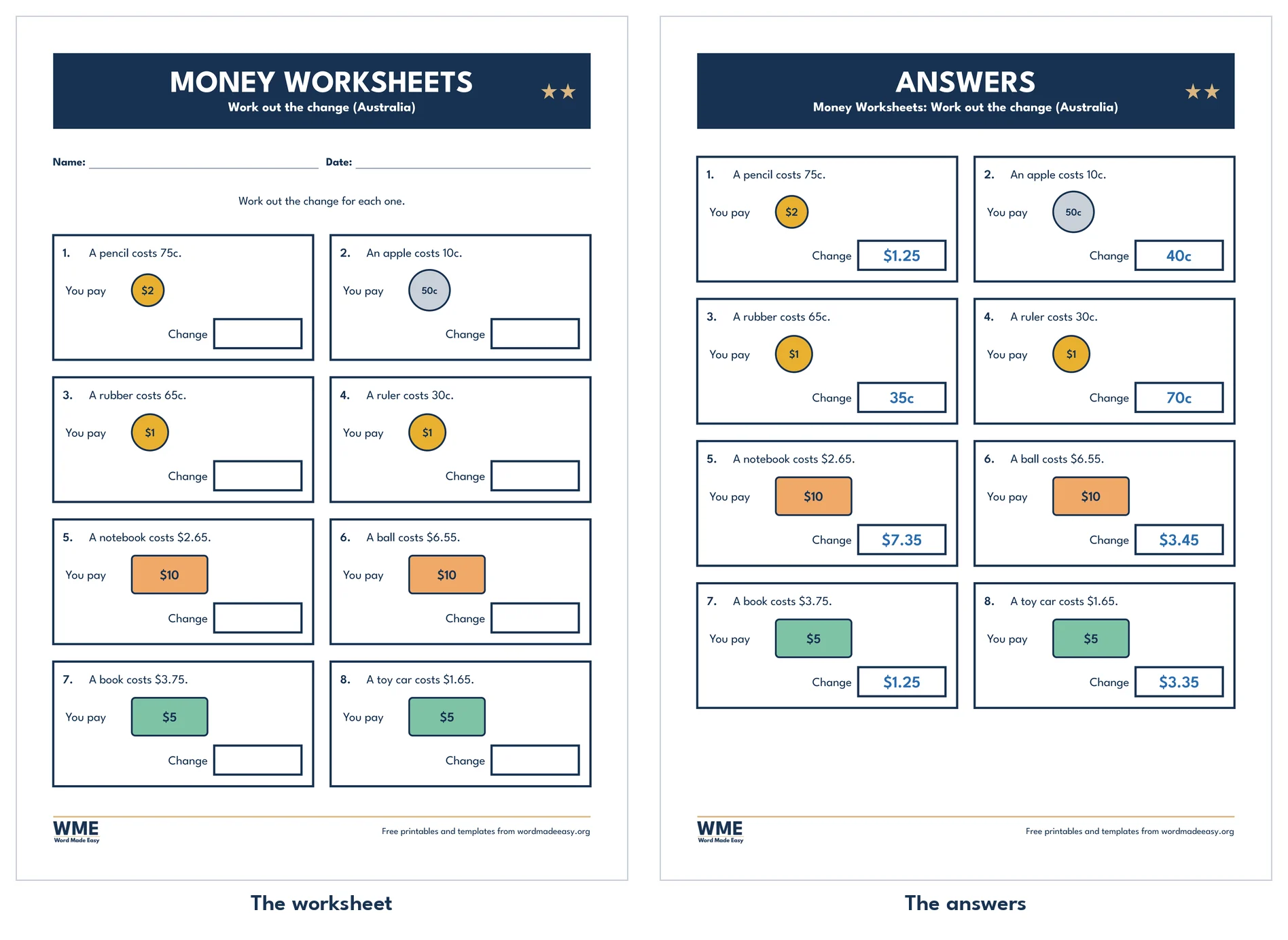
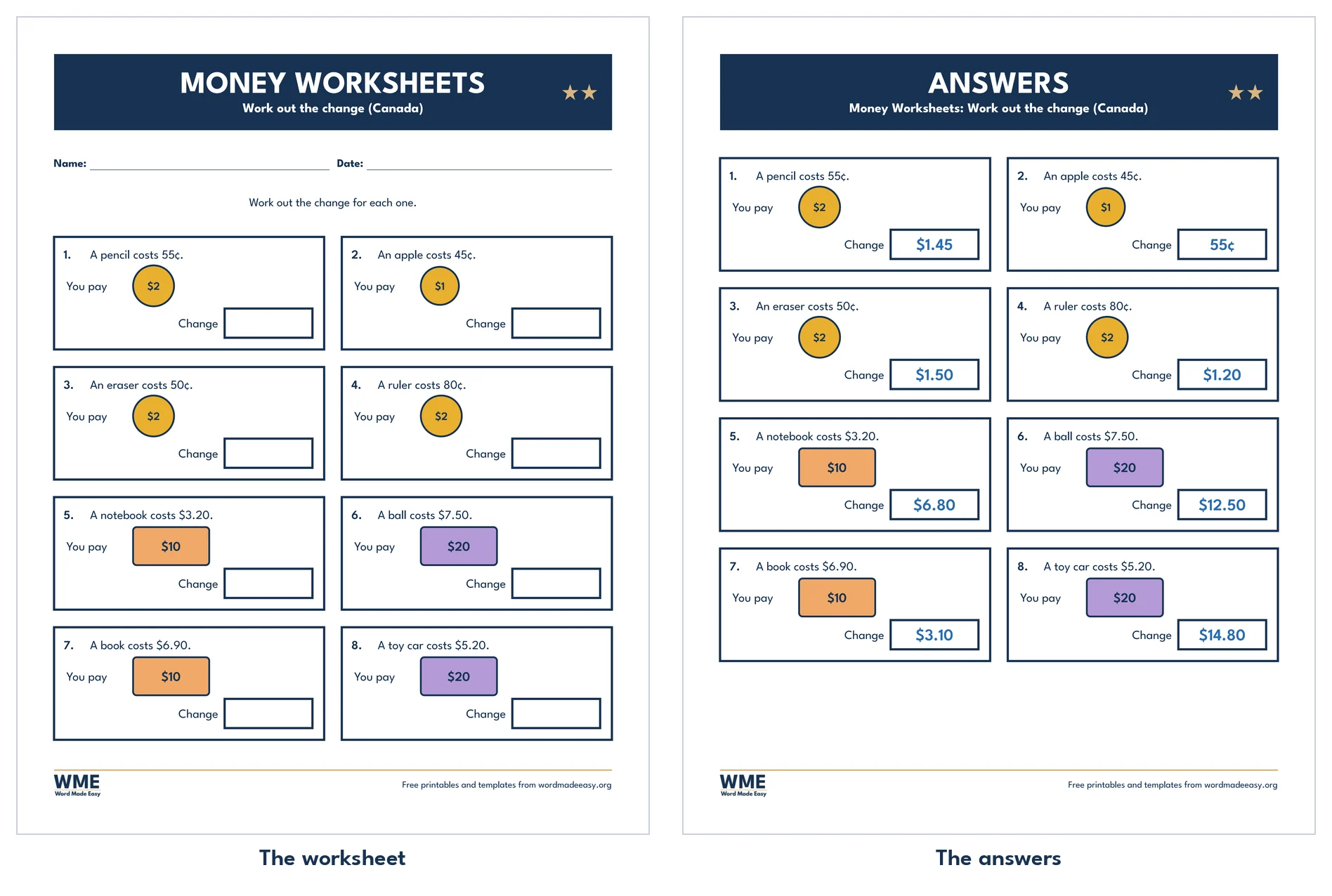
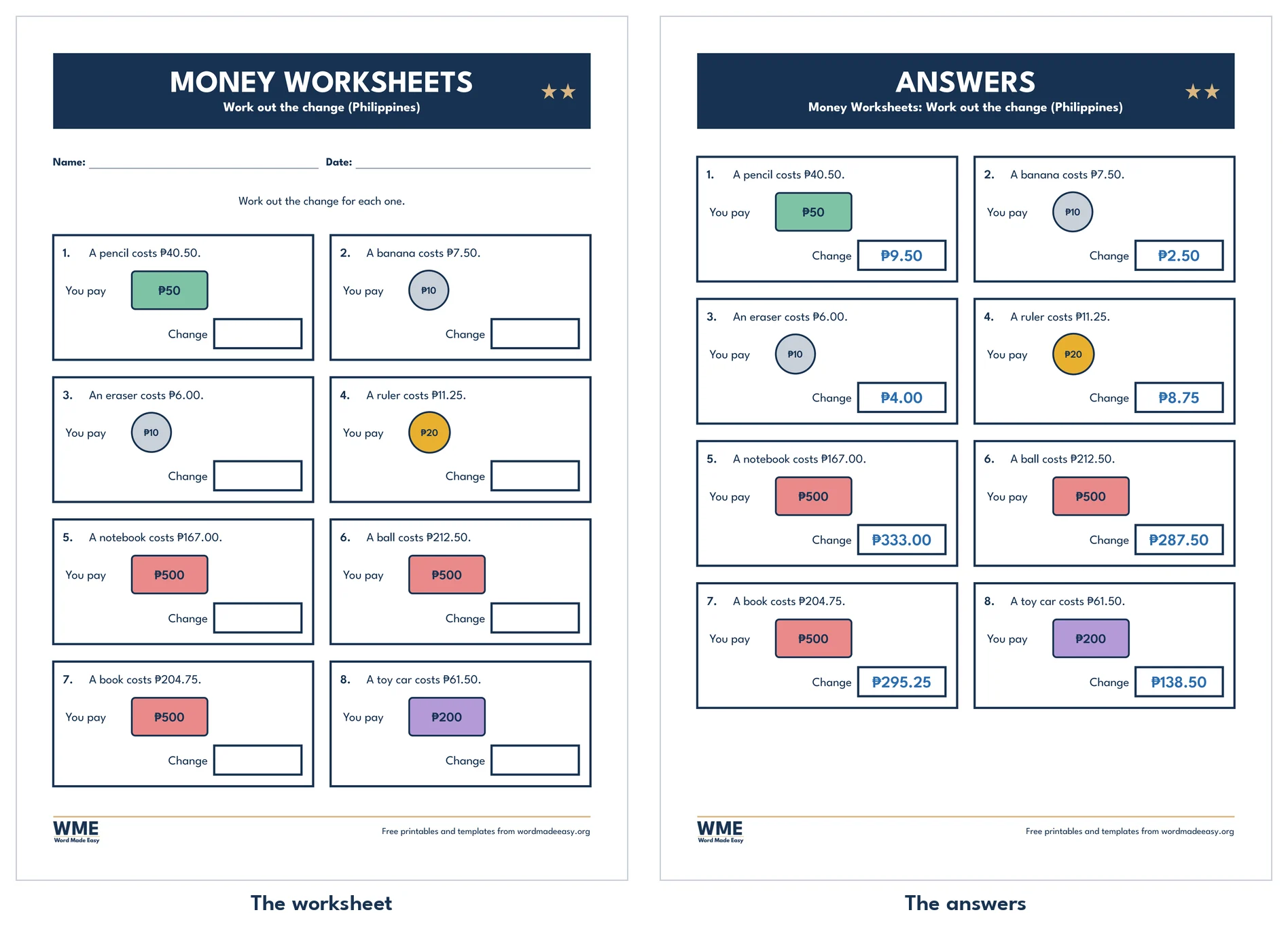
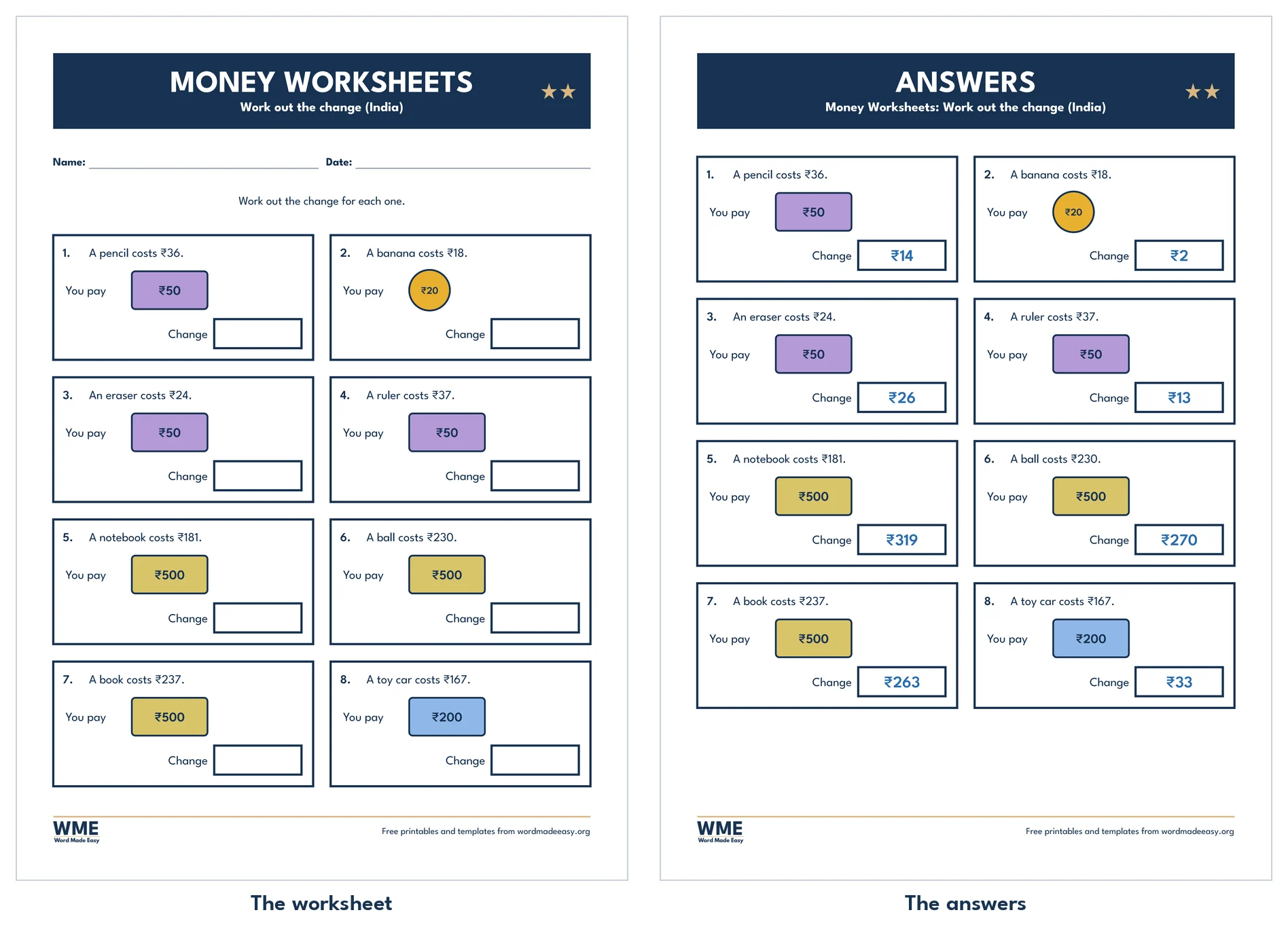
| Give Change 7 | 2 stars: Work out the change, with answers |
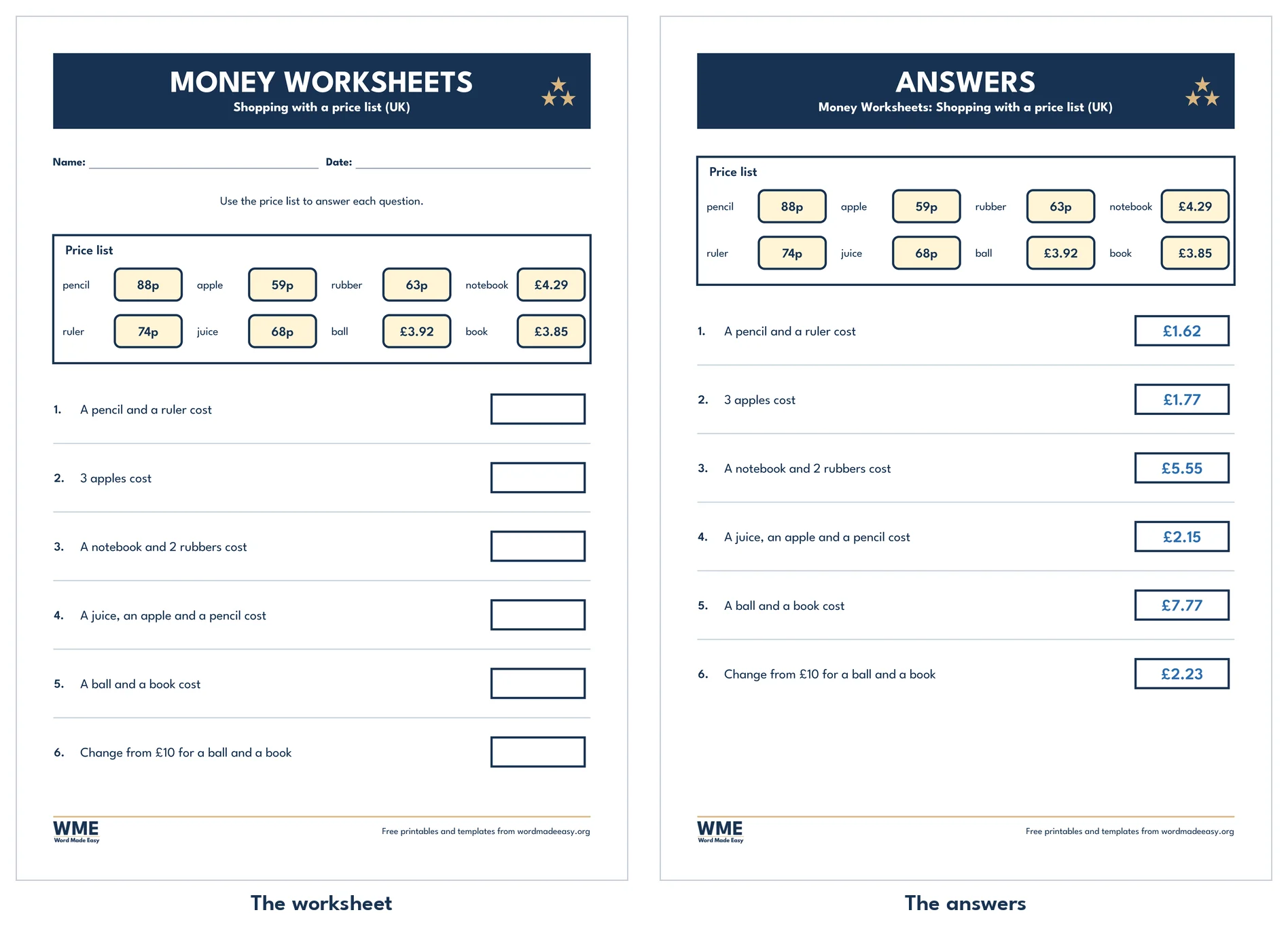
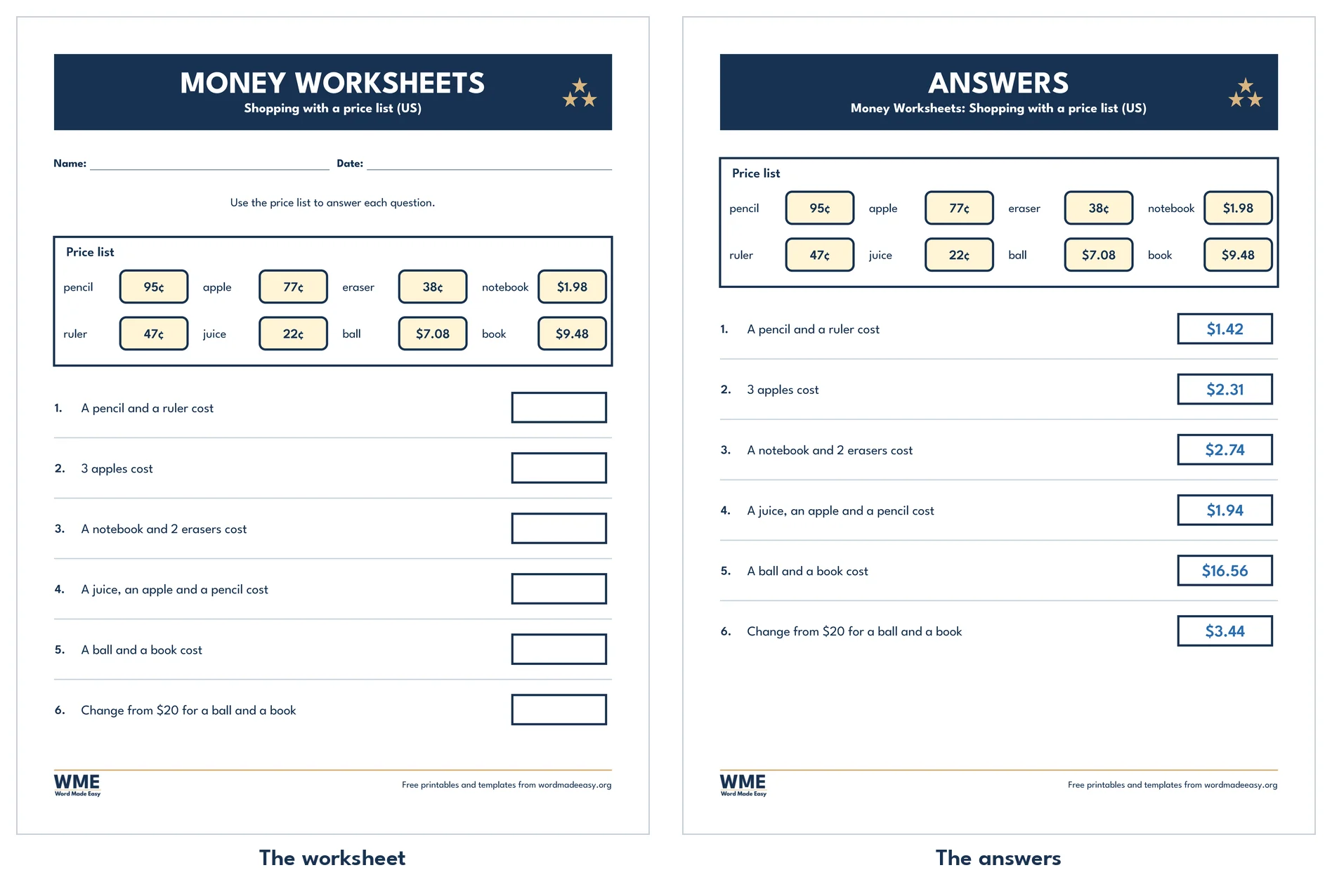
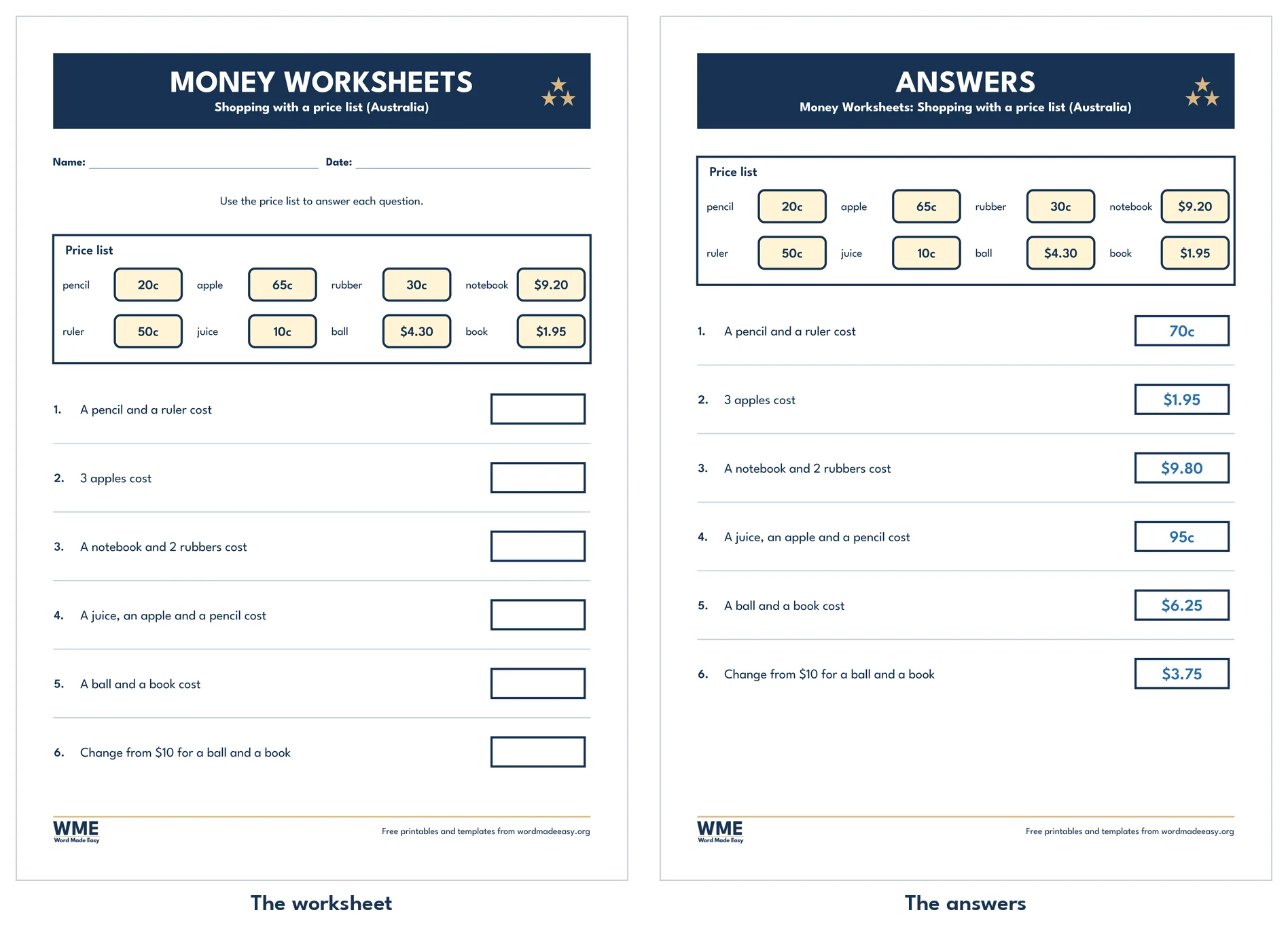
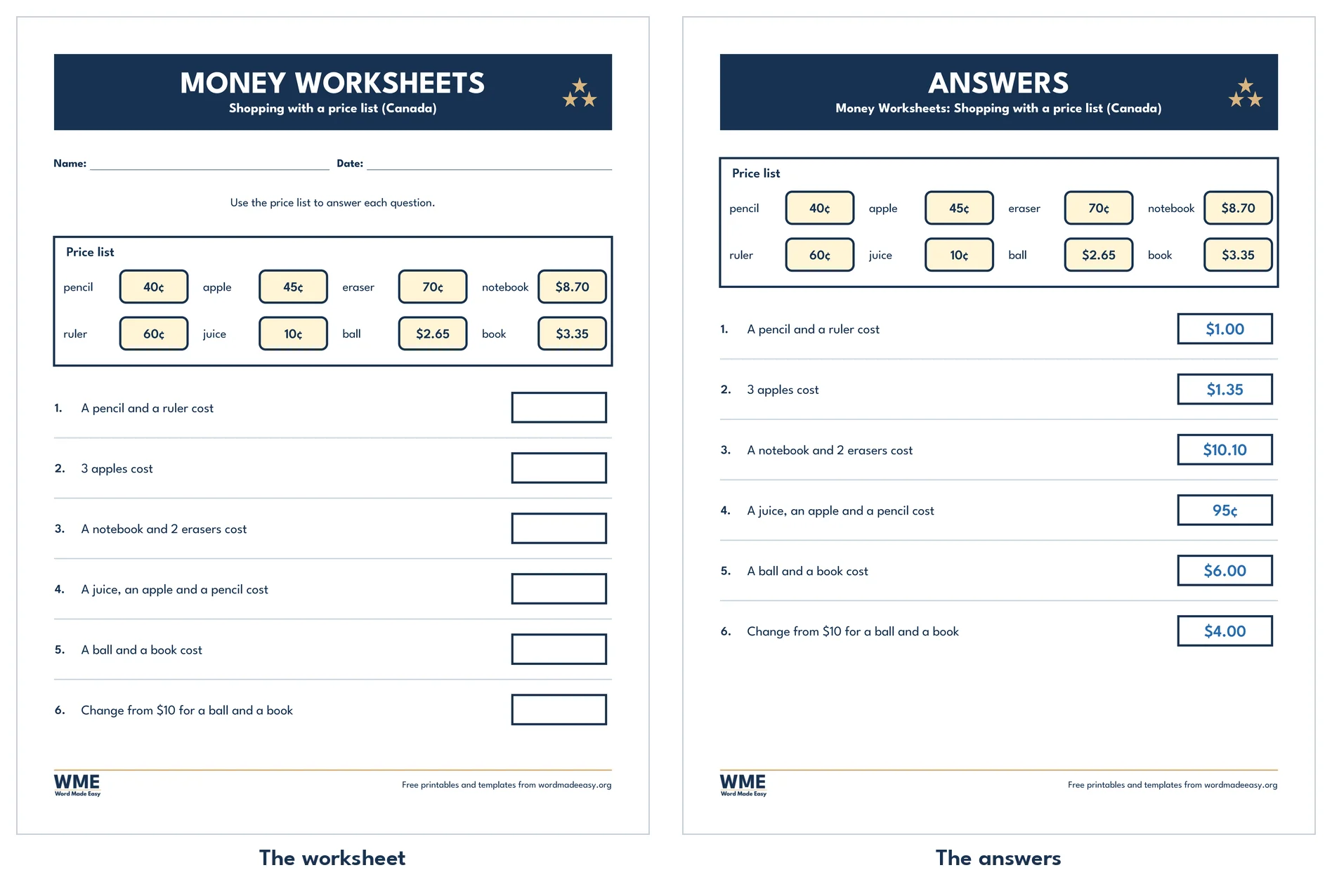
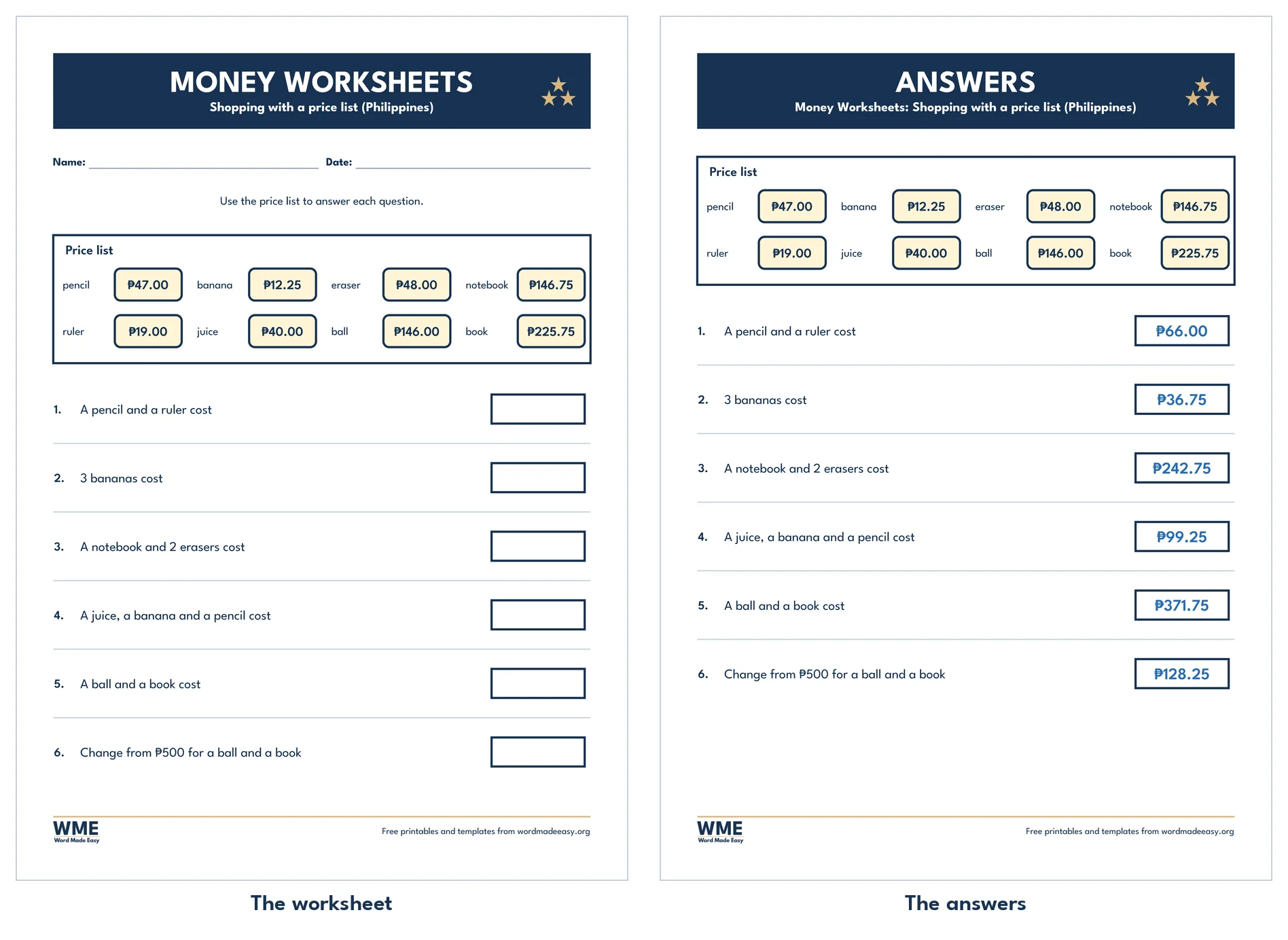
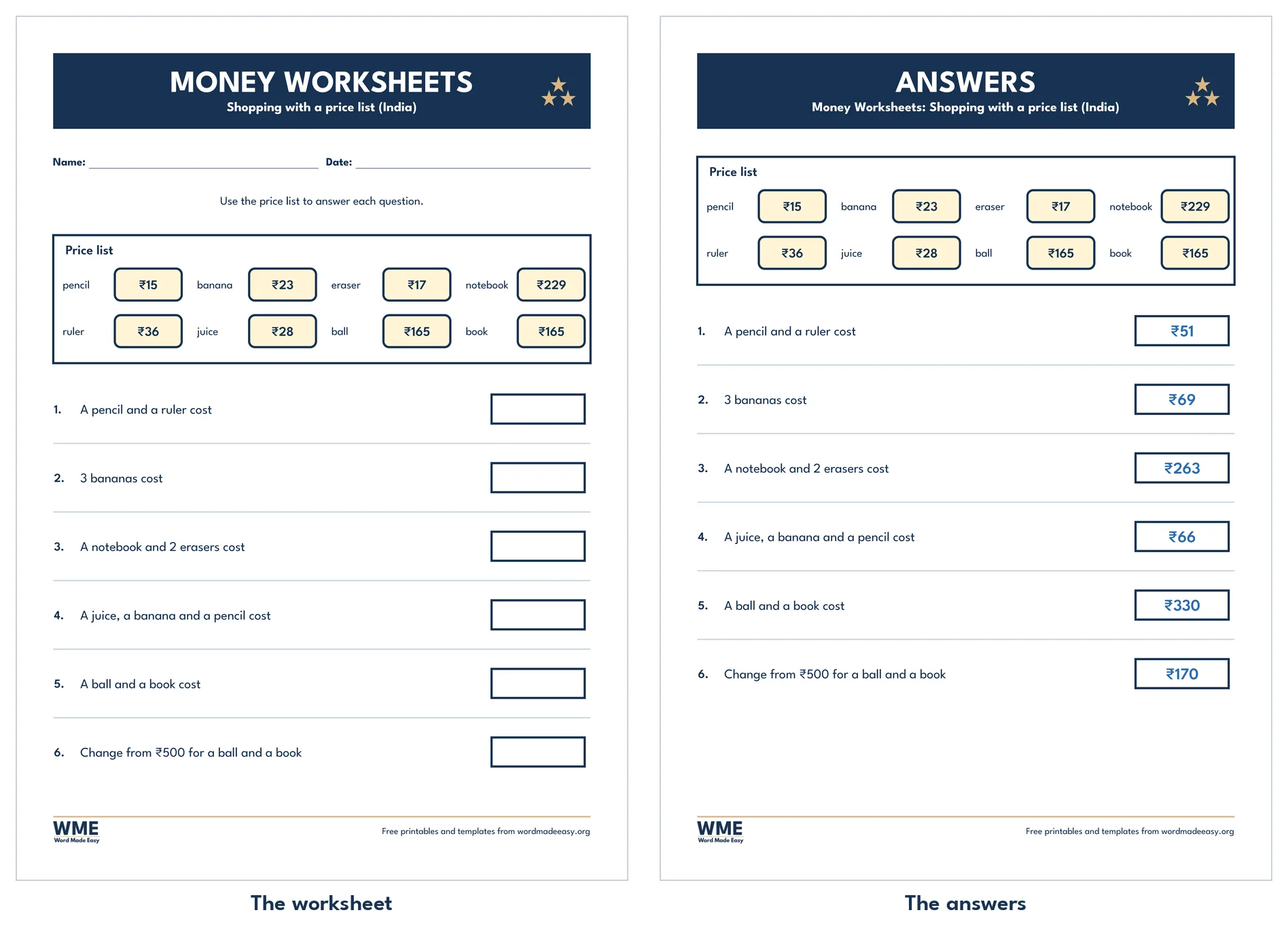
| Shopping List 8 | 3 stars: Shopping with a price list, with answers |
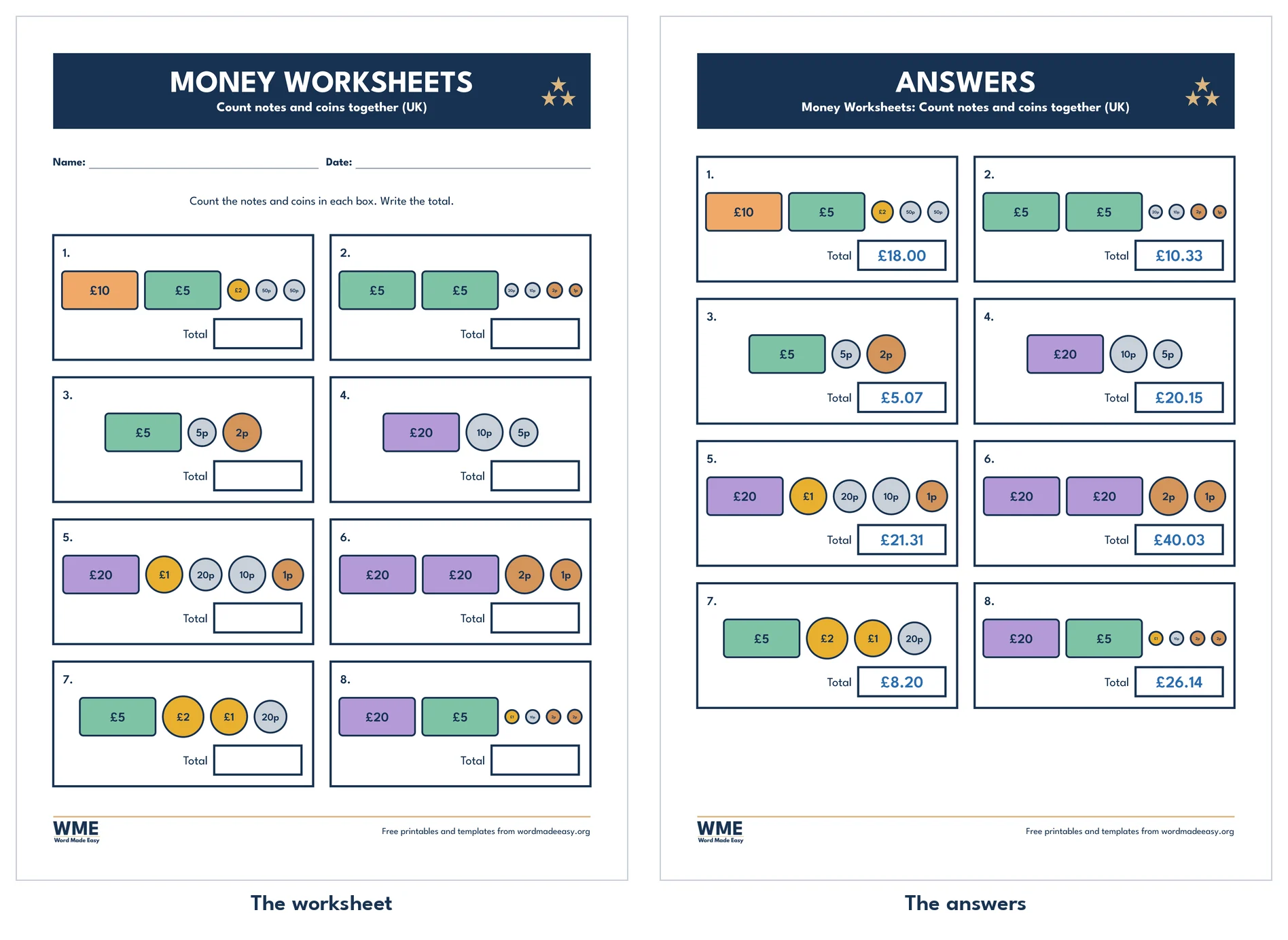
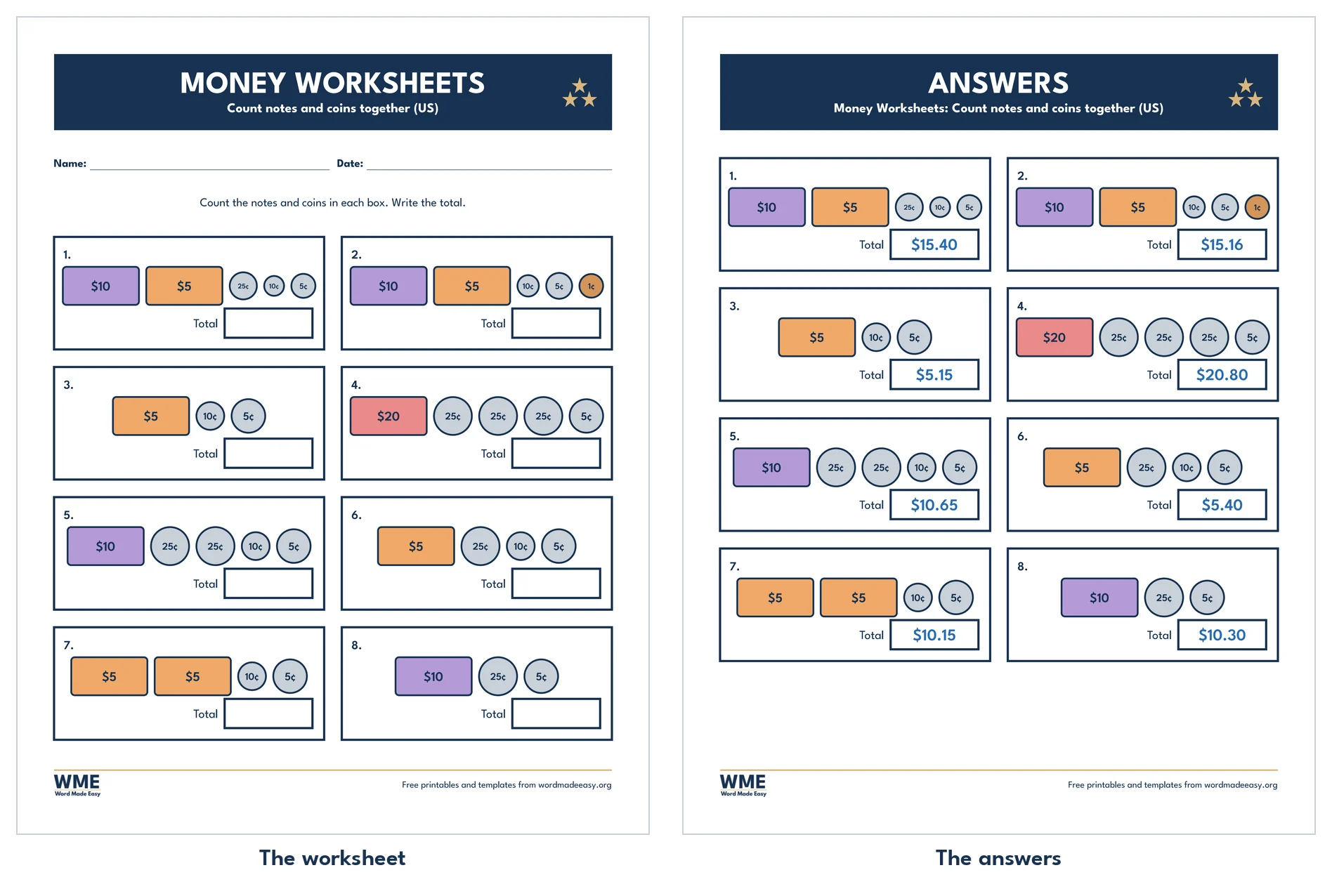
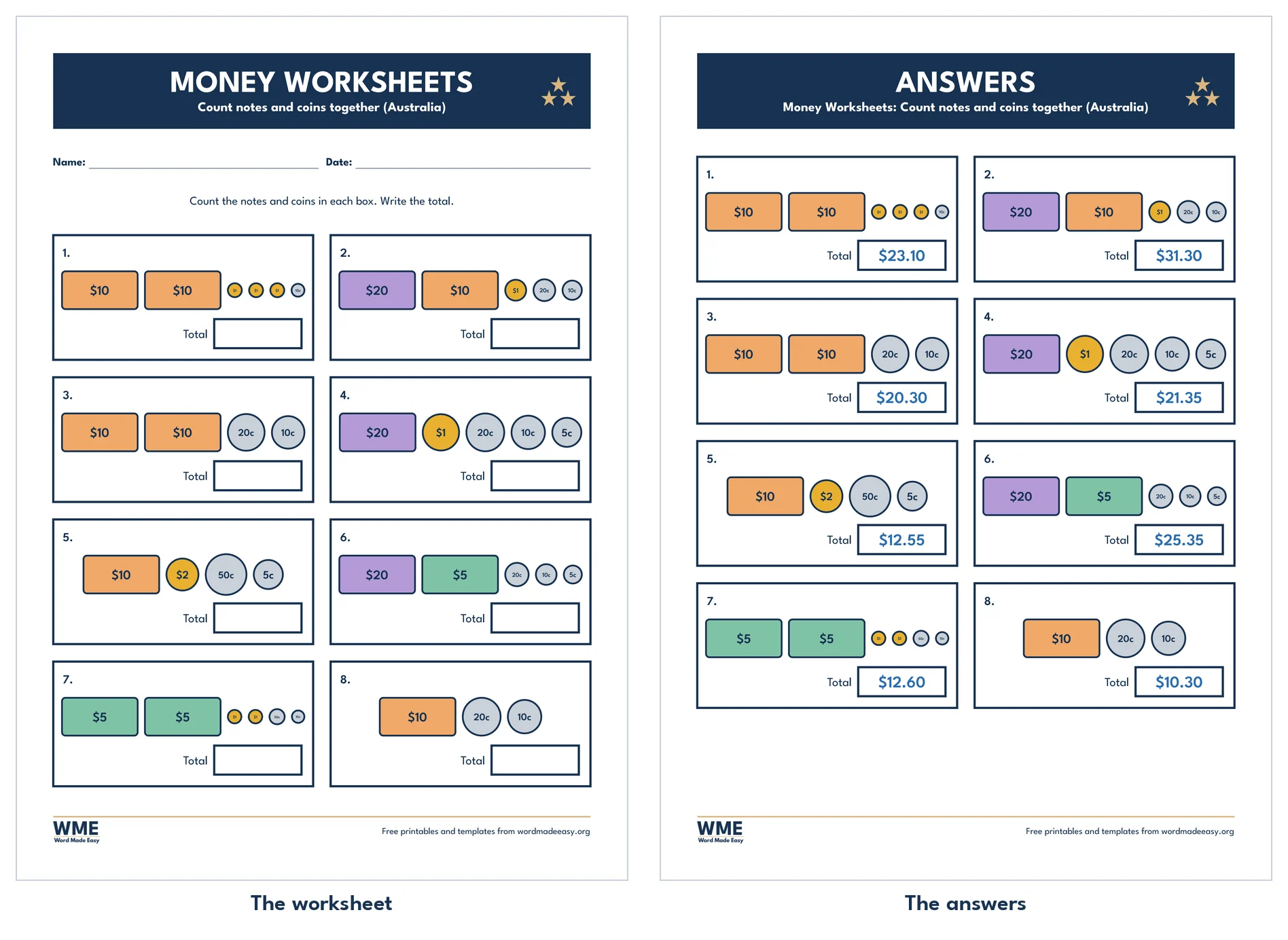
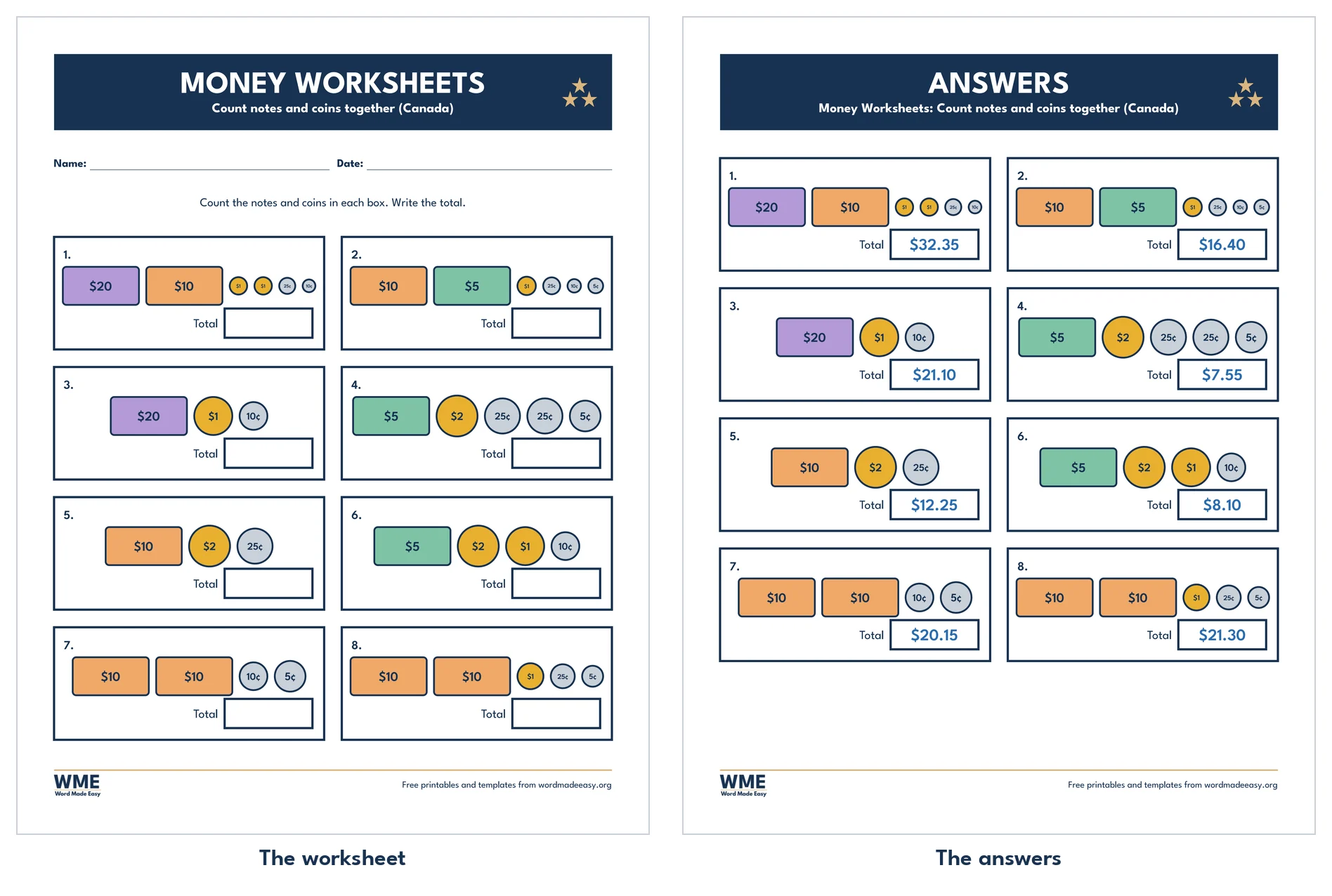
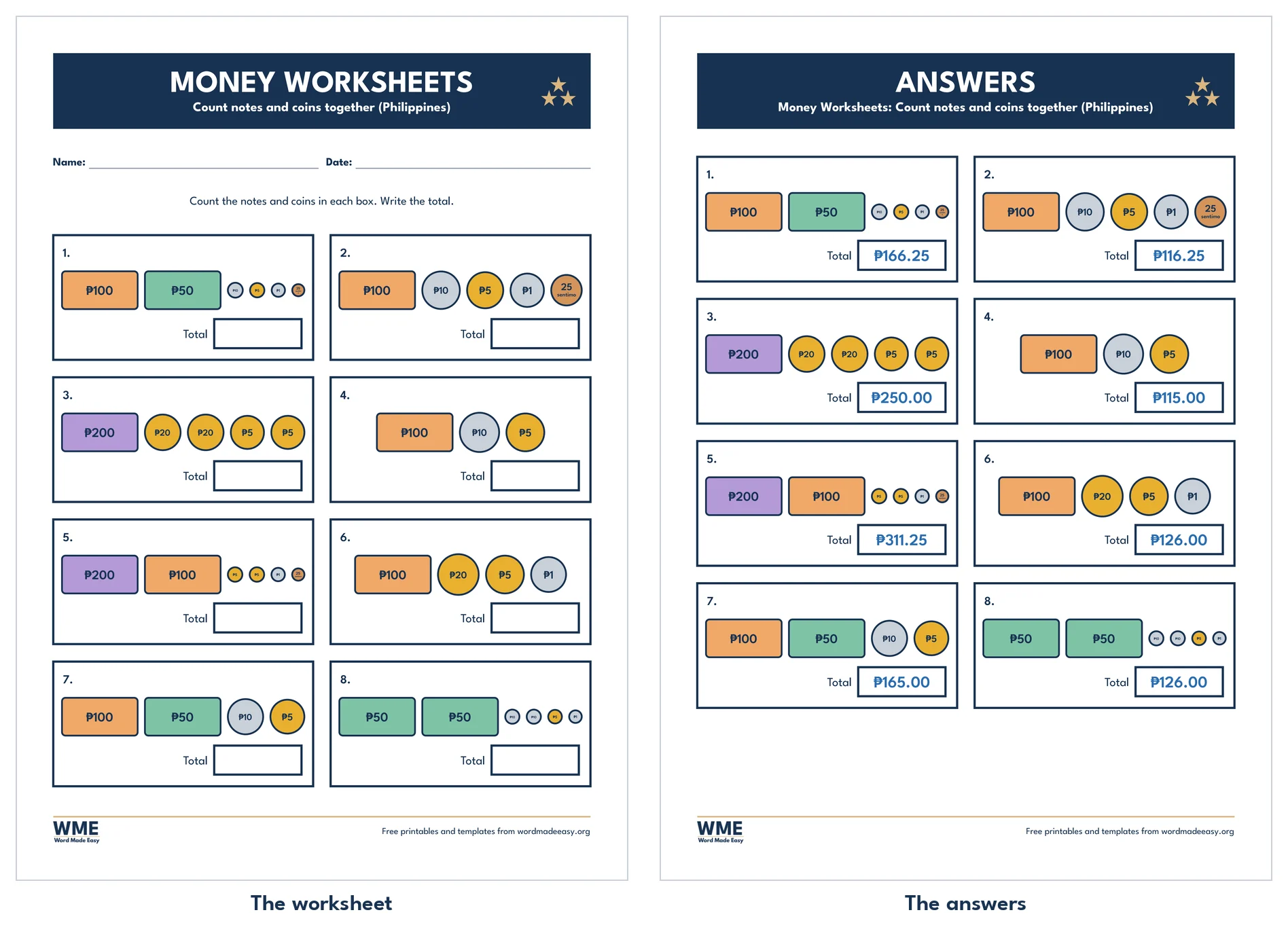
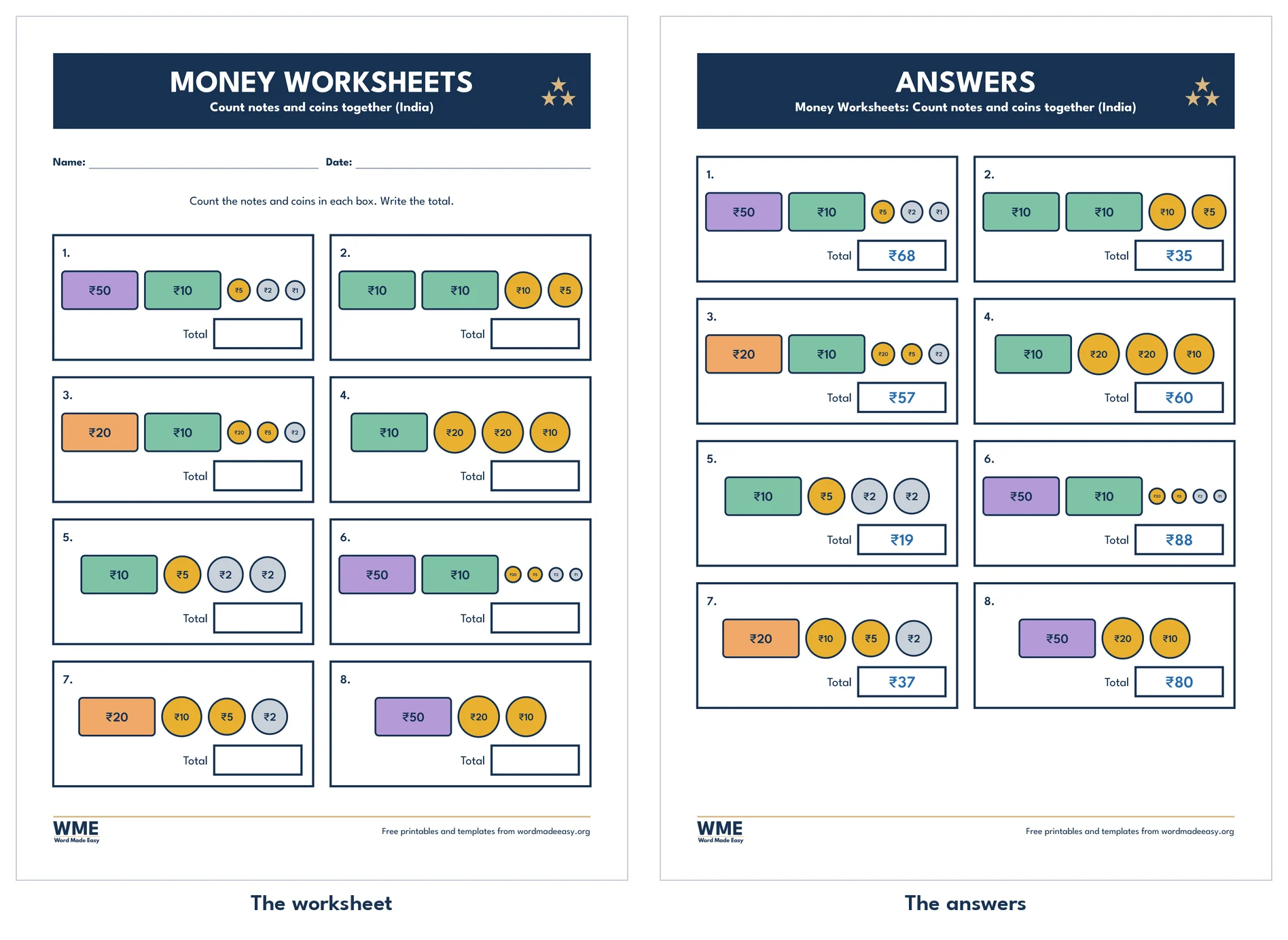
| Notes and Coins 9 | 3 stars: Count notes and coins together, with answers |
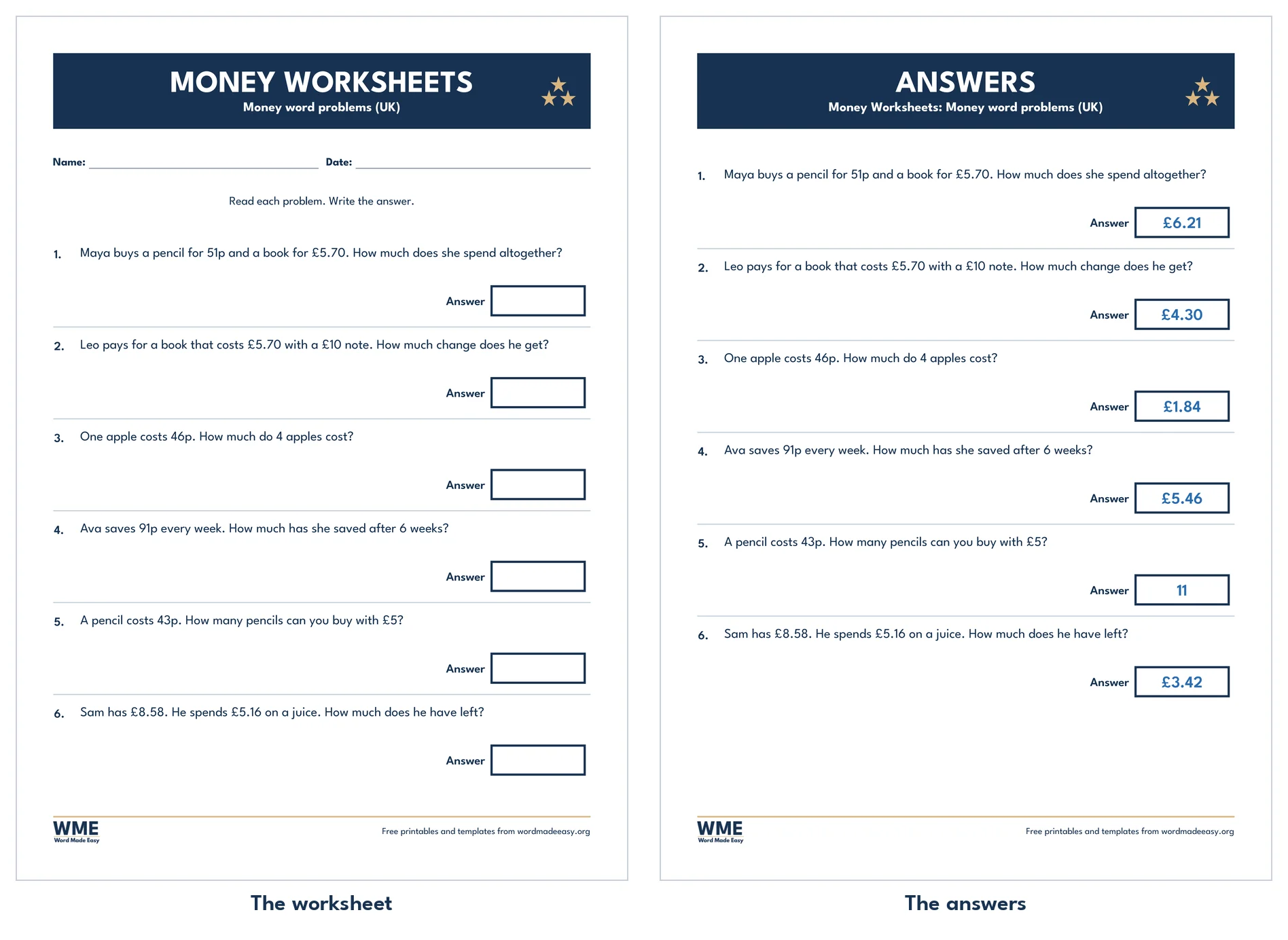
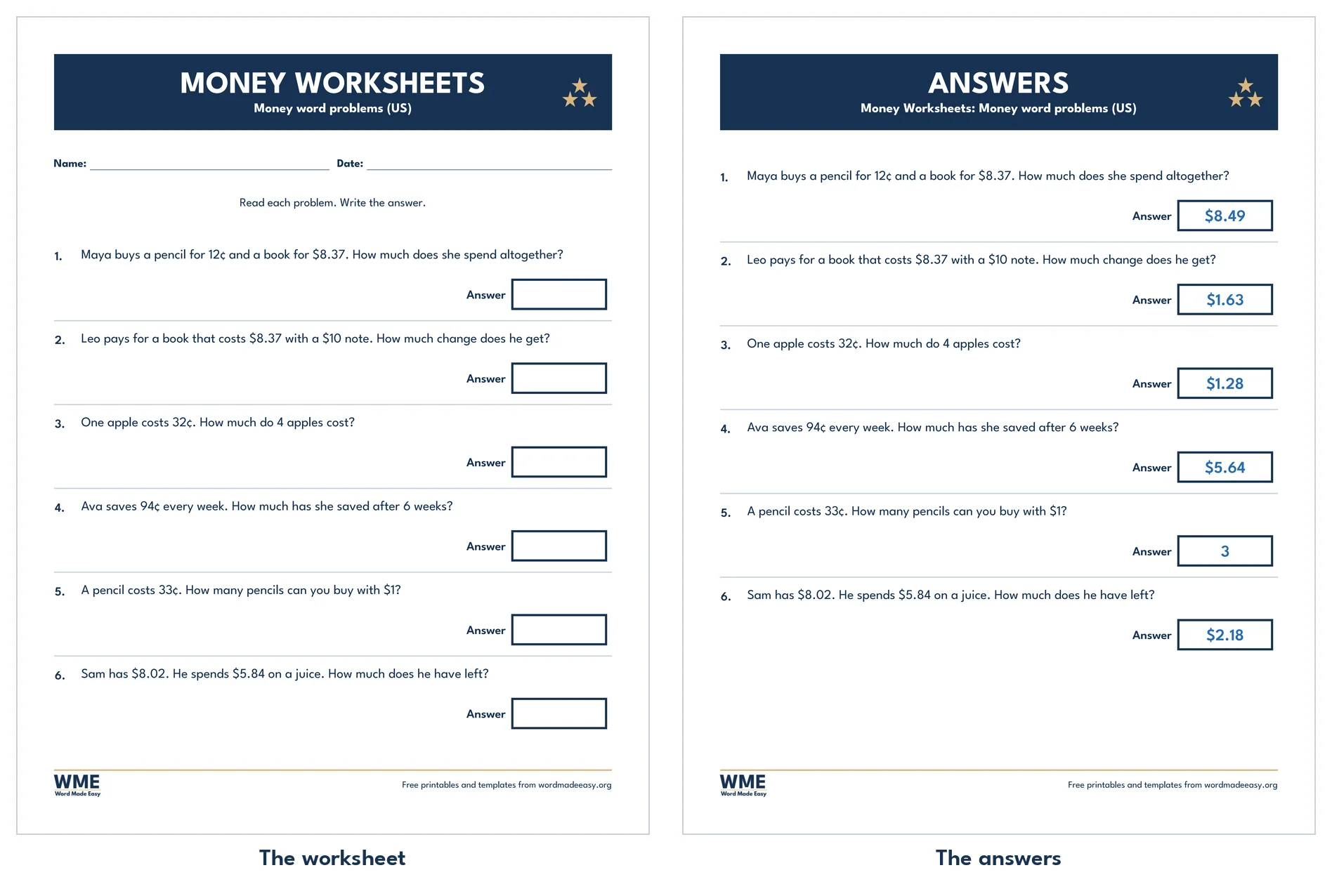
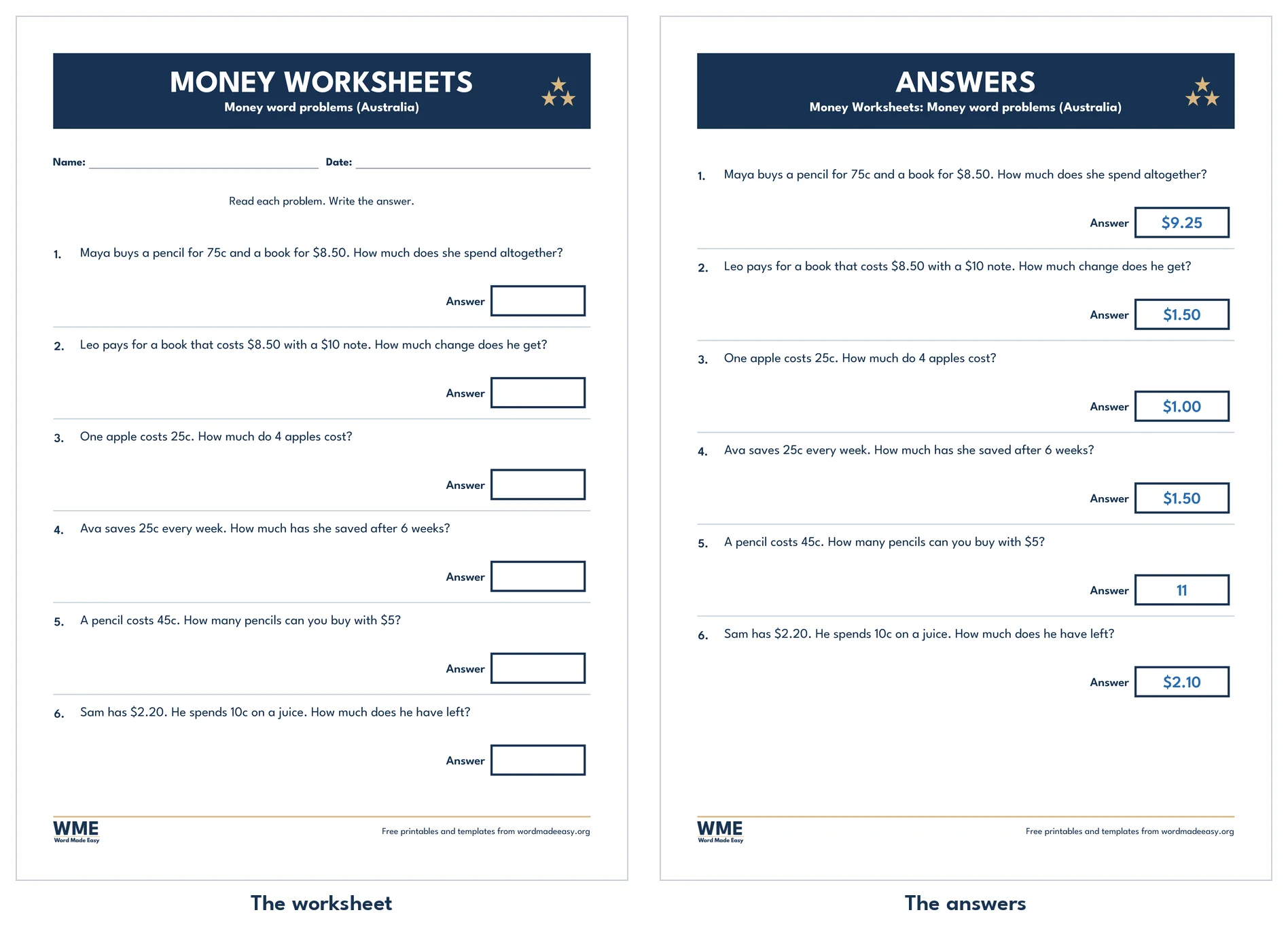
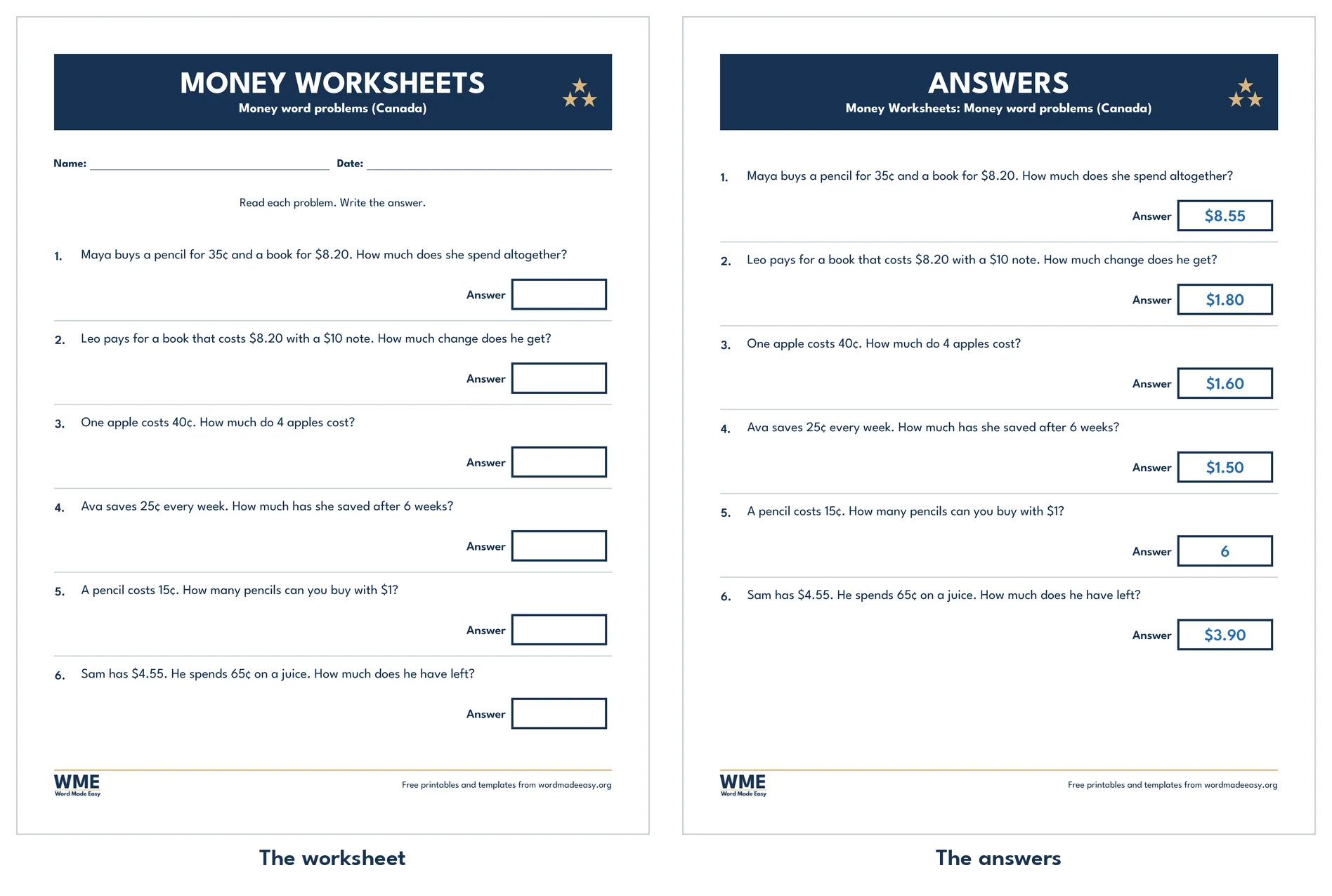
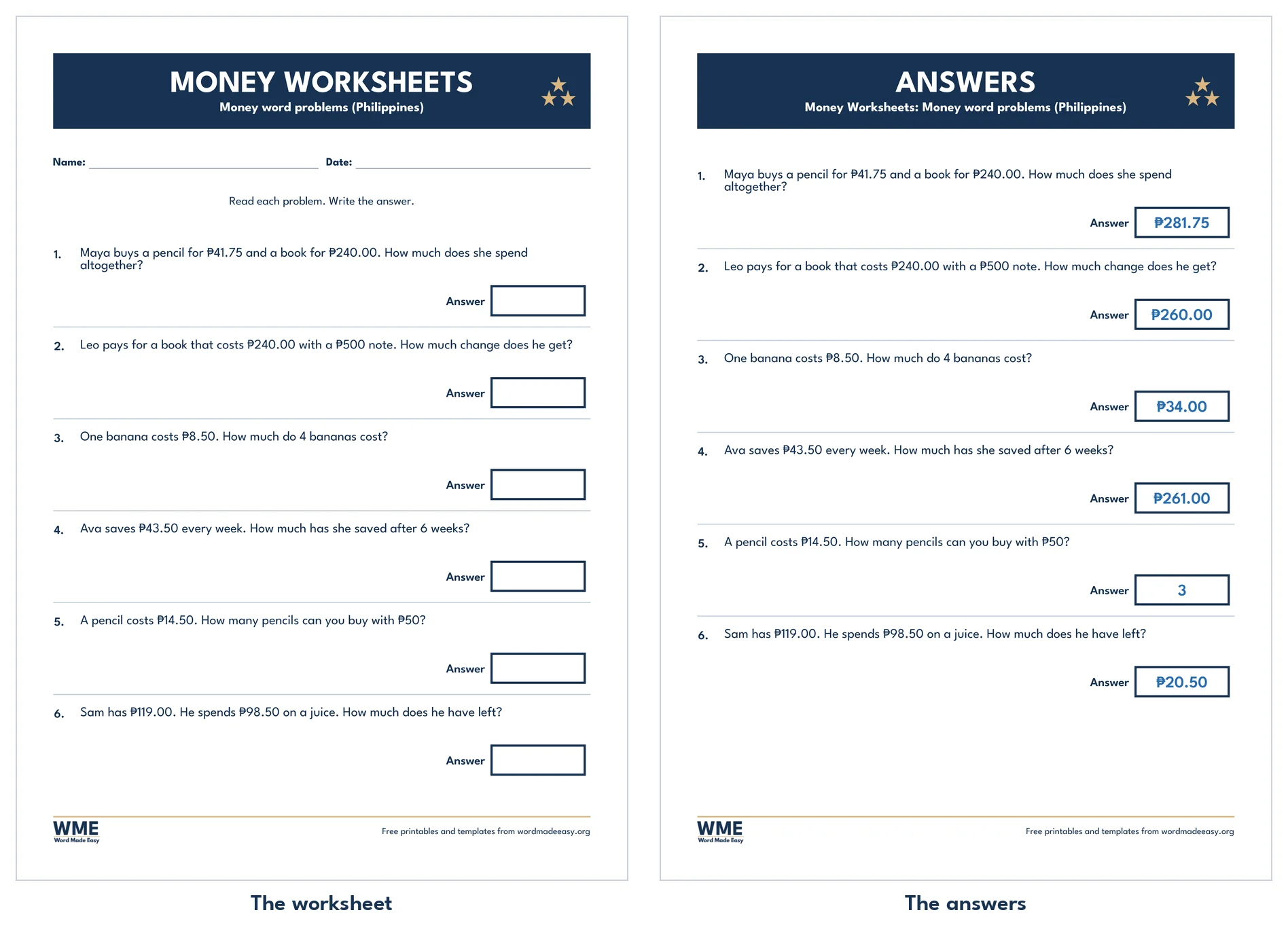
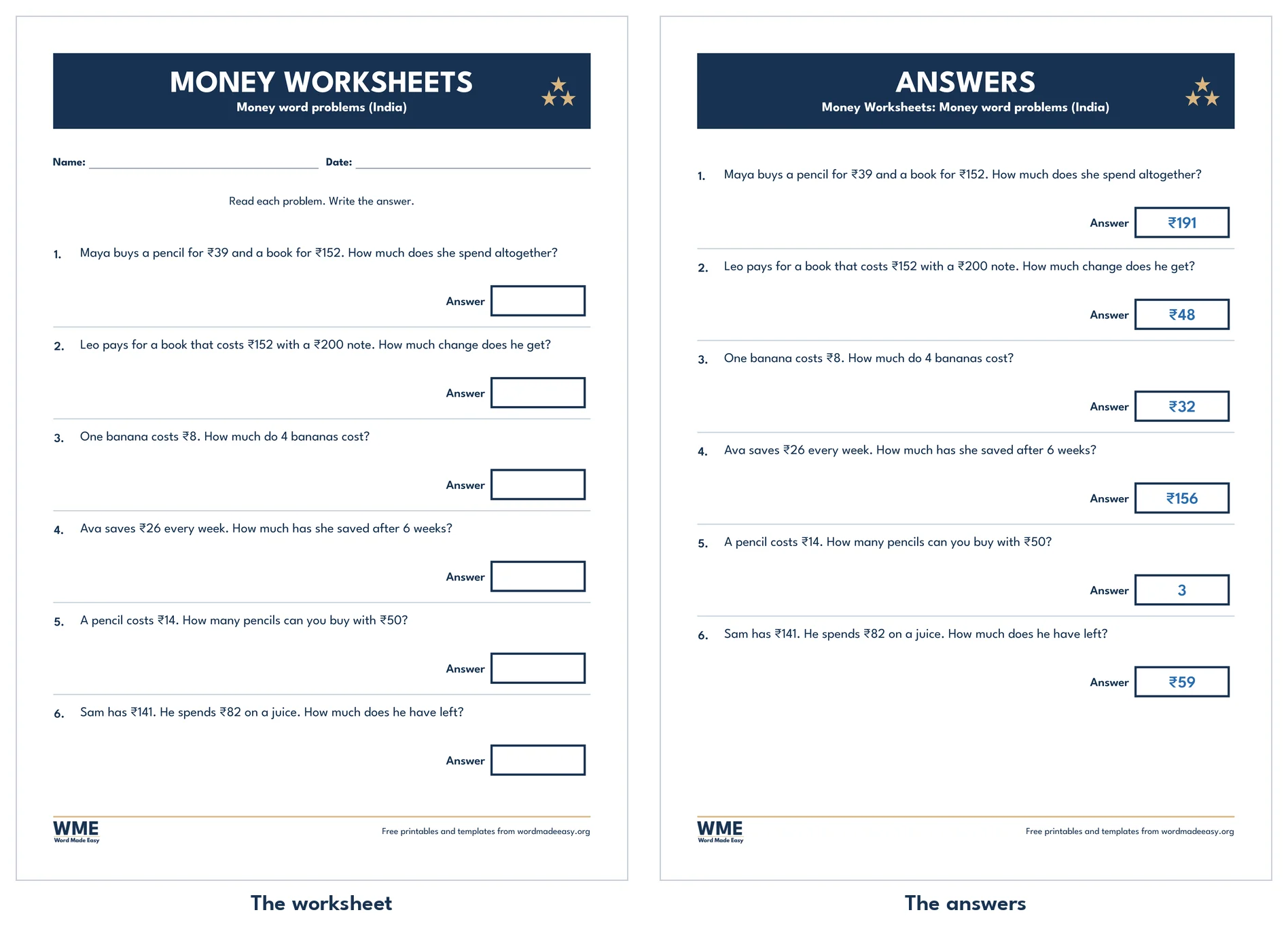
| Money Problems 10 | 3 stars: Money word problems, with answers |
👉 Coins are plain circles with the value typed on them, and every price is Word text, so you can change an amount in seconds. Page 2 of each file gives every answer.
How Do Children Learn to Count Money?
Counting money is counting in mixed steps. Children first learn the value of each coin, then sort a handful from the biggest coin to the smallest and count on: 20, 30, 35, 36. Next they add prices, make an amount in different ways and look for the fewest coins, which needs the biggest coin that fits each time. Giving change is counting on again, from the price up to the note or coin paid. The sheets follow that order, and the coins are plain labelled circles, so children read the value rather than guess it from a picture.
Which Money Worksheet Should You Start With?
- Every currency has the same ten designs and the same gold star levels, so a class can share one plan whichever money it uses.
- Count the Coins 1 and 2 (1 star): small coins first, then every coin.
- Add Two Amounts 3 (1 star): two price tags to add.
- Make the Amount 4, Fewest Coins 5 and Compare Amounts 6 (2 stars): circle coins, choose the fewest coins, and write <, > or = between two purses.
- Give Change 7 (2 stars): the price and the coin or note paid.
- Shopping List 8, Notes and Coins 9 and Money Problems 10 (3 stars): a price list, notes with coins, and six word problems.
- Australian and Canadian amounts end in 0 or 5, because those countries no longer use 1 cent coins; Indian amounts are whole rupees.
- For counting on in steps before money, see the counting on worksheets.
How to Use the Money Worksheets
- Choose your currency in the download box: each download holds that country’s ten sheets in colour and black and white.
- Start with the stars that suit your class and print the worksheet page.
- Sort the coins in each box from the biggest value to the smallest, then count on.
- Write the total in the box, using the small unit for amounts under one note, such as 75p, 75¢ or 75c.
- Mark with page 2, then move on to the next sheet.
The commonest slip is counting coins instead of their value, so five coins become 5p; ask children to say each value aloud as they touch it. Sorting biggest first stops most mistakes. For change, count up from the price to the amount paid rather than taking away. Real coins on the table help with the first sheets, and the plain circles make it easy to match them. For percentages and sale prices later on, try the percentage worksheets.
Black and White Versions
Every currency also comes in black and white: white coins with black outlines and labels, so the sheets photocopy cleanly. Each currency download holds both versions, in their own folders.
How to Print the Money Worksheets
Print at 100% (Actual size) on the paper the file was made for, A4 or US Letter, so the coins keep their sizes. Page 1 is the worksheet and page 2 the answers.
FAQs
Are these money worksheets free?
Yes. All ten designs are free in all six currencies; each download has the Word files, PDFs and print-ready images.
Which currencies are included?
UK pounds and pence, US dollars and cents, Australian dollars and cents, Canadian dollars and cents, Philippine pesos and sentimo, and Indian rupees.
Why are the coins plain circles?
Each coin is a simple circle with its value written on it, so children read the amount clearly, and nothing copies a real coin design.
Is there an answer key?
Yes. Page 2 of every file gives each total, the change, the fewest coins and the comparisons, and rings one way to make each amount.
What paper size are they?
US and Canadian money is on US Letter; UK, Australian, Philippine and Indian money is on A4.
Can I change the amounts?
Yes. Every coin label, price and question is Word text, so you can retype any amount.
Conclusion
Ten money worksheets in six currencies, from counting small coins to change and shopping problems, each with an answer page.
Choose your currency above, and for adding and taking away practice next, open the addition and subtraction worksheets.
Related Tutorials
- Free Addition and Subtraction Worksheets for Word
- Free Place Value Worksheets for Word
- Free Savings Challenge Printables for Word
Maths Resources
Recently Added Maths Resources
Browse all free maths resources for home and school, all made by a teacher.
Leave a comment
Have a question about these resources, or an idea for a new one? Ask below.