
Free printable alphabet resource
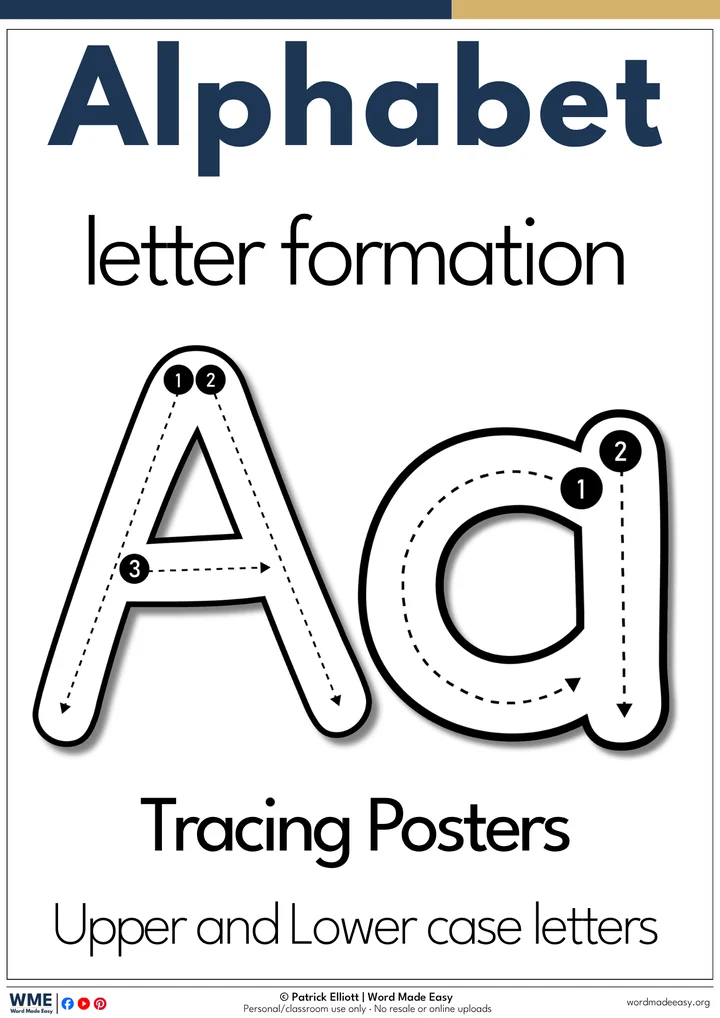
These free alphabet letter formation worksheets give children a clear A-Z sequence for recognising, tracing and forming uppercase and lowercase letters. Each worksheet pairs a large line-art picture prompt with guided formation arrows and handwriting practice.
Preview what is inside
1 of 3
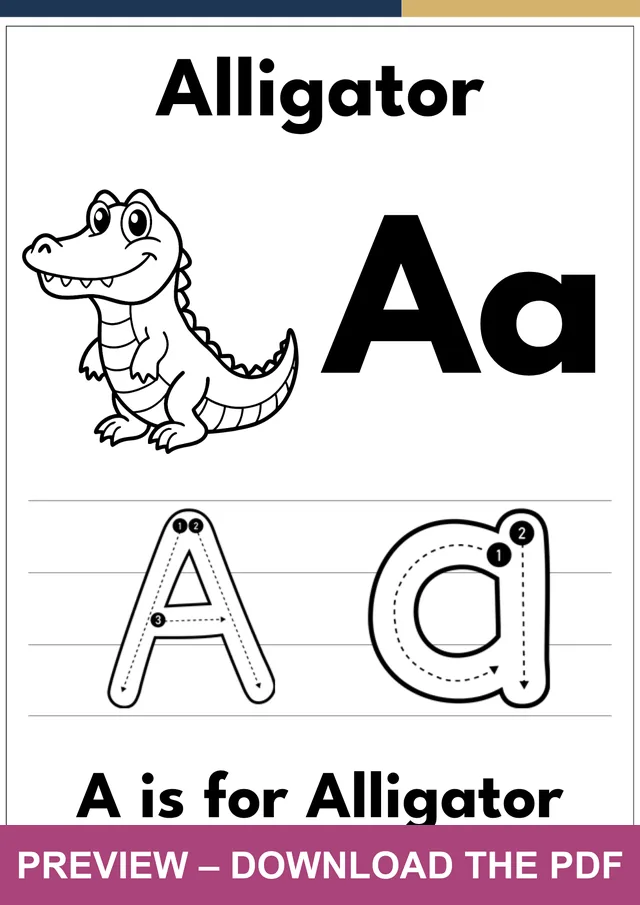
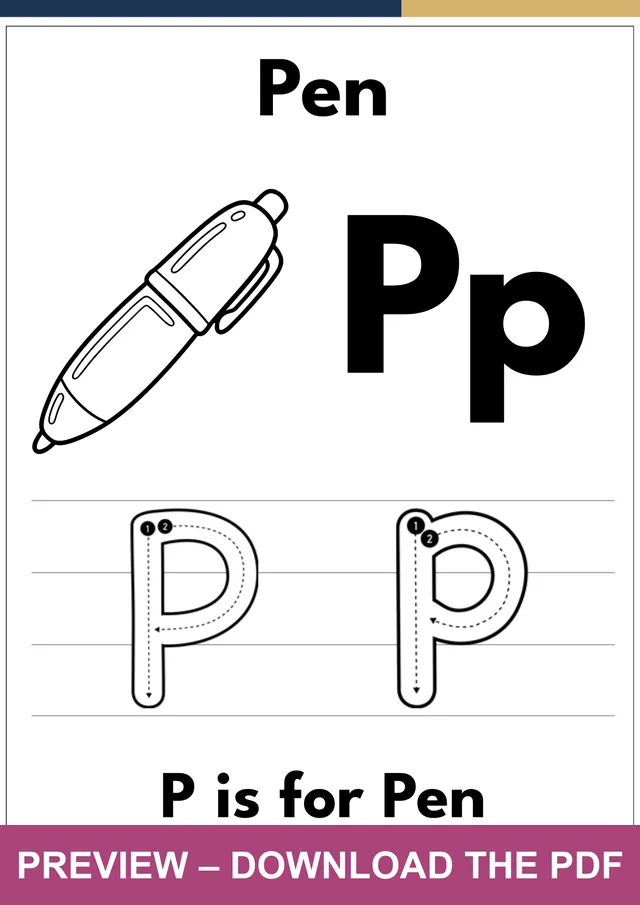
Use the arrows or dots to view the clean cover and two inside pages. The inside pages are reduced-resolution, watermarked previews; the PDF contains clean printable worksheets.
Introduce the letter shapes with the Alphabet Chart A-Z, then use the Alphabet Flashcards A-Z for quick recognition and oral rehearsal.
About these alphabet letter formation worksheets
This printable collection contains one front cover followed by 26 individual A-Z worksheets. Every worksheet presents the capital and lowercase form of one letter, a familiar picture prompt and a simple sentence such as A is for Alligator or P is for Pen. Large formation models include numbered starting points, directional arrows and broken guide lines so children can see where to begin and how the pencil should travel.
The consistent page layout reduces distraction and lets pupils concentrate on one letter at a time. The black-and-white line art is clear on ordinary classroom printers and can also be used as an optional colouring prompt after the formation work is complete.
What is included?
A complete alphabet sequence: 26 worksheet pages cover A to Z in order, with both uppercase and lowercase letter shapes.
Picture and vocabulary prompts: Each page links the focus letter to a familiar word and line-art illustration, helping children connect the printed symbol, initial sound and spoken vocabulary.
Guided formation models: Numbered dots, arrows and dashed pathways make the movement sequence visible before pupils attempt the shape independently.
A 29-page PDF package: The clean resource cover and 26 worksheets are followed by the Word Made Easy thank-you and terms-of-use pages.
What children can practise
- recognising capital and lowercase forms of each letter;
- starting each letter in the correct place and following the intended stroke direction;
- using controlled pencil movements to trace straight lines, curves and joins;
- linking a grapheme to a familiar word and its initial sound;
- developing visual discrimination between similar letter shapes;
- building confidence and consistency through repeated short practice.
How to use the worksheets
Introduce: Display one page and say the letter name, common sound and picture word together. Trace the large model with a finger while describing the movement in simple language.
Practise: Ask the child to follow the numbered route with a finger, then use a pencil on the dashed path. Encourage a comfortable grip, relaxed posture and slow, deliberate movement rather than speed.
Review: Compare the completed tracing with the model. Ask where the letter begins, which direction the pencil travels and which picture word helps the child remember the sound.
Teaching and follow-up ideas
- Print only the letters currently being taught instead of giving the whole pack at once.
- Place a page inside a reusable sleeve so pupils can rehearse with a dry-wipe pen before working on paper.
- Air-write the capital and lowercase letter using a whole-arm movement, then reduce the movement gradually to finger and pencil scale.
- Invite pupils to say another word beginning with the focus sound and draw it on the reverse of the page.
- Sort completed pages into letters with mainly straight strokes, mainly curved strokes or a mixture of both.
- Return to selected pages for brief retrieval practice rather than completing many letters in one sitting.
Support and challenge
Support: Work on one large letter at a time, use finger tracing first and add a tactile route with string, sand or a textured surface. Cover the second model if the page feels visually busy, and give a short verbal cue for each movement.
Challenge: After tracing, ask the pupil to reproduce the letter from memory on a whiteboard or separate paper. They can generate another alliterative word, compare the capital and lowercase shapes, or explain the formation route to a partner.
Where this resource fits in learning
Use the pages alongside a structured phonics and handwriting sequence rather than relying on alphabetical order as the teaching order. Select the worksheet that matches the grapheme already introduced, model its formation explicitly and revisit it in short sessions until the movement becomes secure. The Department for Education reading framework provides wider guidance on teaching the foundations of literacy.
For additional recognition practice, follow the tracing work with the Phase 2 Letter Sound Placement Worksheet. This changes the task from forming a single letter to noticing where a grapheme belongs within a word.
Resource licence
Free for personal and classroom use. You may print copies for yourself or your learners. Resale, redistribution and uploading the file to other websites are not permitted.
Questions about the alphabet worksheets
What do these alphabet worksheets ask pupils to do?
Children recognise the focus letter, connect it to a picture word and follow numbered arrows and dashed routes to practise the capital and lowercase formation.
How many printable pages are included?
The resource contains a clean front cover and 26 A-Z worksheet pages. The PDF also includes two Word Made Easy thank-you and terms-of-use pages.
Do the worksheets teach letter sounds too?
Each page includes a familiar picture word beginning with the focus letter, so teachers can connect formation practice to the grapheme and common initial sound already being taught.
Should children complete the pages in alphabetical order?
Not necessarily. Choose the worksheet that matches the letter or grapheme in your phonics and handwriting sequence, then revisit it in short practice sessions.
How can I support a child who finds tracing difficult?
Begin with finger tracing and large whole-arm movements, give one short movement cue at a time and use a reusable sleeve before asking the child to work directly on paper.
May I print copies for my class?
Yes. You may print copies for your own learners under the personal and classroom-use licence.
Leave a Reply