
Free printable Foundation handwriting resource
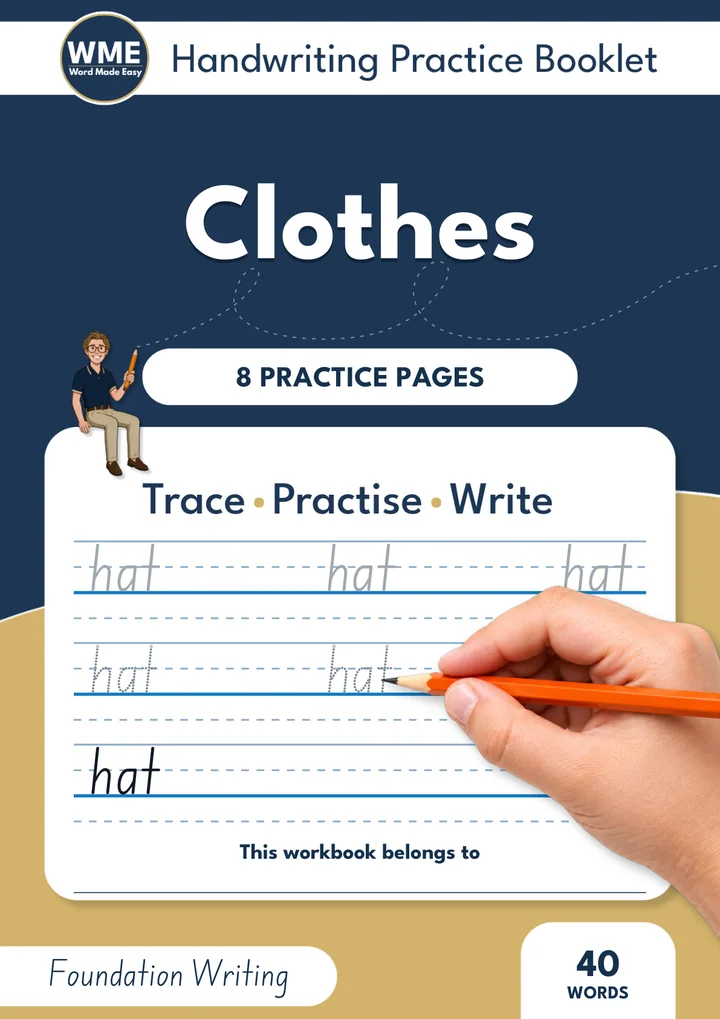
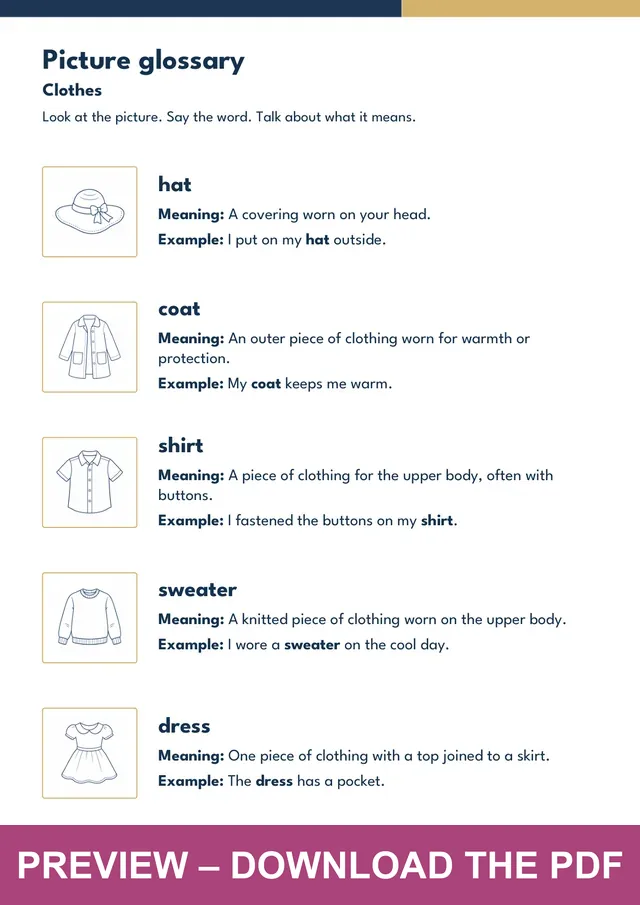
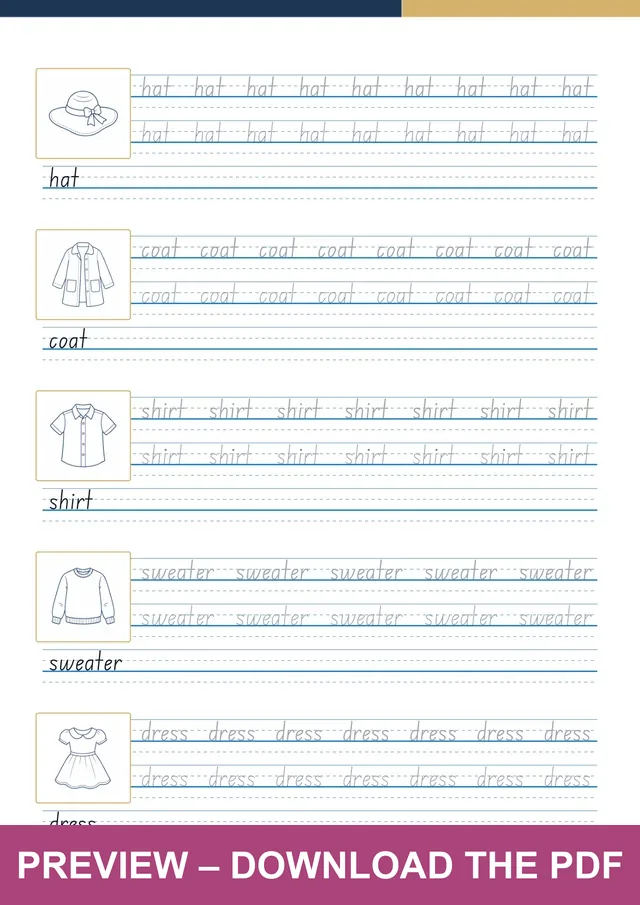
This clothes handwriting workbook introduces 40 clothing and accessory words, from hat and coat to headscarf and poncho. Children discuss the picture glossary, trace grey and dotted Foundation models, then copy the names into blank guided space after a black word model.
Preview what is inside
1 of 4
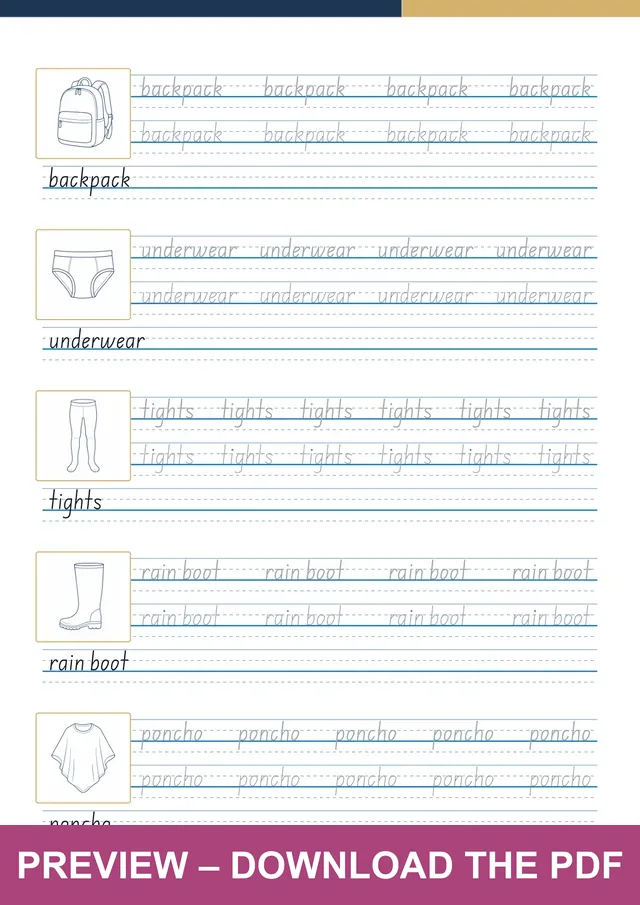
Use the arrows or dots to see the front cover, one glossary page and two handwriting sheets. The three inside-page previews are watermarked; download the PDF for clean printable pages.
Use Clothes Matching and Colouring Worksheet to revisit clothing vocabulary through a different printable task. For letter-level support before longer garment names, choose from Alphabet Trace & Write A-Z Practice Workbook.
About this clothes handwriting workbook
The collection covers everyday garments, footwear and accessories. Familiar words such as sock, shoe and shirt appear alongside cardigan, swimsuit, headscarf and backpack. The glossary supplies meanings and example sentences that can help learners connect vocabulary with dressing routines, weather and activities without assuming everyone wears the same items.
Eight handwriting sheets follow eight glossary pages. Most groups contain a single word, but sun hat and rain boot require a space, and T-shirt includes both a capital letter and a hyphen. Plural forms such as trousers, shorts and tights are printed as complete entries. These details are part of the word model to preserve when copying.
What is included?
- 40 words: hat, coat, shirt, sweater, dress, skirt, trousers, shorts, sock, shoe, T-shirt, blouse, cardigan, sweatshirt, hoodie, jacket, raincoat, jeans, leggings, uniform, apron, pyjamas, swimsuit, boot, sandal, slipper, scarf, glove, mitten, cap, beanie, sun hat, headscarf, belt, tie, backpack, underwear, tights, rain boot, poncho.
- 8 picture-glossary pages with meanings and example sentences.
- 8 handwriting sheets using grey models, dotted letters and independent copying space.
- 20 PDF pages in total: front cover, instructions, glossary, handwriting sheets and two terms pages.
How to use this clothes handwriting workbook
Select an item in a story illustration or dressing-up picture and locate its glossary entry. Read the meaning aloud and talk about a situation in which someone might wear or use it. Keep the discussion open to different clothing choices and climates.
Model hat or coat through the grey, dotted and independent strips. For T-shirt, point out the capital T and the hyphen before tracing. In rain boot, demonstrate a clear internal word space. Review an independent attempt by comparing letter size and the complete spelling with the black model.
Teaching and follow-up ideas
- Prepare labels for a pretend clothes shop using two or three practised names.
- Sort picture cards by a practical purpose, such as footwear or protection from rain, and explain the choices.
- Choose an outfit for a fictional character's activity and dictate a short list of its items.
- Compare glove and mitten in the glossary, then use the pictures to explain the difference before writing.
Support and challenge
Begin with a familiar short item such as hat or sock and introduce unfamiliar garments through the glossary. Do not assume pupils own every item or ask them to discuss personal clothing needs. Let a child copy a long name such as sweatshirt in small portions while checking the model. Confident writers can create a labelled drawing or preserve the punctuation in T-shirt without an adult reminder.
Where this fits in learning
Move from recognising a pictured item to naming it, understanding the explanation and recording its label. The workbook supports practical vocabulary alongside handwriting rather than prescribing clothing for a particular person or season. Later tasks can involve selecting labels for a story, a shopping list or a drawing, using adult help for any words beyond the printed collection.
Choosing pages to print
For this clothes handwriting workbook, pair glossary page 3 with practice page 11 for hat, coat, shirt, sweater and dress. The last handwriting page, PDF page 18, contains backpack, underwear, tights, rain boot and poncho. Select entries appropriate to the learner and lesson; completing all eight writing sheets at once is unnecessary. If your focus is punctuation, locate the T-shirt group on page 13 and discuss the capital and hyphen before writing. A test print helps confirm that pale lettering and the solid blue baseline are clear at the chosen print setting.
The handwriting guidance can help adults demonstrate capital and lowercase formation before pupils copy T-shirt and other labels. NSW handwriting teaching resources.
Resource licence
Free for personal, homeschool or single-classroom use under the terms included in the PDF. Resale, redistribution and uploading the file to another website are not permitted.
Questions about this workbook
What is included in the clothes handwriting workbook?
There are 40 entries covering garments, footwear and accessories, including cardigan, headscarf, backpack and poncho.
Does the workbook include punctuation practice?
T-shirt contains a capital T and a hyphen, and the learner should preserve these features when copying the model.
Are any labels more than one word?
Yes. Sun hat and rain boot each contain a space between two words.
What is the total PDF length?
Twenty pages: cover, instructions, eight glossary pages, eight handwriting sheets and two terms pages.
Must children own the clothes shown?
No. Use pictures, fictional characters or pretend-shop examples without requiring personal items.
Can I print just one topic group?
Yes. Select the glossary and handwriting pages that suit the vocabulary and letter forms you are teaching.
Leave a Reply