
Free printable Foundation handwriting resource
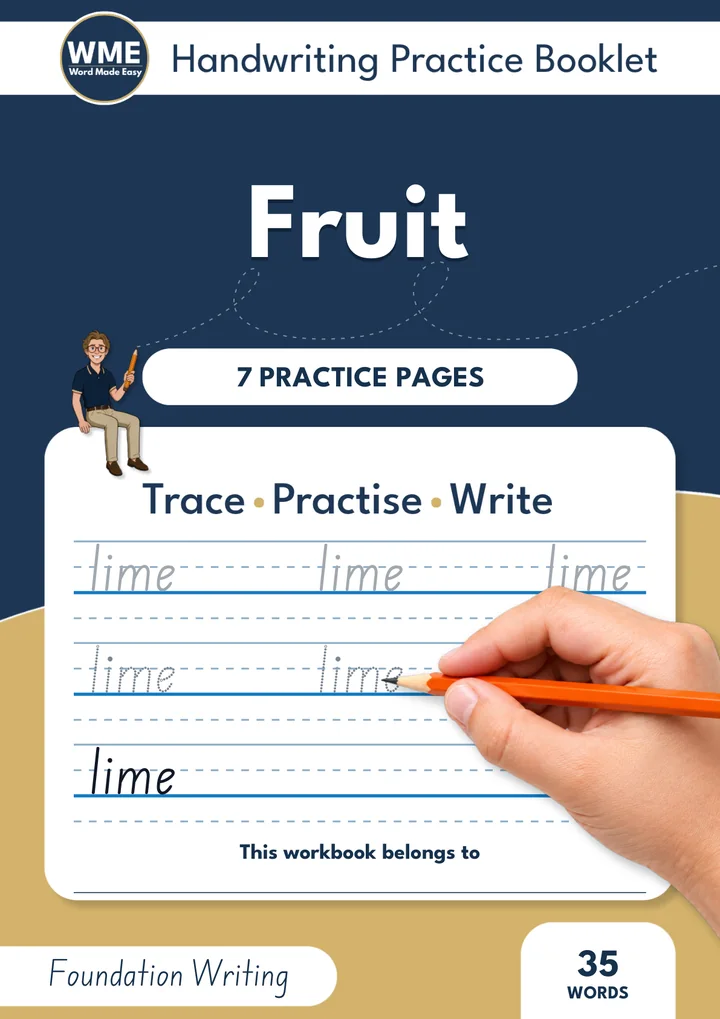
This fruit words handwriting workbook introduces 35 names, from apple and banana to lychee and dragon fruit. Children explore illustrated glossary entries and example sentences before tracing the grey models, following dotted letters and copying the words in Foundation handwriting.
Preview what is inside

1 of 4
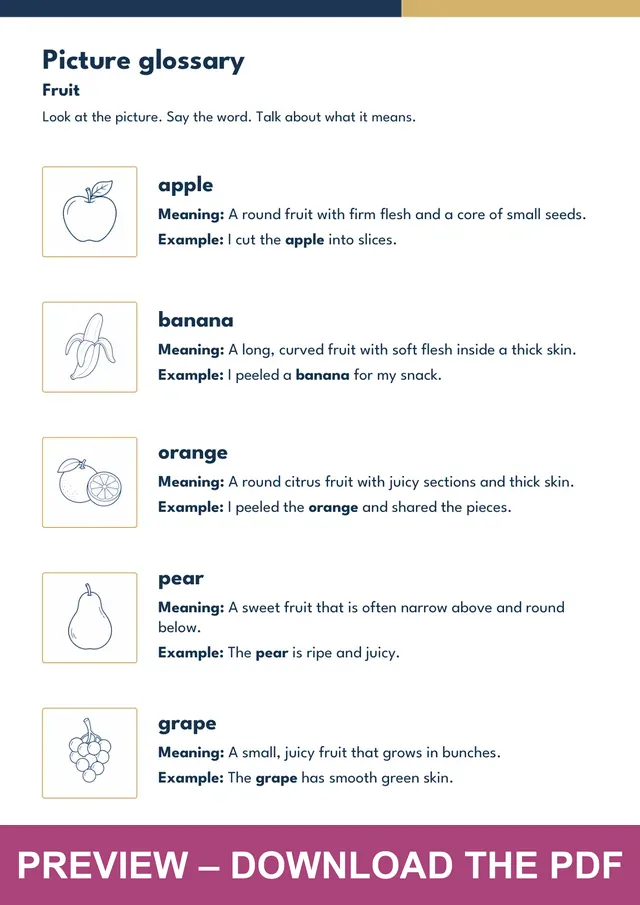
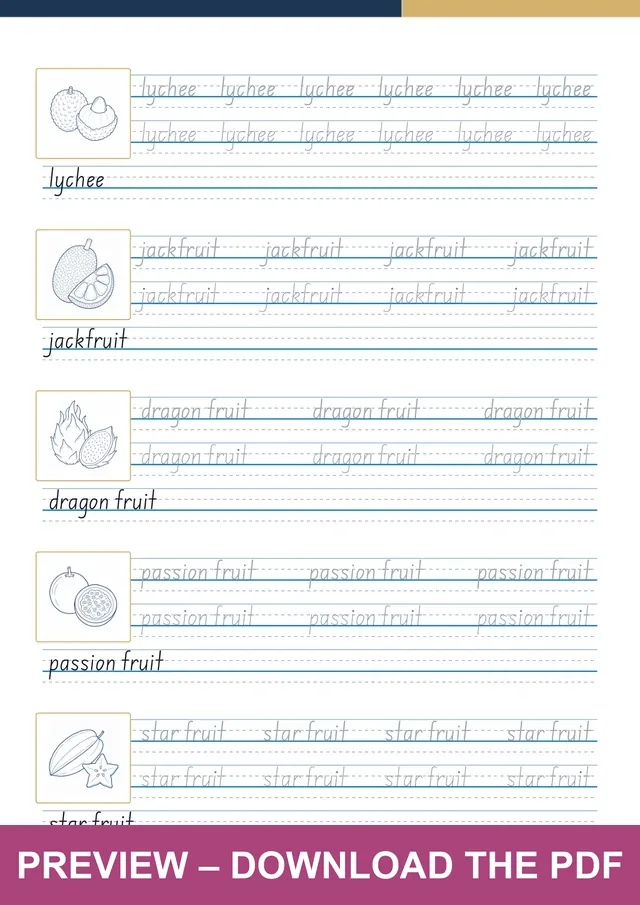
Use the arrows or dots to see the front cover, one glossary page and two handwriting sheets. The three inside-page previews are watermarked; download the PDF for clean printable pages.
Use Fruit Matching and Colouring Worksheet for a different task with fruit vocabulary. Return to Alphabet Trace & Write A-Z Practice Workbook when individual letter forms need practice before a longer fruit name.
About this fruit words handwriting workbook
The collection gives adults a wide range of familiar and less familiar fruit vocabulary to discuss. It includes berries, citrus fruits and names such as papaya, guava, persimmon and jackfruit. The glossary provides a short meaning for each entry, so a pupil can learn a new name without having handled that fruit before.
Seven handwriting sheets follow seven glossary pages. Every entry offers three guided strips and a picture prompt. Longer single words such as pomegranate and two-word names such as passion fruit create different spacing demands. Avocado is included in this fruit collection; adults can use that entry to discuss how familiar food groupings and botanical terms sometimes differ, without making classification the handwriting task.
What is included?
- 35 words: apple, banana, orange, pear, grape, plum, lemon, lime, peach, apricot, cherry, strawberry, raspberry, blueberry, blackberry, watermelon, melon, pineapple, mango, papaya, guava, coconut, kiwi, avocado, grapefruit, mandarin, pomegranate, fig, date, persimmon, lychee, jackfruit, dragon fruit, passion fruit, star fruit.
- 7 picture-glossary pages with meanings and example sentences.
- 7 handwriting sheets using grey models, dotted letters and independent copying space.
- 18 PDF pages in total: front cover, instructions, glossary, handwriting sheets and two terms pages.
How to use this fruit words handwriting workbook
Open a glossary page and choose a fruit the learner recognises. Name it together, read the example and notice one feature in the picture. If introducing lychee or jackfruit, explain the word first rather than treating the picture as a reading test.
Model apple slowly, paying attention to the repeated p letters and their descending strokes. Work through the grey, dotted and independent strips. For dragon fruit, point to the space between the two words and keep that gap visible in each copy. End by selecting a readable label for a pretend fruit stall.
Teaching and follow-up ideas
- Arrange fruit pictures into a pretend shop and add labels using a few practised names.
- Compare lemon, lime and orange in the glossary and describe visible similarities and differences.
- Choose one unfamiliar fruit to describe from its glossary picture and meaning before attempting its spelling.
- Group strawberry, raspberry, blueberry and blackberry by their shared spoken ending, then look carefully at the complete written names.
Support and challenge
Start with a shorter entry such as fig or plum if a long name would exhaust the learner. Read unfamiliar words and explanations aloud. Allow a pause after a few letters in pomegranate so that the next part can be checked against the model. Extend learning through an oral description or a shopping-list label on separate paper, without requiring tasting or bringing food into the activity.
Where this fits in learning
Begin with naming and describing fruit pictures, use the glossary to widen vocabulary, then practise recording selected names. The order is thematic rather than a controlled sequence of spelling patterns. Once a label can be copied confidently, pupils can choose it for a drawing, pretend shop or list. Return to unfamiliar meanings before expecting the child to use those words independently.
Choosing pages to print
For this fruit words handwriting workbook, for an introduction to apple, banana, orange, pear and grape, pair glossary page 3 with handwriting page 10. The final handwriting sheet is page 16 and contains lychee, jackfruit, dragon fruit, passion fruit and star fruit. Those entries offer a useful comparison between single-word and two-word labels. Choose one group for careful work rather than printing all seven handwriting sheets for a single sitting. Keep the picture glossary available to explain new vocabulary, and check a test print so pale and dotted letter models remain visible.
The teaching reference offers further help with letter formation when copying repeated letters in apple and berry names. NSW handwriting teaching resources.
Resource licence
Free for personal, homeschool or single-classroom use under the terms included in the PDF. Resale, redistribution and uploading the file to another website are not permitted.
Questions about this workbook
What is included in the fruit words handwriting workbook?
The workbook contains 35 entries, including apple, mango, guava, persimmon, lychee, dragon fruit and star fruit.
Are there two-word fruit names?
Yes. Dragon fruit, passion fruit and star fruit appear as complete labels with a space between the words.
Do children need to taste the fruit?
No. The pictures and adult-read glossary explanations can support the activity without handling or eating food.
How many PDF pages are there?
Eighteen: cover, instructions, seven glossary pages, seven handwriting sheets and two terms pages.
Why is avocado in the list?
Avocado is included as a fruit entry. Adults can discuss classification separately if it is relevant to their lesson.
What is a suitable short writing entry?
Fig, plum or lime offers a shorter label, provided the learner understands the word before tracing.
Leave a Reply