Skip to content
Word Made Easy Shop
Home Word Tutorials Word Templates Resources Google Docs PowerPoint Tutorials YouTube Videos
Home Word Tutorials Word Templates Resources Google Docs PowerPoint Tutorials YouTube Videos Shop

How to Recover an Unsaved Word Document: 2 Methods

Microsoft Word, Word Productivity & Automation

Updated 13 November 2026 · By Patrick Elliott

You can often recover an unsaved Word document using built-in tools that quietly save temporary copies of your work while you type. If Word crashed, your PC shut down, or you closed a file without saving, those temporary copies may still hold your latest changes — and getting into the habit of saving early (even to save a Word document as a PDF) makes recovery far less likely to be needed.

In this guide, you’ll learn two reliable methods to recover an unsaved Word document: the Recover Unsaved Documents feature and the Windows Temp folder. You’ll also learn how to enable AutoRecover so it doesn’t happen again.


Contents hide
1 Can You Recover an Unsaved Word Document?
2 How to Recover an Unsaved Word Document: Step-by-Step
3 Method 1: How to Recover an Unsaved Word Document Using Word
4 What Are ASD Files?
5 Method 2: How to Recover an Unsaved Word Document from the Temp Folder
6 Which Method Should You Use?
7 Common Problems When Recovering Unsaved Documents
8 How to Enable AutoRecover in Word
9 Pro Tips to Avoid Losing Documents
10 FAQs
11 Conclusion
12 Related Tutorials
13 Word Tutorials

Can You Recover an Unsaved Word Document?

Yes. Microsoft Word automatically creates AutoRecover (.ASD) files while you work. If your document wasn’t saved before Word closed, you can usually restore it from these temporary files. This works in Word 2016, 2019, 2021, and Microsoft 365.

Recovery is most likely to succeed when:

  • Word crashed unexpectedly
  • Your computer shut down without warning
  • You closed a document without saving
  • AutoRecover was enabled beforehand

👉 The sooner you attempt recovery, the better your chances.


Watch the Video Tutorial

If you prefer to see this in action, the full video walkthrough is below, showing each method step by step.

Keep goingHow to Recover a Corrupted Word Document: 3 Easy MethodsA step-by-step guide that goes well with this one.Read the tutorial →

How to Recover an Unsaved Word Document: Step-by-Step

Try Method 1 first — it’s the fastest. If Word doesn’t list your file, Method 2 searches Windows directly.


Method 1: How to Recover an Unsaved Word Document Using Word

The quickest route is Word’s own recovery feature.

Step 1: Open Word

Launch Microsoft Word without opening another document.

Step 2: Open the Info Menu

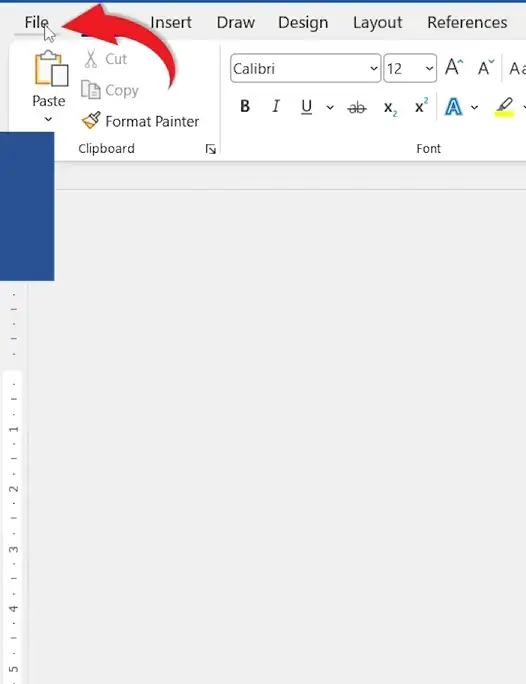
  1. Click the File tab.
  2. Select Info from the left-hand menu.
Microsoft Word File tab highlighted as the first step to recover an unsaved Word document

Step 3: Access Document Recovery

Under Info:

  1. Click Manage Document.
  2. Select Recover Unsaved Documents.
Microsoft Word Info page showing Manage Document with Recover Unsaved Documents to recover an unsaved Word document

Word opens the folder where unsaved documents are stored.


Step 4: Open the Recovery File

  1. Select the file you want to restore.
  2. Click Open.
  3. Save it straight away with File → Save As.

👉 The document reopens. Save it now so you don’t lose it a second time.


What Are ASD Files?

When AutoRecover is enabled, Word periodically saves temporary recovery files with the .ASD extension. These hold recent versions of your document and are used to restore work after an interruption. If Word detects an available .ASD file, it can often recover most or all of your unsaved changes.


Method 2: How to Recover an Unsaved Word Document from the Temp Folder

If Method 1 doesn’t find your file, look in Word’s AutoRecover folder first: go to File > Options > Save and copy the AutoRecover file location (usually C:\Users\your name\AppData\Roaming\Microsoft\Word), then paste it into File Explorer. If no .ASD file is there, search the Windows temporary files folder as below.

Step 1: Open the Run Dialog

Press Windows + R.
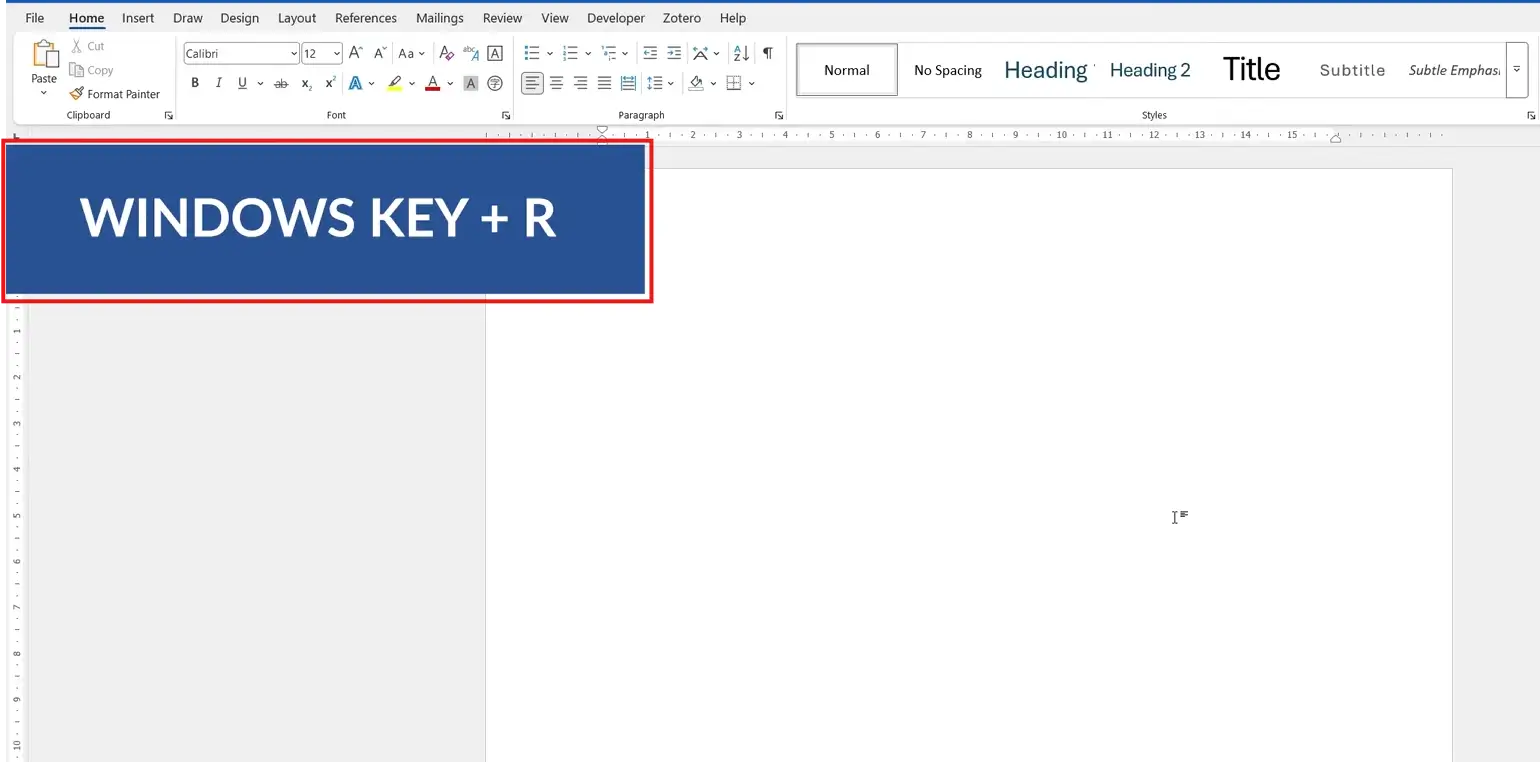
Windows Run dialog opened with the Windows + R shortcut to recover an unsaved Word document from the Temp folder

The Run window appears.


Step 2: Open the Temp Folder

Type the following, then click OK:

%temp%
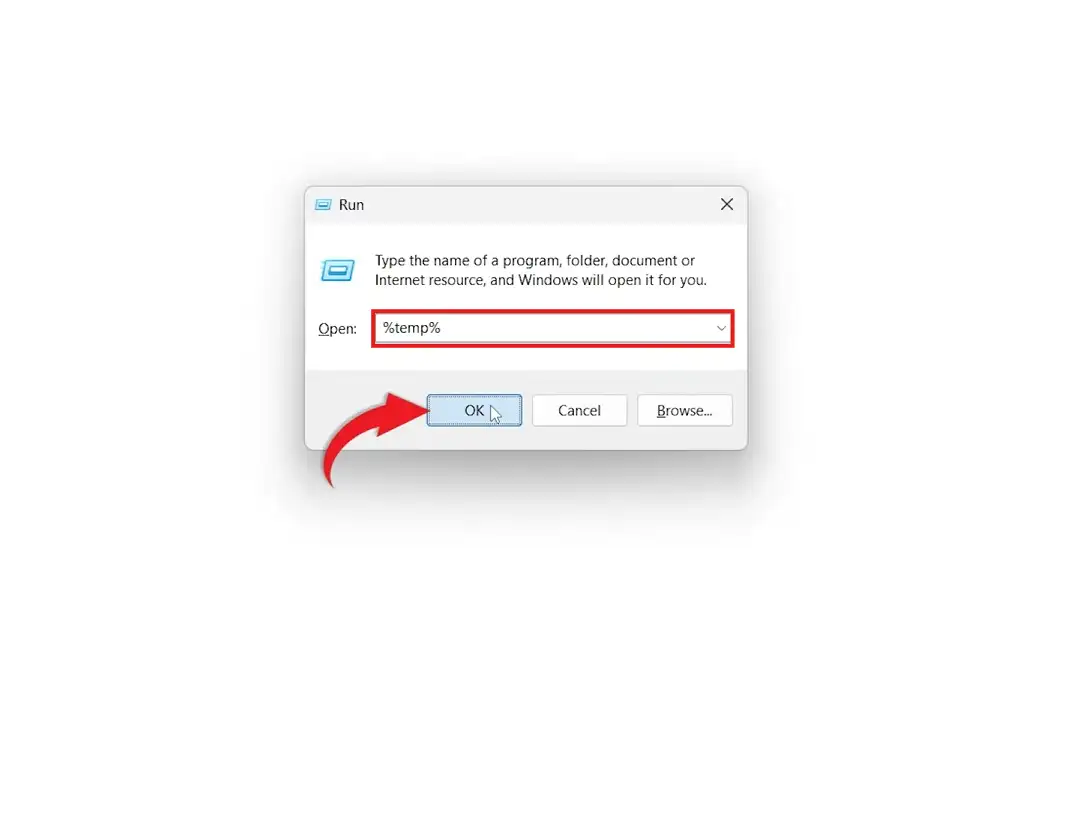
Windows Run dialog showing the %temp% command to find AutoRecover files and recover an unsaved Word document

Windows opens your temporary files folder.


Step 3: Filter the Files

The Temp folder can hold hundreds of files. To find yours faster:

  1. Right-click the column headers if Type isn’t visible.
  2. Enable the Type column.
  3. Sort or filter by Type.

Look for files labelled:

  • Microsoft Word Auto Recovery Document
  • Files with the .ASD extension

Step 4: Open the Recovery File

  1. Double-click the .ASD file.
  2. Word launches and attempts to recover the document.
  3. Save the recovered file immediately.

👉 If the file opens, use File → Save As straight away to keep it.


Which Method Should You Use?

MethodBest for
Recover Unsaved DocumentsThe first thing to try — fastest and simplest
Temp folder (%temp%)When Word doesn’t list the file automatically

Common Problems When Recovering Unsaved Documents

The Recover Unsaved Documents folder is empty

AutoRecover was likely turned off, so no .ASD file was created. Try Method 2, then enable AutoRecover for next time.

No .ASD file appears in the Temp folder

Sort by Date modified to bring recent files to the top, and check whether the document was stored in OneDrive instead of locally.

The recovered file is an older version

AutoRecover only saves at set intervals, so the last few minutes may be missing. Lower the interval (below) to reduce future gaps.

The .ASD file won’t open

Open Word first, then use File → Open → Browse, set the file type to All Files, and point it at the .ASD file directly.


How to Enable AutoRecover in Word

To improve your chances next time:

  1. Click File → Options → Save.
  2. Tick Save AutoRecover information every X minutes (set it to 5).
  3. Tick Keep the last AutoRecovered version if I close without saving.

A shorter interval means more frequent backups — and if the document holds sensitive material, it’s worth learning to password protect a Word document once it’s saved.


Pro Tips to Avoid Losing Documents

  • Save constantly with Ctrl + S (see how to save in Word) — it’s the single best habit for protecting your work, and you’ll find more time-savers in the Microsoft Word keyboard shortcuts cheat sheet.
  • Store files in OneDrive so every change syncs automatically to the cloud.
  • Consolidating drafts? Learn how to merge multiple Word documents into one file instead of juggling separate copies.

FAQs

How do I recover an unsaved Word document?

To recover an unsaved Word document, go to File → Info → Manage Document → Recover Unsaved Documents, then open the available recovery file.

Where are Word AutoRecover files stored?

Word stores AutoRecover files as .ASD files in the AutoRecover file location shown under File, Options, Save (usually AppData, Roaming, Microsoft, Word). The Windows %temp% folder is a fallback worth searching.

What is an ASD file?

An .ASD file is a temporary AutoRecover file Word creates to restore unsaved work after a crash or unexpected shutdown.

Can I recover a document I closed without saving?

Yes — as long as AutoRecover was enabled and Word saved an AutoRecover file before the document closed.

Does OneDrive recover unsaved Word documents?

If the file was stored in OneDrive, check Version History on the OneDrive website to restore an earlier version.

Why can’t I find my unsaved document?

If AutoRecover was disabled or no temporary file was created, the document may not be recoverable.

How often does Word save AutoRecover files?

By default every 10 minutes. Lower it to 5 minutes under File → Options → Save for more frequent backups.


Conclusion

You can usually recover an unsaved Word document through the Recover Unsaved Documents feature or by searching the Windows Temp folder for .ASD files.

From here, enable AutoRecover, save often, and keep files in OneDrive — and if you regularly move work between formats, it helps to know how to convert a PDF to a Word document without losing your content.


New to Word? This tutorial goes with Chapter 2 of the free Microsoft Word for beginners guide: Create, save and open documents. It covers the basics step by step, with screenshots, short videos and practice files, and you can download the whole guide as a free PDF.

Related Tutorials

  • How to Save a Word Document as a PDF
  • How to Password Protect a Word Document
  • How to Merge Multiple Word Documents Into One File

Word Tutorials

Recently Added on Word Made Easy

  • How to Mail Merge Certificates in Word: 7 Easy Steps

    November 12, 2026
  • How to Split a Cell in Word: 2 Easy Methods

    November 11, 2026
  • How to Add Mendeley Citations in Word: 9 Easy Steps

    November 11, 2026

Browse the complete collection for help with formatting, layout, pages, tables, images, and document setup.

View all Word tutorials
Watch on YouTube

For Microsoft support documentation, visit the official Microsoft guidance.
← PreviousHow to Insert Equations in Word: 3 Easy Methods
Next →How to Check Spelling and Grammar in Word (Spell Check): 4 Easy Steps

Leave a comment Cancel reply

Stuck on a step, or know a quicker way? Ask or share it below.

Meet the Author

Patrick Elliott standing outdoors holding his dog.

I’m Patrick Elliott, the creator of Word Made Easy. I’ve worked in schools for over 10 years and I’m now an Inclusion Lead in the UAE. I use Microsoft Word and PowerPoint every day for planning, documentation and classroom resources.

Every guide is tested step by step before publishing (usually in Microsoft 365), and every free template is one I made myself in Word. You’ll also find practical walkthroughs on my YouTube channel.

Browse

  • Word TutorialsStep-by-step guides for every feature
  • Word Beginners HubFree 12-chapter Word course
  • Word TemplatesFree, editable downloads
  • ResourcesWorksheets, posters and puzzles
  • Word Shortcut Cheat SheetsFree printable PDFs
  • Google Docs TutorialsStep-by-step Docs guides
  • PowerPoint TutorialsClear, simple slide guides
  • YouTube VideosWatch the video walkthroughs

Watch on YouTube

Prefer to watch? Most guides have a short video walkthrough on the Word Made Easy channel.

  • 147videos
  • 1.88Mviews
  • 8,000+subscribers
Subscribe on YouTube

Recently Added

  • Complaint Letter Templates: 6 Free Sample Letters for WordNovember 26, 2026
  • Apology Letter Templates: 6 Free Sample Letters for WordNovember 26, 2026
  • Certificate of Employment Templates: 6 Free Sample Certificates for WordNovember 26, 2026
  • Authorization Letter Templates: 10 Free Sample Letters for WordNovember 26, 2026
  • Ramadan Planner 2027: 8 Free Printable Templates for WordNovember 26, 2026

Most Downloaded

  • Microsoft Word for Beginners: Free Guide and PDF91 downloads in the last 30 days
  • Free ILAW Lesson Plan Templates for Word: English and Filipino (DO 16, s. 2026)89 downloads in the last 30 days
  • Free 1×1 and 2×2 Picture Templates for Word: 4 ID Photo Sheets76 downloads in the last 30 days
  • Free Fillable Form Templates for Word: 4 Easy Forms65 downloads in the last 30 days
  • Free Microsoft Word Keyboard Shortcuts Bundle: 14 Cheat Sheets (PDF)58 downloads in the last 30 days

About

  • About Me
  • Contact
  • Shop

Microsoft Word

  • All Word Tutorials
  • Page Layout & Sections
  • Tables, Images & Media
  • Formatting Basics
  • Productivity & Automation
  • Beginners Hub
  • Shortcut Cheat Sheets

Word Templates

  • Business
  • Calendars and Planners
  • Home, Health and Money
  • School and Teacher Forms
  • Cards, Invitations and Labels
  • Paper and Grids
  • Holidays and Seasonal

Resources

  • Phonics and Reading
  • Handwriting
  • Writing
  • Maths
  • Puzzles and Activities
  • Classroom Display
  • Study Packs
  • Seasonal
  • Collections

More Tutorials

  • Google Docs Tutorials
  • PowerPoint Tutorials
  • YouTube Videos

Follow Us

  • YouTube
  • Facebook
  • Pinterest
Privacy Policy Cookie Policy Terms of Use
© 2012–2026 Word Made Easy. All rights reserved.
Manage your privacy

To provide the best experiences, we and our partners use technologies like cookies to store and/or access device information. Consenting to these technologies will allow us and our partners to process personal data such as browsing behavior or unique IDs on this site and show (non-) personalized ads. Not consenting or withdrawing consent, may adversely affect certain features and functions.

Click below to consent to the above or make granular choices. Your choices will be applied to this site only. You can change your settings at any time, including withdrawing your consent, by using the toggles on the Cookie Policy, or by clicking on the manage consent button at the bottom of the screen.

Functional Always active
The technical storage or access is strictly necessary for the legitimate purpose of enabling the use of a specific service explicitly requested by the subscriber or user, or for the sole purpose of carrying out the transmission of a communication over an electronic communications network.
Preferences
The technical storage or access is necessary for the legitimate purpose of storing preferences that are not requested by the subscriber or user.
Statistics
The technical storage or access that is used exclusively for statistical purposes. The technical storage or access that is used exclusively for anonymous statistical purposes. Without a subpoena, voluntary compliance on the part of your Internet Service Provider, or additional records from a third party, information stored or retrieved for this purpose alone cannot usually be used to identify you.
Marketing
The technical storage or access is required to create user profiles to send advertising, or to track the user on a website or across several websites for similar marketing purposes.
Statistics

Marketing

Features
Always active

Special features

Special purposes
Always active

  • Manage options
  • Manage services
  • Manage {vendor_count} vendors
  • Read more about these purposes
Manage options
  • {title}
  • {title}
  • {title}
Manage your privacy
To provide the best experiences, we use technologies like cookies to store and/or access device information. Consenting to these technologies will allow us to process data such as browsing behavior or unique IDs on this site. Not consenting or withdrawing consent, may adversely affect certain features and functions.
Functional Always active
The technical storage or access is strictly necessary for the legitimate purpose of enabling the use of a specific service explicitly requested by the subscriber or user, or for the sole purpose of carrying out the transmission of a communication over an electronic communications network.
Preferences
The technical storage or access is necessary for the legitimate purpose of storing preferences that are not requested by the subscriber or user.
Statistics
The technical storage or access that is used exclusively for statistical purposes. The technical storage or access that is used exclusively for anonymous statistical purposes. Without a subpoena, voluntary compliance on the part of your Internet Service Provider, or additional records from a third party, information stored or retrieved for this purpose alone cannot usually be used to identify you.
Marketing
The technical storage or access is required to create user profiles to send advertising, or to track the user on a website or across several websites for similar marketing purposes.
Statistics

Marketing

Features
Always active

Special features

Special purposes
Always active

  • Manage options
  • Manage services
  • Manage {vendor_count} vendors
  • Read more about these purposes
Manage options
  • {title}
  • {title}
  • {title}
Request